
Michael Brook Interview: ‘Cobalt Blue’, the Infinite Guitar and Panning for Gold
Michael Brook has spent much of his career discovering new possibilities within familiar instruments. His development of the Infinite Guitar expanded the expressive range of the electric guitar, allowing notes to sustain indefinitely and giving him greater freedom to explore the fluid, ornamented phrasing that had attracted him to Indian music.
Yet technical invention has never been an end in itself for Brook. Technology, production and technique have always served a more elusive purpose: the search for a sound capable of creating an emotional response before it can be fully explained.
That search is especially clear on ‘Cobalt Blue’, his second solo album, originally released by 4AD in 1992. More rhythmic, melodic and song-like than its predecessor, ‘Hybrid’, the album emerged after a long period in which Brook had toured extensively and worked with artists including Brian Eno, Daniel Lanois, Jon Hassell, Nusrat Fateh Ali Khan and Youssou N’Dour. It also marked the point at which he became comfortable with the electric guitar again, after spending time in musical environments where the instrument could seem overly conventional or even out of place.
As Brook explains in this interview, the foundations of ‘Cobalt Blue’ began with him experimenting alone, but the finished album was shaped by an unusually rich group of collaborators. Brian Eno helped him recognise structural and arrangement possibilities that Brook admits were largely invisible to him at the time. Roger Eno, Daniel Lanois, cellist Rohan de Saram and others brought melodic, textural and organic elements that expanded the original ideas without obscuring their character.
Brook describes the process not as the execution of a concept but as a gradual discovery. He would experiment, improvise and follow his instincts, keeping the fragments that seemed to hold something special. He compares the process to carving a sculpture of a horse from a block of stone: beginning with a large amount of material and gradually removing everything that does not belong.
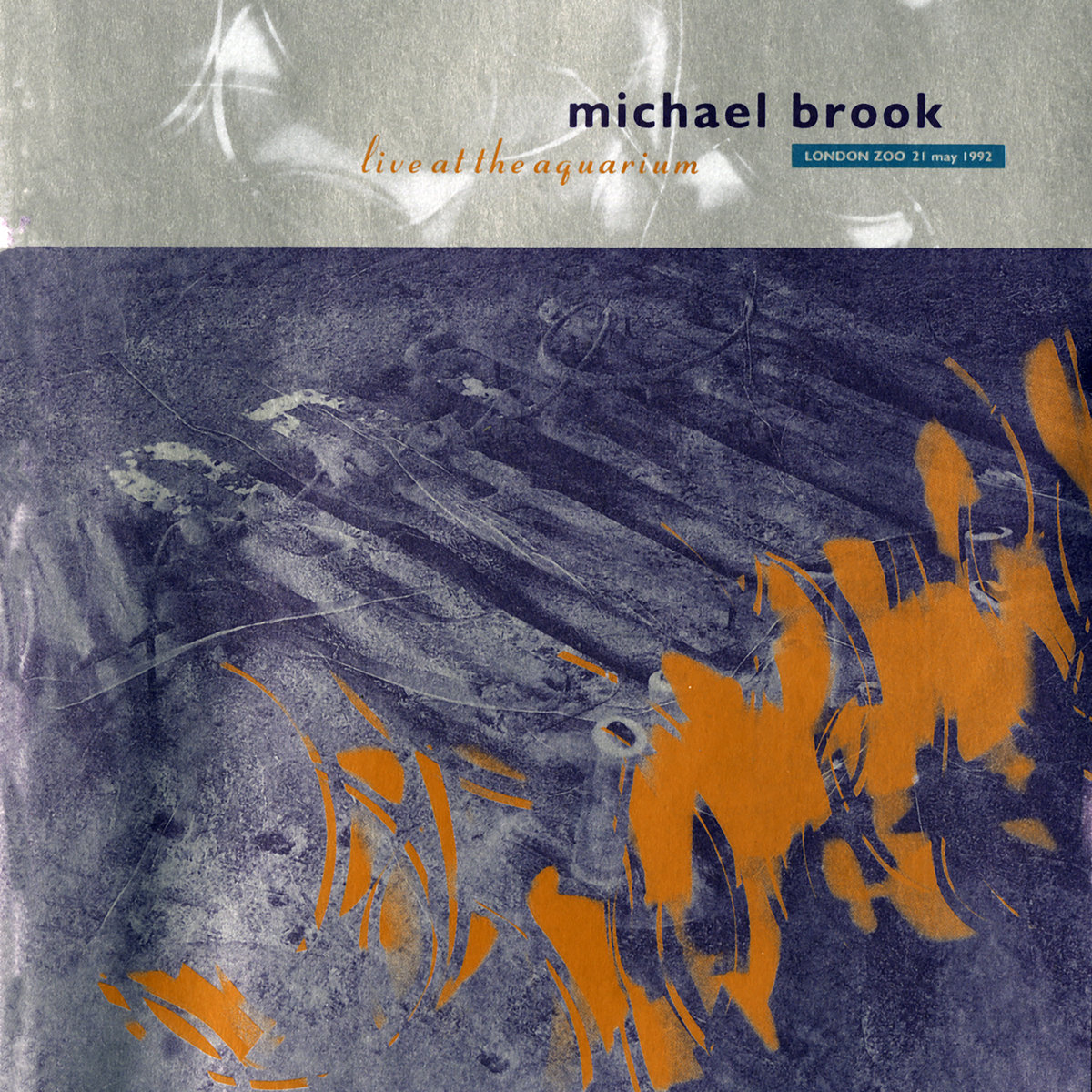
The album’s related recording, ‘Live at the Aquarium’, documents a rare solo performance recorded at London Zoo on 21 May 1992. The recording itself survived almost by accident, after someone was sent back to Brook’s apartment to collect a DAT tape shortly before the performance. Where Brook now hears the studio album as more compositional, the live recording carries the concentration of music unfolding in real time.
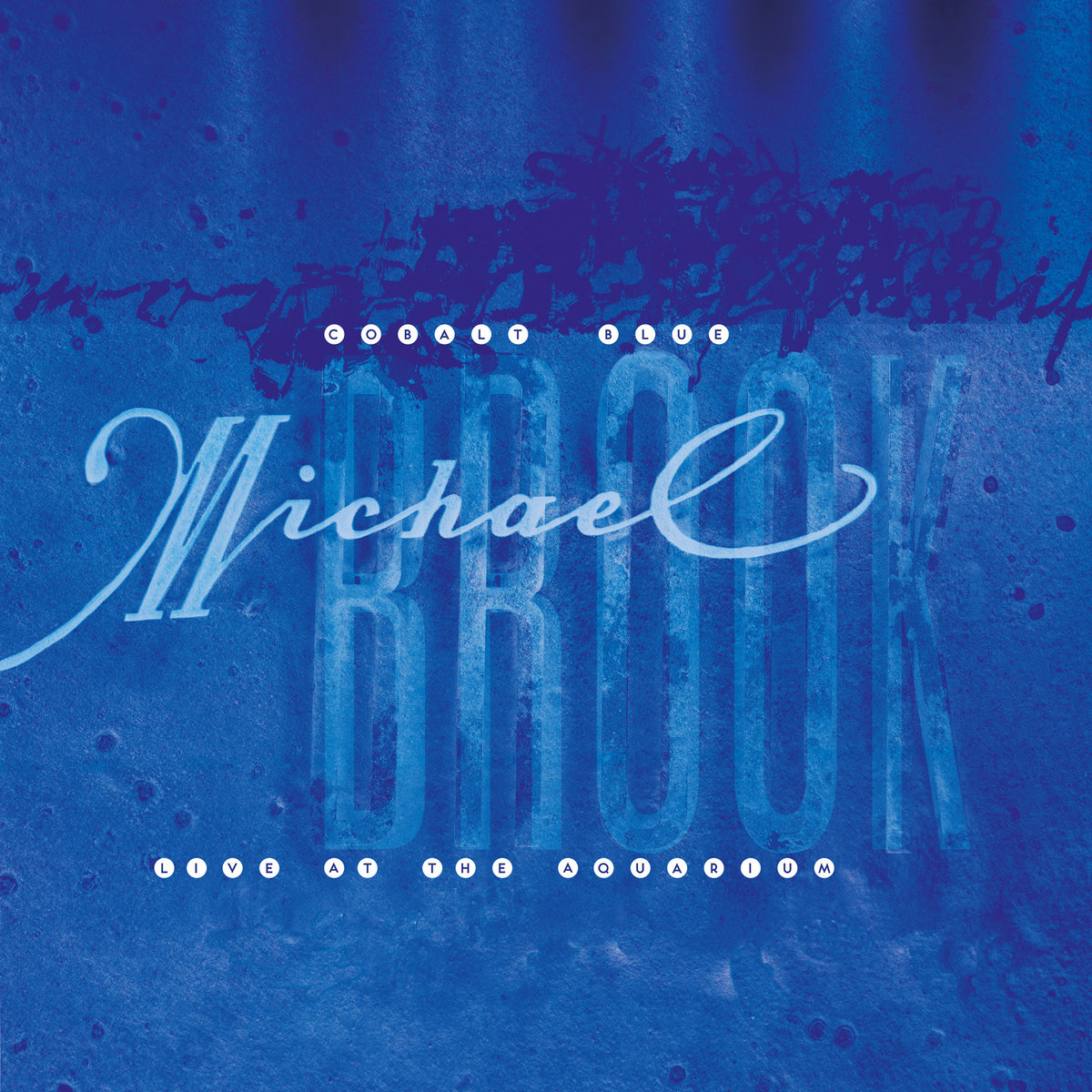
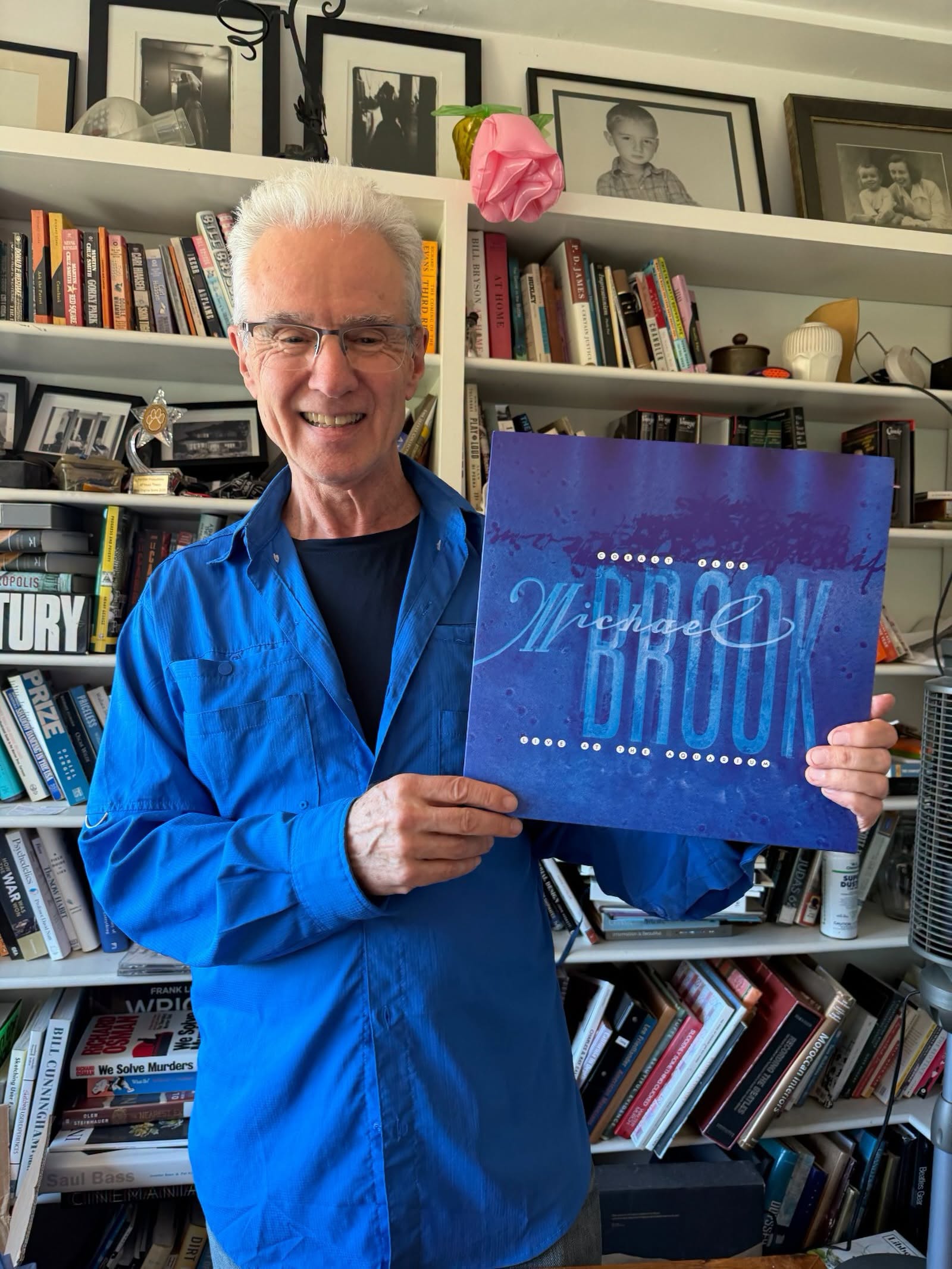
Both recordings return on 10 July 2026 in newly remastered editions. ‘Cobalt Blue’ receives its first vinyl repressing, while ‘Live at the Aquarium’ appears on vinyl for the first time. Together, they offer two distinct views of the same body of work: one carefully constructed in the studio and the other shaped by the uncertainty of live performance.
Brook’s reflections reach far beyond these two releases. He discusses his earliest experience of music as something immersive and transformative, his teenage years playing R&B in Toronto bar bands, the development of the Infinite Guitar and the particular freedoms created by the limitations of late-1980s recording technology. He also speaks candidly about touring with David Sylvian and Robert Fripp, his work with musicians from different traditions and the unexpected path from ‘Ultramarine’ appearing in Michael Mann’s ‘Heat’ to a long career composing for film.
Now celebrating his 75th birthday, Brook has stepped away from film work to return his attention to concerts and a new album. His reasons are both creative and practical. There is still pleasure in experimenting and still the possibility that an unplanned sound may reveal something worth pursuing, but there is also a growing awareness that time is finite.
More than three decades after ‘Cobalt Blue’, his working method remains remarkably consistent. He still treats music as exploration, where most ideas pass but some reveal real value.
“The whole process has continued much as it did when I was working on ‘Cobalt Blue’,” he says. “There is always a panning-for-gold aspect to it, and if you are lucky, it happens every once in a while.”
“Everything started with experimenting and improvising.”
Before ‘Hybrid’, ‘Cobalt Blue’, the Infinite Guitar, 4AD, film scores and all these extraordinary collaborations, there was Michael Brook as a teenager in Toronto, playing in bar bands and trying to find his way into sound. What do you remember about that first pull towards music?
I think, in a general sense, I found that some music seemed to be immersive and transcendent and simply drew me in, in ways that probably aren’t possible to articulate.
Even when I was a child, I had this tiny record player and one album, which was ‘My Fair Lady’. It wasn’t really my taste, but I listened to that record over and over again. There was something about it that took me to another place. It was kind of magic.
In my teens, I started listening to fairly standard things: The Beatles, Jimi Hendrix, Jeff Beck and people like Wilson Pickett. In bar bands, we played a sort of lame white-Canadian-teenager version of R&B, but I liked playing it.
Then my aesthetic gradually drifted away from rock towards things that were more textural and atmospheric.
You’ve described ‘Cobalt Blue’ as your second ‘solo’ album after ‘Hybrid’, though you’ve also been very generous about the guidance you had from Brian Eno, Roger Eno, Daniel Lanois, Russell Mills and Ivo Watts-Russell. Looking back, what part of that record feels most like you alone in a room, and what part could only have happened because of that particular community around you?
I think the skeleton of the ideas was me alone in a room. All the starting points came from that. Then all the collaborators brought something.
Brian Eno brought a lot of structural suggestions and arrangement ideas that were invisible to me at the time. I simply didn’t perceive music in that way, which was down to my naivety about the whole process.
Roger Eno and, to a degree, Daniel Lanois brought in other melodic ideas I hadn’t thought of. Roger could play piano and accordion, and Rohan de Saram brought this sensual, organic feeling that was a lovely contrast to the crisp guitar sounds and percussion. Daniel added parts, but also contributed some of the structural thinking that Brian had brought.
Russell Mills and Ivo Watts-Russell were more like cheerleaders on the sidelines. They would say that something was working really well, or that another part needed more work.
There’s a beautiful shift from ‘Hybrid’ to ‘Cobalt Blue’, from darker, slower, more textural pieces into something more rhythmic, melodic and almost song-like without needing lyrics. Was that a conscious break from the world you had been in?
‘Hybrid’ was driven, to a degree, by textural and atmospheric inspiration. It was also the first time I had access to a proper studio where I could do more sonic manipulation than was possible in my home studio. I started it at home in Toronto and finished it at Daniel Lanois’s studio in Hamilton.
There was also a gradual movement away from the shame and humiliation I had felt about playing electric guitar at university. My enthusiasm for and confidence in the electric guitar had increased by the time I started ‘Cobalt Blue’, and I no longer had any reservations about it.
I wanted to capture some of the things that had inspired me, from guitarists such as J. J. Cale, Jeff Beck and Ali Farka Touré to the cinematic guitars in Ennio Morricone’s scores. I felt uninhibited, and losing that inhibition had been a slow process.
So it was partly that the guitar was asking for different things, but my perspective had also shifted. There were about seven years between making the two albums.
You’ve said that ‘Cobalt Blue’ came partly from becoming more comfortable with the guitar again, even after being in environments where guitar could feel almost embarrassing or too conventional. Did making the album change your relationship with the instrument? Did it give you permission to be a guitarist again, but on your own terms?
To a degree, it did give me permission to be a guitarist again, on my own terms, and in a kind of, ‘Let’s just fool around on the guitar and see what happens,’ way.
Everything started with experimentation and improvisation. It’s like the question of how you make a sculpture of a horse. You start with a large block of stone and remove everything that doesn’t look like a horse.
I would simply mess around, and perhaps one out of every 30 things felt as though it had some magic or inspiration. Then I would refine and work on those ideas.
The Infinite Guitar started from a pretty practical idea: finding new ways to get sustain, bends and different kinds of expression out of the instrument. When you think about it now, do you see it mainly as a technical invention, or as a musical tool that helped you get closer to the sounds you were hearing in your head?
Mostly the latter.
I was intrigued by melodic elements of Indian music and ways of playing melodies in which part of the focus is on how you move from one note to another, rather than simply which note follows which. It is almost the opposite of a piano, with its very discrete notes.
The ornamentation and journey between notes became increasingly interesting to me, partly because I had been playing with Jon Hassell, who had adapted Indian music techniques to the way he played trumpet.
I never became particularly good at it, but I learned about it as another way of approaching the guitar. You are limited in doing that with a conventional guitar because it is fundamentally, to a degree, a percussive instrument. You play a note and can wiggle it for a while, but it eventually disappears unless you use feedback.
The Infinite Guitar allowed me to explore the more expressive, ornamented style of melody that intrigued me at the time.
“Today, you almost have to constrain yourself artificially because the possibilities are infinite.”
These days, music technology can do almost anything. But when I listen to ‘Cobalt Blue’, it feels very much shaped by the tools and limitations you were working with at the time. You had tape, pedals, looping, sequencers and the challenge of one person trying to create this huge sonic world. Do you ever miss working within those kinds of constraints?
A bit. The number of options now is certainly overwhelming, so you have to put much more work into filtering things.
When I was making ‘Cobalt Blue’, I didn’t need to filter anything because I only had small pieces of technology and couldn’t afford very much. I was definitely channelled by the electronic options available to me. ‘Constrained’ isn’t quite the right word.
In the same way that an instrument directs you towards certain things, the options available to me shaped what I did. A violin has a particular way of being played and a particular character. The technology felt less like a limitation than a set of possibilities.
It was like going to a farmers’ market and discovering that the tomatoes and parsley are especially good that day. You aren’t constrained by that. You are inspired by what is available. Those things are assets rather than constraints.
I had to buy much of that hardware again to work out how to perform these concerts, because I had foolishly got rid of it. It wasn’t particularly expensive to replace because most of it is unfashionable now. The exception is the Eventide H3000. It was the first serious multi-effects unit, and I think I bought mine in 1988. It costs roughly the same now as it did then because they no longer make it. There are units that can do much more, but there is something magical about it.
My original plan was to use all that old equipment in the concerts, but I abandoned the idea because it is nearly 40 years old. It is heavy, delicate, expensive to travel with and difficult to repair.
When I toured back then, I had one of everything and no backup. If anything had broken, I wouldn’t have been able to perform. I didn’t even think about that, which tells you how naive I was. I did around 60 concerts and nothing ever broke.
I’ve now found mostly equivalent software versions. There are still some things in the H3000 that I haven’t replicated, but the benefits outweigh that. In the case of the Yamaha TX802 synthesizer, I think the plug-in sounds just as good, or even better.
Those characteristics definitely affected the music, and in a good way. Today, you almost have to constrain yourself artificially because the possibilities are infinite. Anyone in a bedroom with an iPad has more technology available than The Beatles had for ‘Sgt. Pepper’s Lonely Hearts Club Band’, but nobody I know is making ‘Sgt. Pepper’s’ in their bedroom.
So yes, I miss working with those kinds of constraints, but I can’t fake them. People say, ‘Just limit yourself to 16 tracks,’ but I can’t artificially constrain myself in that way.
Brian Eno’s involvement on ‘Cobalt Blue’ seems especially interesting because he wasn’t simply adding ‘Eno atmosphere’. He helped with structure, editing and arrangement. At the time, did you feel he was changing the music from the outside, or helping it become what it was trying to be?
I don’t think the question quite maps onto what was happening. There was no concept, and certainly no articulable concept, of what the music was trying to become. There was never a sense that it had to be a particular way. It was all a process of discovery and exploration.
There may have been an unconscious sense that something felt right or that it was better than before, but I didn’t know what it was going to become.
Brian completely made it better. I don’t think he was changing it from the outside. He would say, ‘Have you considered moving from this section to that section?’ or, ‘It’s difficult to hear the rhythm here. What if we added a part that clarified it?’
It was guidance and inspiration from someone who is brilliant at it and had also done much more of that work than I had.
‘Live at the Aquarium’ has such a strange and lucky origin story, recorded at the London Zoo almost by accident. You’ve said the studio album is more architectural, while the live version perhaps has more passion. When you hear the two side by side now, what does the live recording reveal that the studio version keeps hidden?
Those comments about ‘Cobalt Blue’ being more architectural and ‘Live at the Aquarium’ having more passion are recent observations.
I think there is more of a performance in ‘Live at the Aquarium’. There is perhaps more focus on the feeling and emotion of the parts. It has a real-time quality, and in that sense it may be closer to seeing a play in the theatre than watching a film. It unfolds in real time.
I didn’t think about any of that at the time. It was simply about trying to make something that felt good to me. Those are definitely retrospective observations.
Your work with Nusrat Fateh Ali Khan, Youssou N’Dour, Cheb Khaled, U. Srinivas and others sits in a period when people often used the term ‘world music’, sometimes usefully and sometimes lazily. With time, how do you think about those collaborations now? What did they teach you about listening?
In terms of the phrase ‘world music’, I think it mostly means non-Western music. Some people get worked up about it, but I don’t think it is a big issue.
It used to be a practical matter: ‘I’m looking for this kind of music. Where do I find it in the record shop?’ You went to the world music section. As a prescriptive or limiting description, I don’t think it is particularly useful, but if it is being used lazily, then come up with a better idea.
Working with musicians from other cultures exposed me, for the first time, to aspects of music I had never considered. In Indian music, for instance, the journey between notes can receive much more emphasis.
One of the most interesting things I learned through those particular collaborations was something I had never thought about in relation to Western musical culture: how flexible and eclectic it can be.
When I worked with Djivan Gasparyan from Armenia, U. Srinivas and Nusrat Fateh Ali Khan, they largely did what they had become masters of doing. I changed the background or context around them, but the things they played or sang were, to a large degree, similar to what they had done on their more traditional recordings.
We might say, ‘Just improvise something over this,’ and they might respond, ‘What do you mean? This is what I do. This is my thing.’ They were certainly open to it and weren’t resistant, but that particular way of approaching it wasn’t necessarily on their radar. I found that fascinating.
It was different with Youssou N’Dour because I was really producing him. We didn’t collaborate in quite the same way.
What those experiences taught me is that Western music often operates with a very large vocabulary, while the particular traditions I encountered could place greater emphasis on going deeply into nuance and finer degrees of subtlety and sophistication. Western culture tends to say, ‘There is a vast universe here.’ That was something I hadn’t previously understood.
You were part of the 1993 David Sylvian and Robert Fripp tour, opening the shows with your own solo Infinite Guitar pieces and then joining the band for the main set. That feels like a fascinating meeting point: Fripp’s almost monastic discipline and precision on one side, and your own interest in sustain, atmosphere, chance and emotional texture on the other. What do you remember about standing inside that music night after night? Did being so close to Fripp’s way of thinking about the guitar change anything in your own approach, or did it clarify how different your path already was?
In some ways, I wasn’t an obvious choice to play in that band. It mostly worked out, but some of those pieces had an element of what I suppose would now be called math rock. There might be a piece in 35/8 or something like that.
I never formally studied music and had never counted things. I simply went with whatever felt good. I was weak at that aspect of playing and at dealing with complex structures. I ploughed along and was mostly competent, but there was one piece I never learned to play correctly. It was actually rather humiliating.
Fripp is an amazing guitarist. Being close to his way of thinking didn’t change my approach very much because I had no ambition to enter the territory he occupies. He practises for six hours a day and plays with extraordinary precision. It is magical, but it wasn’t something that resonated with me as a player. I enjoyed it as a listener.
If anything, the experience slightly strengthened my resolve, or my interest, in being textural and improvisatory and pursuing the feeling of a performance.
‘Ultramarine’ eventually found another life through Michael Mann’s ‘Heat’, which helped bring your music into the film world. Did that feel like a surprising detour, or did film make sense for you because your instrumental music was already dealing with mood, movement, tension and inner life?
I had wanted to work in film even while making ‘Cobalt Blue’. I was very inspired by Ennio Morricone, and I thought it would be good to do. I didn’t want to do it full-time.
My ideal world would have been to make one film a year, one album a year and tour every two years, or something like that, moving between those worlds.
But I didn’t get any film work and didn’t know how to enter that world until I was asked to score an IMAX film.
Around the time I moved to Los Angeles, which would have been 1999, the album world I had inhabited, both through Real World and 4AD, went off a cliff. I think that happened initially because of piracy and then streaming, and it became impossible to earn a living from it in the way I had before.
Luckily, I began to receive more film offers. It was great because I still spent all day making music. There are many similarities. The difference is that you have an external goal and are working with other people whose sensibilities you need to acknowledge.
It has been great, but about a year ago I went to Pakistan, partly because of the release of a new Nusrat recording. It reminded me of being in the music world, and I realised how much I missed that.
I decided to take a sabbatical from film, which is what I am doing now. I am trying to perform these concerts and working on a new album.
You’ve spent so much of your career between uncertainty and precision: inventing an instrument, building tracks alone, producing great singers, scoring films and now returning to these early 4AD records around your 75th birthday. At this point, what still gives you that feeling of ‘panning for gold’ in the studio or onstage?
Truthfully, I would say that, overwhelmingly, it just hasn’t changed. It feels the same. It is still fun simply to mess around. Developing this new rig has often been inspiring, and new ideas happen that way.
The whole process has continued much as it did when I was working on ‘Cobalt Blue’. There is always a panning-for-gold aspect to it, and if you are lucky, it happens every once in a while.
This isn’t the driving force at all, but one consideration in trying to tour now is that I am 75. Statistically, I am unlikely to be able to play well for that much longer. I’m getting into better shape now. I may not become as good a player as I was when ‘Live at the Aquarium’ was recorded, but certainly, in five years, it is unlikely that I will be able to play as well as I can now, simply because that is how nature works.
My age was therefore a factor, although it wasn’t the deciding factor by any means. It was more a feeling that this might be my chance to do it, so I decided that I should do the things I wanted to do rather than suppose I could get to them later.
You begin to experience the finiteness of your life. I don’t like it, but that is the way it is.
At the same time, this is a lot of fun. Working purely on music has put much more of a spring in my step. To a degree, I also enjoy not having a boss, which is what happens when you work in film. You have a patron. There are many great things about that, but it is a nice change not to have one.
Klemen Breznikar
Special thanks to Erin Christie for her invaluable help in making this interview possible.
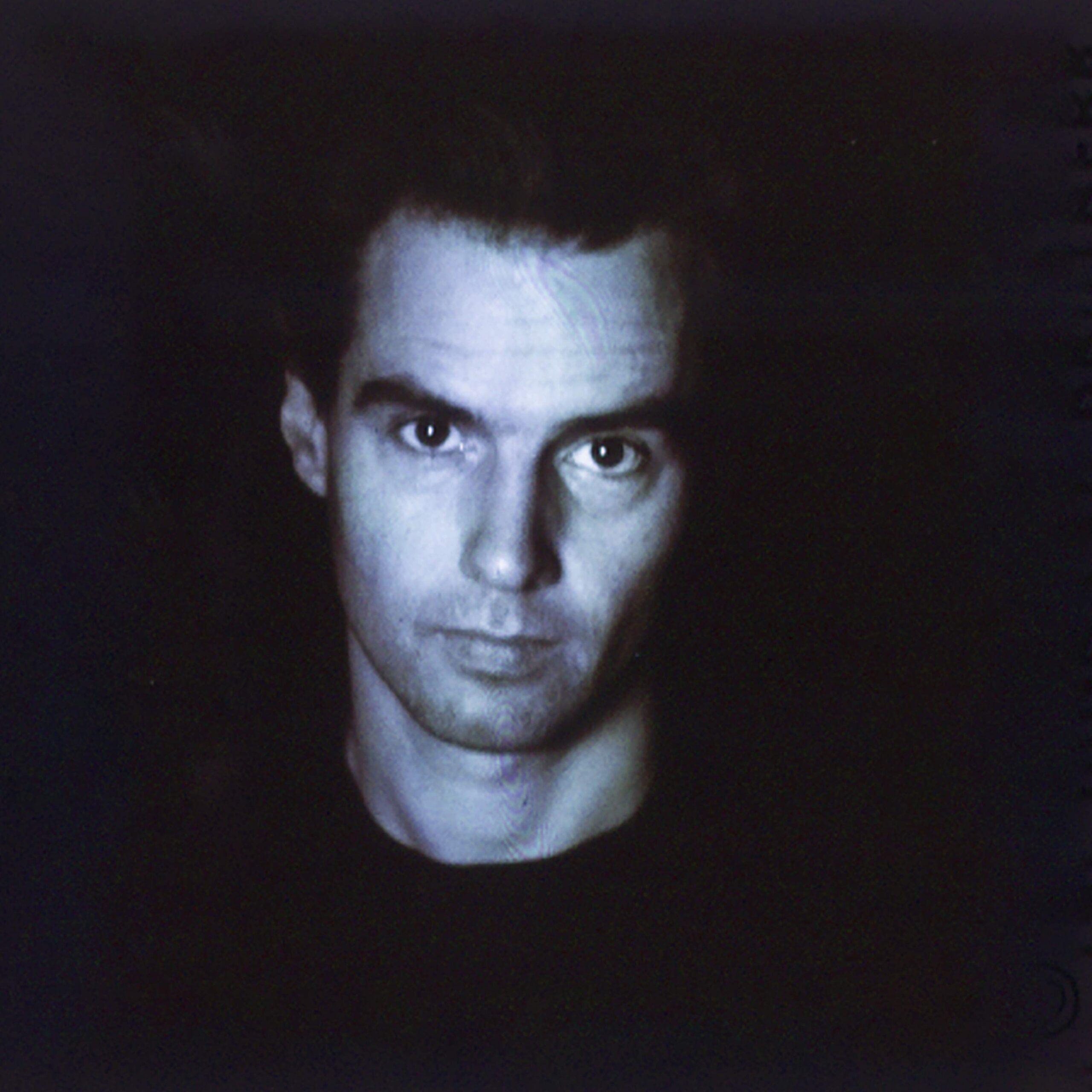
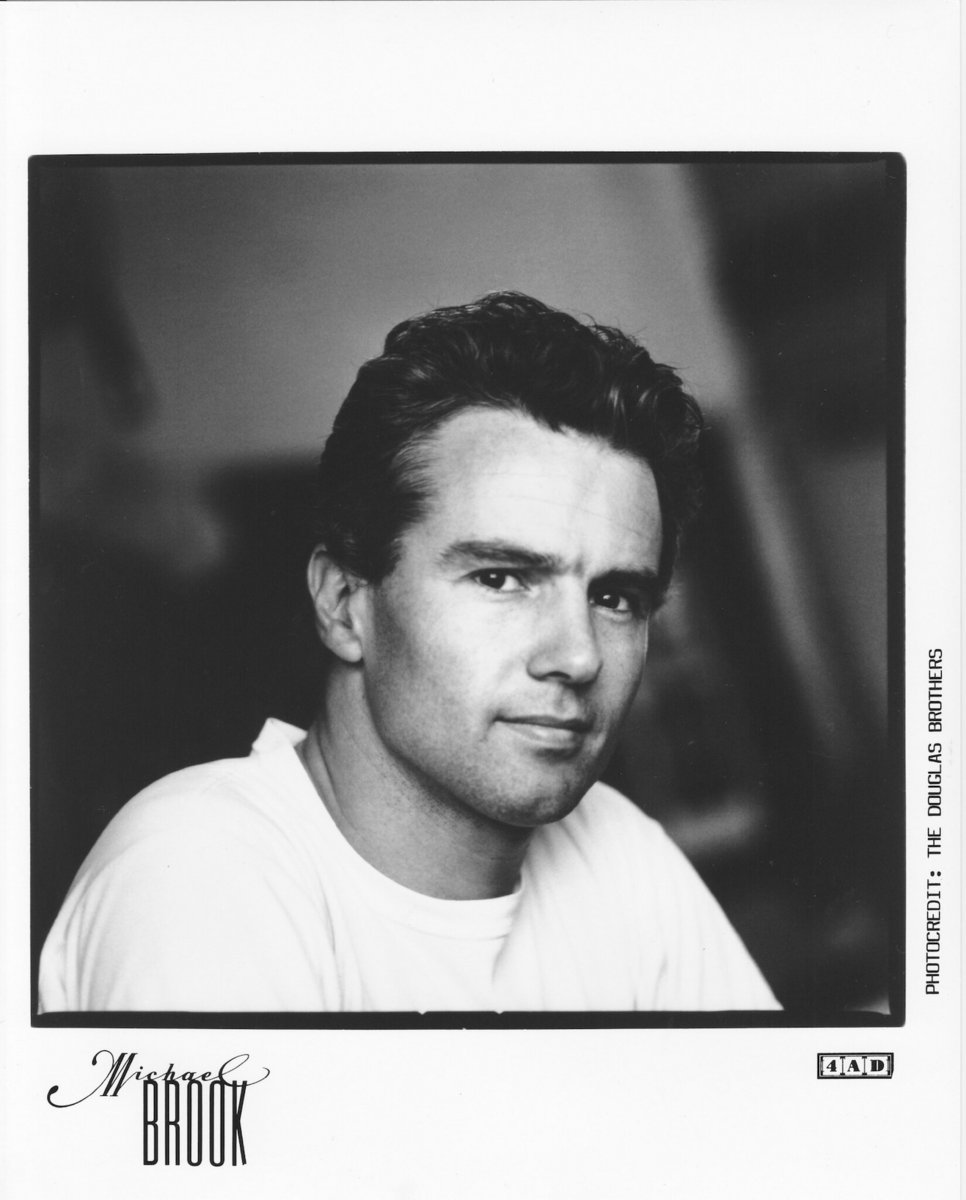
Headline photo: Michael Brook by The Douglas Brothers
Michael Brook Website / Instagram
4AD Website / Facebook / Instagram / X / YouTube / Bandcamp