
Hardy Mums Interview: A New Album from a Lost Country
You can search for hours, but you won’t find Doggerland on any map. It exists somewhere in between – at the heart of things where only true searchers dare set foot.
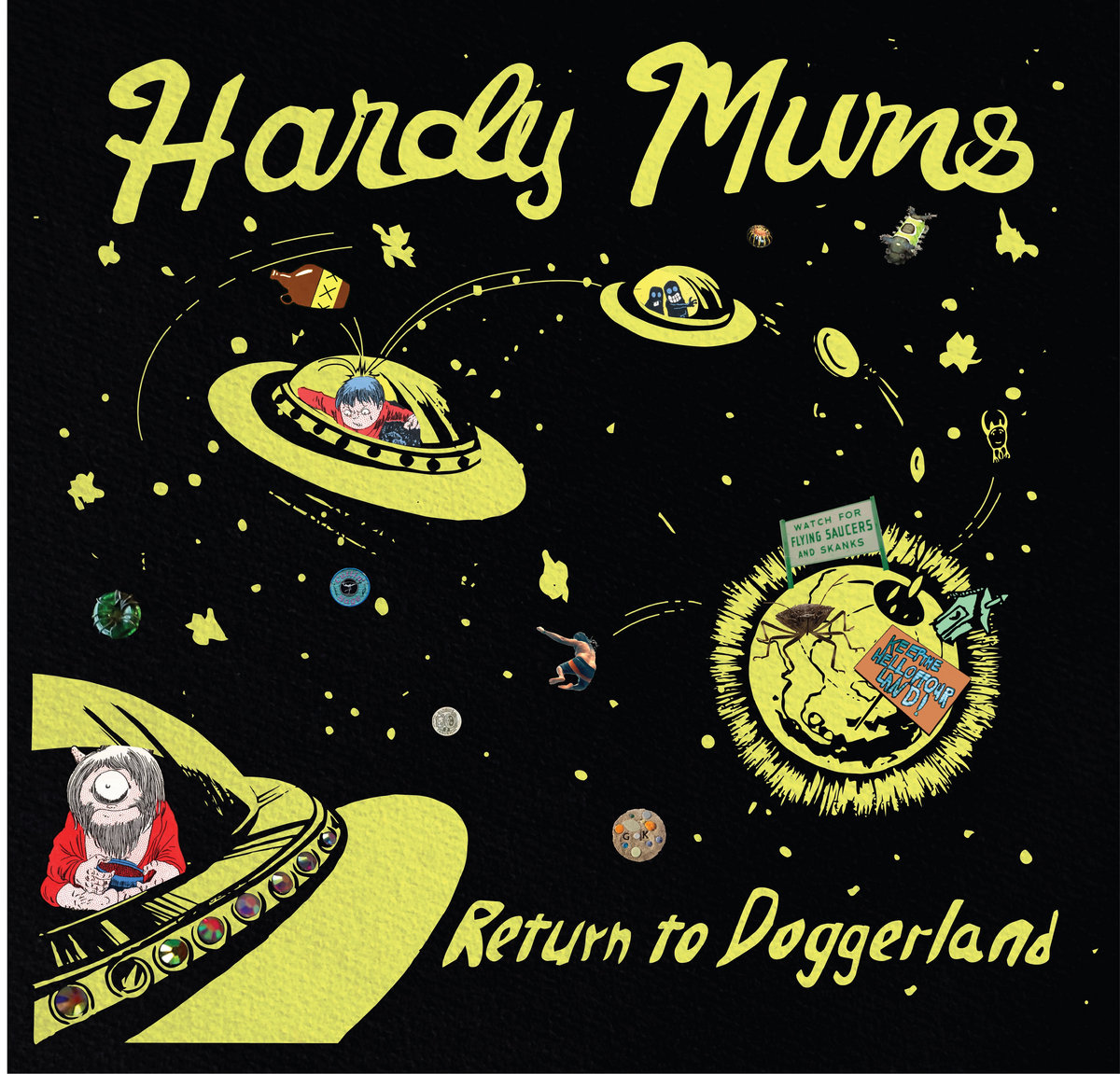
But, Hardy Mums have been there before. And for their debut album, ‘Return to Doggerland’, the Mums reveal a plethora of sonic secrets from that mysterious beyond.
Producer Eddie Ashworth is a shapeshifter; a chameleon. From song to song, there’s no telling where his wandering ear will guide him next. Partnering with Pete Sebastian, Bryan Gibson, Bud Carroll, Zane Smith, Sasha Colette, Larry Elefante, Sam Corlett, Ben Davis Jr, Eric Mrozkowski, Kari Ann Rutushin and several others, Ashworth has crafted a record that feels musically diverse but collectively unified.
Instrumental opener ‘Esprit de L’escalier’ sets a scene – it’s pensive energy spilling into the haunting soft-rocker ‘Dilettante’. Then, the Mums switch gears into the twangy, fiddle-laden ‘Next Train to Clarksburg’. Moving on, ‘Whip-Poor-Will’ is an all-out rocker full of pinched harmonics and chunky rhythm guitars. There’s apparently no limits for Ashworth and company, who swap genres like they’re shuffling a deck of cards. ‘The Almost Lovers’ shows the Mums’ soulful side, with big brass and emotive vocals. The album’s fifth single, ‘A Good Day for a Bad Tattoo’ marries smoky textures with the backroom debauchery of its lyrics. And finally, ‘Pitching Woo’ recalls the homegrown rock of the early 00s with a warm acoustic guitar and gorgeous vocal harmonies.
Townes Van Zandt once wrote the line “Maybe she just has to sing for the sake of the song.” I think Hardy Mums could keep writing and recording and never run out of inspiration. Guided by Eddie Ashworth, this project finds joy in putting songs first. The Mums play each note for the “sake of the song.” And it makes for an absolutely beautiful debut record.
“Each song has its own origin story and unique journey to completion — some took minutes, others years.”
Were the songs written quickly or slowly? How did you decide which ones would make the album?
It varied from song to song. A couple were written quickly in the moment and completed the same day, while others took a couple years from original inception to putting the finishing touches on the lyrics.
‘Pitching Woo’ is an example of the former—dashed off in a few hours–whereas ‘Dilettante’ was started on Ocracoke Island in 2024 and I wrote and sang the lyrics two years later, just days before the album was sent off to mastering!
Some existed as backing tracks until the right collaborators came along—for example the riddim for ‘Muldoon’ (the first video from the album) was put together by Mums bassist Mike O’Neal and me, and the lyrics and melody were written by Ashley LaRue and Benny Coleman months later. Another is ‘Something New To Find’ which started with a track that OG Mum Pete Sebastian and I concocted at his studio in Kihei and was completed a year or so later by students in my lyric writing course and finally recorded at the Oxide Shed.
Others were finished years ago (‘The Almost Lovers’) and were eventually recorded when I found the right singer to interpret them (in this case, the phenomenal Dallas Craft). I guess you could say that each song has its own origin story and unique journey to completion—some took minutes, others years.
I had a body of about 20 songs and song ideas I was working with, and the songs on Doggerland are the ones that seemed to loosely fit together thematically, dealing as they do with life’s journeys and the people and places encountered on the way.
What was it like to shift gears so drastically from song to song, and how did you manage to make it feel so seamless?
It was fun, in the beginning I barely thought about things fitting together! My own tastes are all over the shop, so I just sort of indulged whatever style of music, vocals, players, and recording techniques the tune called for. In a way I think that having a different singer on each song is kind of a unifying feature—that, and the shifting styles kind of make it sound like one of those music sampler albums record companies put out in the 70’s, like the Warner Bros Loss Leader series. I just loved those records growing up, perfect for parties and you always heard something new and cool on them.
Fortunately, nowadays musicians are mixing things up in subtle and unprecedented ways, and I don’t think listeners are startled at all when they hear genre changes by artists—in fact they’ve come to rather expect it.
I did work pretty hard to get the sonics of all the tracks to fit together despite the stylistic shifts and varying recording situations, then meshing them with tracks recorded at my studio. And there are some other throughlines on the record—I’m a sucker for big choruses, guitar solos, and background vocals so most of the songs feature those elements.
Also, the record was mixed in sequence so I could gauge how each song affected the vibe of the adjacent tracks—making sure they all had the same kind of weight and impact when listening to on the album, and that the transitions between them worked.
The record is absolutely intended to be listened to as complete experience and the vinyl version (which includes heaps of exclusive liner notes, lyrics, and art) is integral to that experience—even flipping the record over at the end of side one!
Can you tell us where Doggerland is?
Long story short: Doggerland is an area (currently under the North Sea between eastern England and northern Europe) that was home to untold generations of people before the end of the last ice age, when rising sea levels and a recently discovered ancient tsunami put the whole region under water. I watched a BBC documentary with Dr Alice Roberts that talked about it and I became fascinated. Apparently she and other pre-historians think the cultures that lived there flourished and due to its abundant resources they likely had developed a fairly complex and vibrant culture, now lost to time. As the sea levels rose folks were displaced and migrated to what became the British Islands, France, and northern Europe, which mirrors my own ancestry closely. It’s wild to think that my own attraction to islands, ferry boats, fishing villages and the like are influenced by the genetic memory of my forebears, and even more wild that the region that could be considered my ancestral homeland is now at the bottom of the ocean.
You have been recording music for a long time. What keeps it fresh?
The people I work with, of course! Every record is a new experience and a set of new or evolving relationships, and the opportunity is always there to make the best record ever if you give it all the proper attention. My approach is to treat each project as its own thing, and I strive to create a distinctive sound for every artist I work with. Constantly trying new stuff, mixing things up—that keeps it fun for me.
And I still really love the process of making records, that quicksilver feeling of capturing a song’s essence and an artist’s vision in a bottle (so to speak) is something that artificial “intelligence” will never replace. And finally putting out my own stuff (in collaboration with my Mums pals) of course is a new horizon in my creative life that I’m excited to continue to explore in the future.
Hardy Mums Facebook / Instagram / Bandcamp