
The Blasters: John Bazz Looks Back on the Band’s Classic Years
The Blasters came from Downey, California, with a repertoire grounded in early rock’n’roll, postwar Chicago blues, rockabilly and country.
By the early 1980s, they had become part of a notably varied Los Angeles scene that included X, Los Lobos, the Gun Club and Black Flag. At the centre of the band’s 1980s recordings were the singer Phil Alvin, his brother Dave Alvin on guitar and songwriting duties, drummer Bill Bateman, bassist John Bazz, pianist Gene Taylor, and saxophonists Lee Allen and Steve Berlin. Their studio work from 1979 to 1985 was assembled by Liberation Hall for the five-LP collection ‘An American Music Story: The Complete Studio Recordings 1979-1985’. Its final standalone instalment, ‘Rare Blasts: Studio Outtakes and Movie Music 1979-1985’, gathers recordings that sat outside the band’s principal albums.
Speaking about the collection, Bazz presents the Blasters less as revivalists than as musicians following the records that had consumed them from an early age. His partnership with Bateman was rooted in shared experience: both had played drums, both grew up in Downey, and both absorbed much of the same music. That common grounding helped shape the band’s rhythm section.
Bazz also recalls the adjustment required when Gene Taylor joined the group. Taylor’s left hand on the piano was forceful enough to occupy some of the musical space usually available to a bassist. Rather than compete with it, Bazz changed parts of his playing, reducing or shifting lines so that the arrangement had room to work.
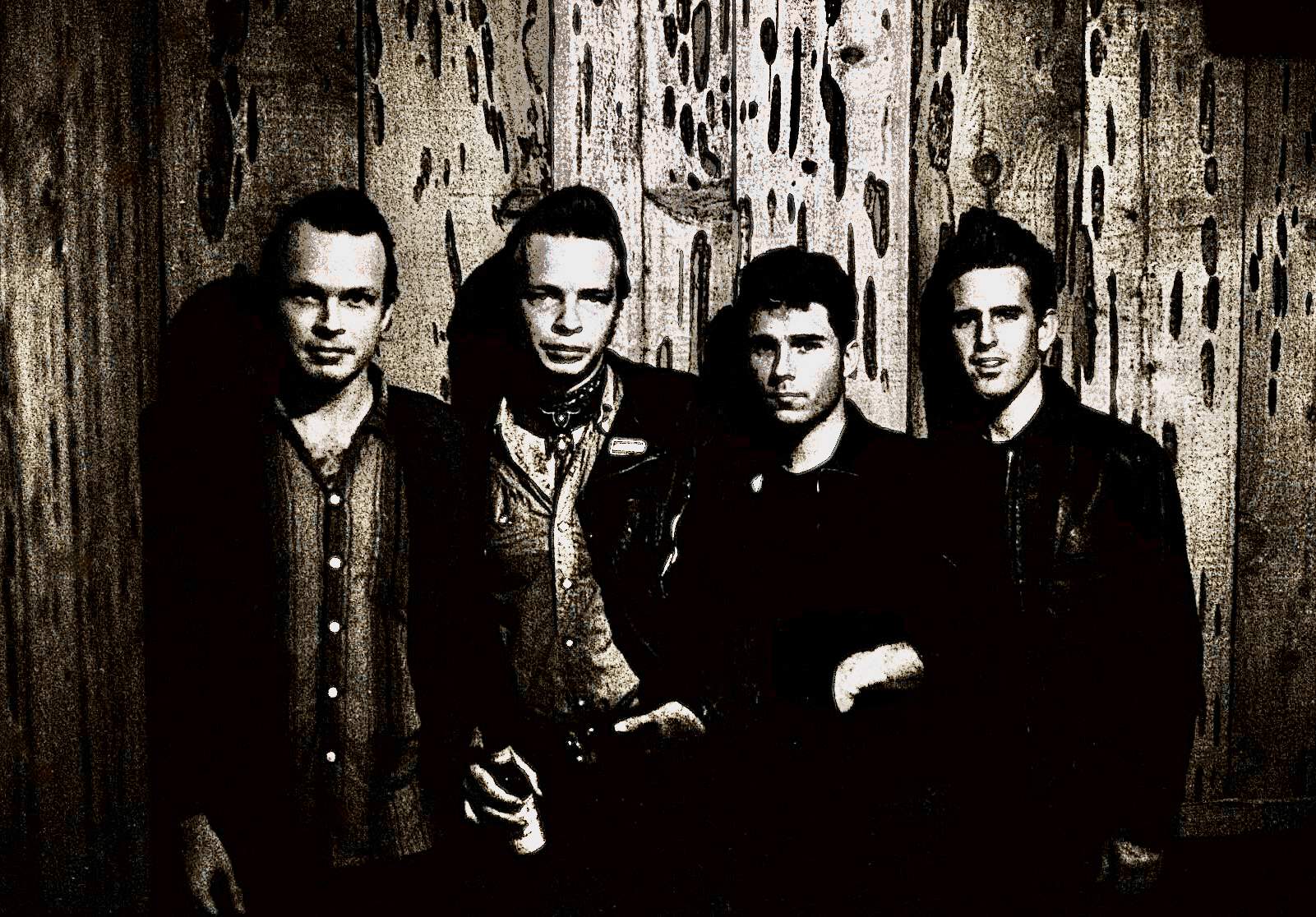
“We all bought records with a vengeance back then.”
The ‘Rare Blasts’ collection really fills in the gaps from that 1979 to 1985 period, beyond the studio albums everyone knows. When you hear a song like ‘Can’t Stop Time,’ or those outtakes from the ‘Non Fiction’ sessions, does it sound to you like you were mostly pulling from players like Willie Dixon and James Jamerson? Or do you hear some of that edgy ’80s L.A. punk energy making its way into your bass lines too?
John Bazz: That’s not me playing bass on ‘Can’t Stop Time.’ It’s Jeff Eyrich, the producer of our ‘Hard Line’ album. Before The Blasters, I had been a drummer, so playing bass was new to me. My musical influences up until then were more along the lines of post-war Chicago Blues and early Rock ‘n’ Roll.
With the Blasters, there was an element of rockabilly thrown into our eclectic mix of early Rock, Blues, and, to a lesser extent, Country. Listening to the first six songs on this compilation, you’ll hear the heart of what made the Blasters tick back in our formative years.
Not so much “channeling” per se, but trying to keep true to the genre. I’m no James Jamerson, Jack Meyers, or John Doe; I can’t do what they do. The course I plotted then (and now) is to serve the music and stay out of the way.
You and Bill Bateman are frequently cited as one of the most telepathic rhythm sections in American music. On the ‘Rare Blasts’ versions of ‘One Bad Stud’ and ‘Blue Shadows,’ there is a very heavy swing that feels different from the ‘Streets of Fire’ soundtrack. How did the two of you approach movie music sessions versus the high-speed energy of the early Rollin’ Rock sessions?
Bill and I are both drummers, so that’s a thing. We also grew up in Downey, California, playing in bands and listening to much of the same music. So, I guess, we walk alike and we talk alike!
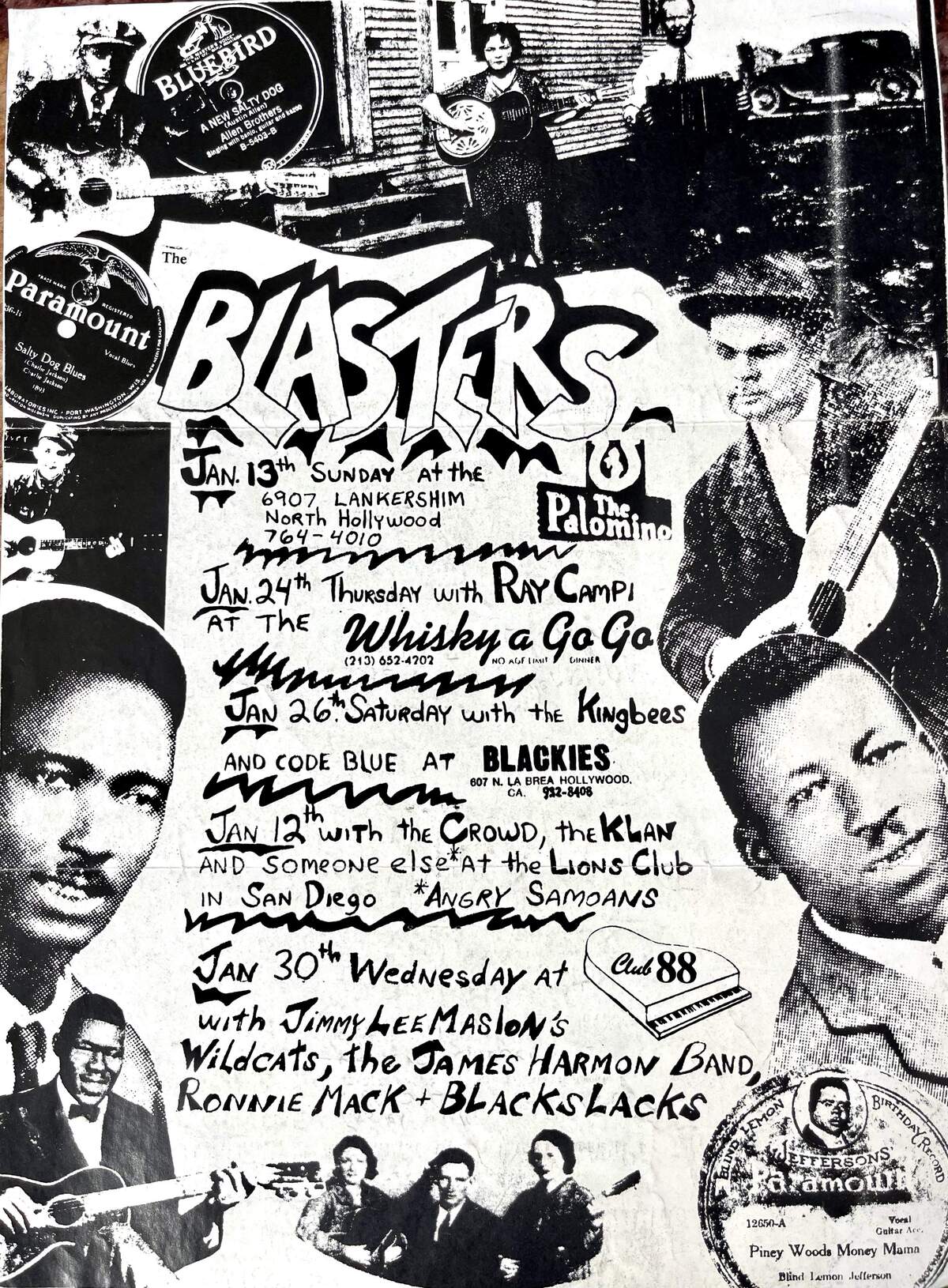
The ‘Streets of Fire’ sessions were a luxury in the sense that the band had a generous movie studio budget and was not under any pressure to get things done on a deadline. This allowed us to perfect our performances and get the best renditions. The “heavy swing” you hear is intentional, especially on ‘One Bad Stud.’
‘American Music’ (1980) was recorded on a shoestring budget for Ronny Weiser. Looking back at those tracks, how did the limitations of Weiser’s studio, literally a converted living room, shape your tonal choices? Were you fighting for low-end clarity, or was the “thinness” of the production an intentional nod to the 1950s 45s you were collecting?
Rollin’ Rock Records was actually a converted two-car garage in Sherman Oaks, and Rockin’ Ronny Weiser ran the show.
When hooking up with Rollin’ Rock Records, we knew that the label’s sound was lo-fi, but that didn’t bother us. The feeling was that no other label better suited us and our sound, as we were pretty lo-fi as well! The thinness of the production wasn’t necessarily intentional, but rather, I believe, a sonic signature of Rollin’ Rock Records.
You, Phil, and Dave were famously obsessive crate-diggers at shops like Downey Music Center and Middle Earth long before you formed the band.
Yes, we all bought records with a vengeance back then. Not only at Middle Earth Records and Downey Music, but also at the Capitol Records swap meet or Wenzel’s Music in Downey. Yet another great spot for vintage records was in the lobby of the Ash Grove music venue on Melrose Blvd. in Los Angeles. The Blasters were notorious for taking the occasional detour, when on the road, in pursuit of vintage records. If you looked hard enough or long enough, you’d always come away with something.
When Lee Allen and Steve Berlin joined the lineup, the harmonic scape of The Blasters expanded massively… you suddenly had to anchor both a heavy rock and roll guitar and a sophisticated horn section. On a track like ‘So Glad’ or ’21 Days in Jail’ from the new collection, how did your role change to ensure the groove didn’t get cluttered by that wall of brass?
I’m not sure if I did anything differently to accommodate the brass; my job was to serve the music while trying to stay out of the way. My guess is that there was a more delicate balance between the piano and the horns than for the rest of the band.
Although there are no horns on those two tracks, the horn section of Steve and Lee helped to augment the band’s sound by adding another layer to our music. There is no denying Lee Allen’s prowess and his contribution to Rock ‘n’ Roll and its history. With Steve Berlin at his side, The Blasters took on a broader range of music, which you’ll hear when listening to ‘One Bad Stud’ or ‘Blue Shadows.’ You’ll hear a very compelling trade between Dave’s guitar and the horn section. Some songs, like ‘Kathleen,’ give me goosebumps when listening to the horns.
‘Non Fiction’ is often called the band’s most “literary” or “blue-collar” record. Dave’s lyrics were getting more cinematic, and the arrangements followed suit. From your vantage point in the pocket, did the band feel like it was moving away from being a “bar band” and toward something more experimental within the roots framework during those 1983 sessions?
The Blasters will always be a hard rockin’ band whether in a bar or on a concert stage; it’s in our DNA! Both ‘Non Fiction’ and ‘Hard Line’ epitomize Dave’s songwriting skills, and as the band and David matured, so did his songwriting. For as long as I’ve known David, he’s always been a storyteller, and these two albums put those skills in the spotlight.
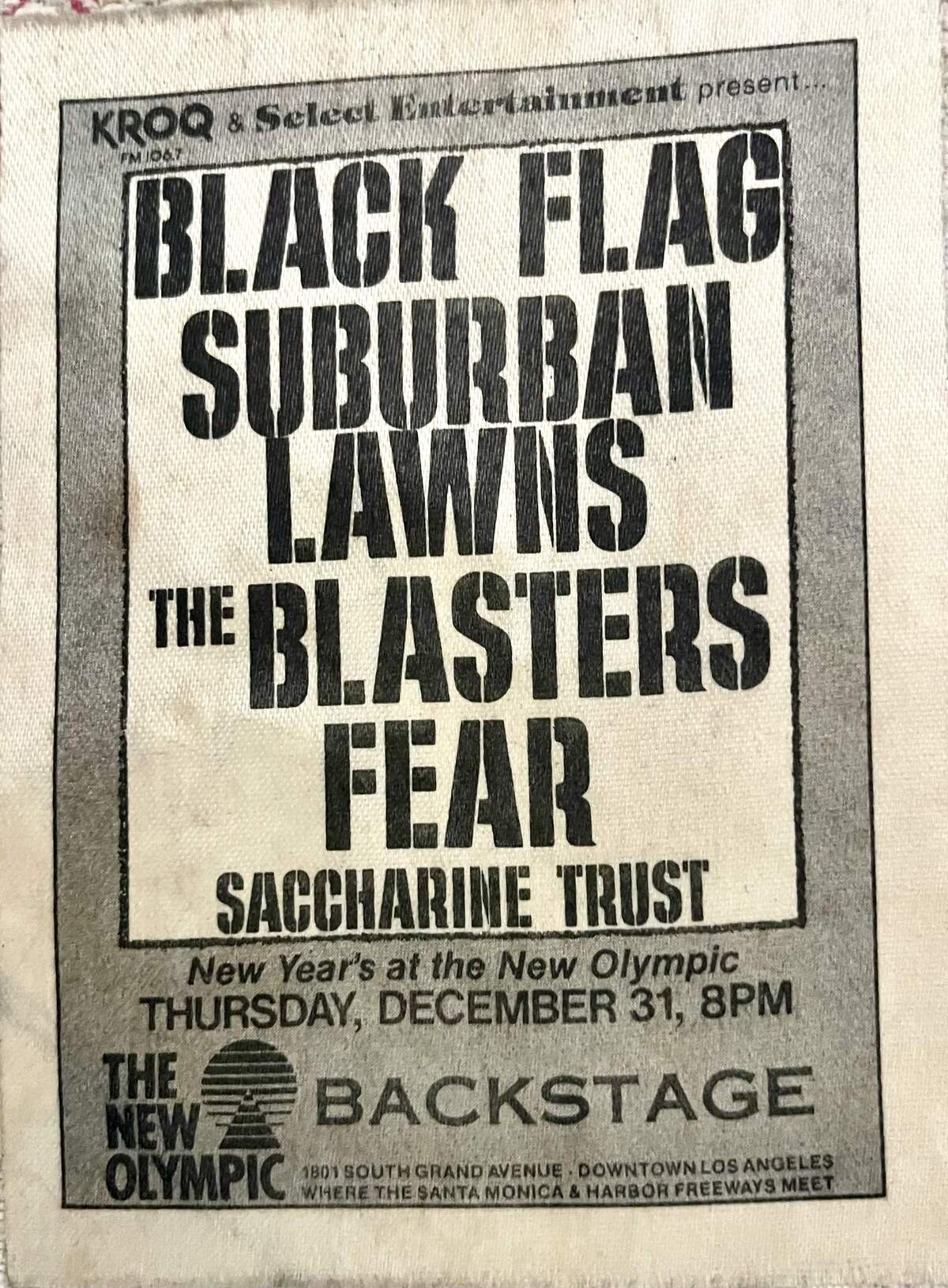
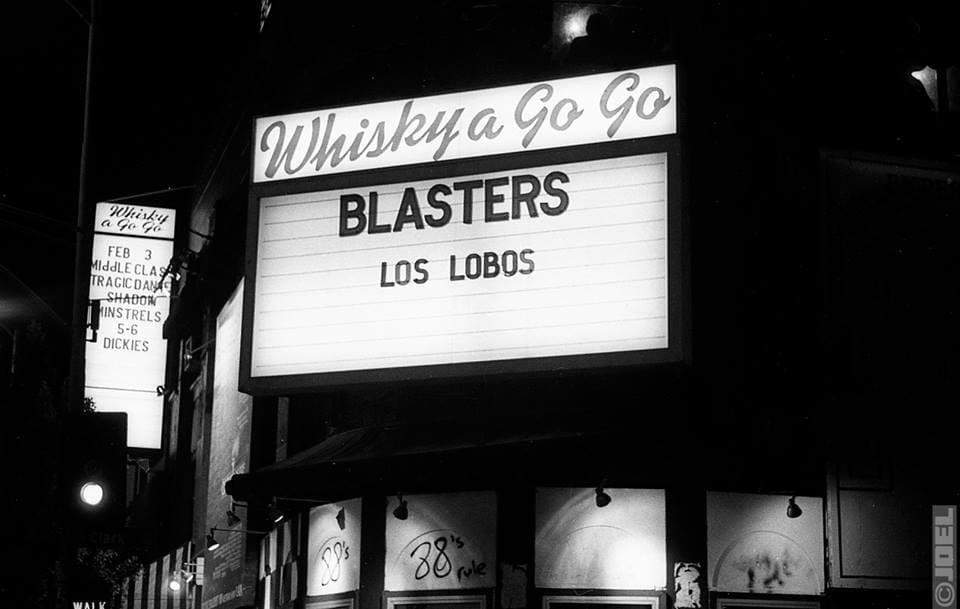
The Blasters famously shared stages with X, Black Flag, and The Gun Club. While those bands were deconstructing rock, you guys were arguably reconstructing it. Did you ever feel like an outsider in the punk scene?
In some respects, I occasionally felt like an outsider, but the spirit of a typical Blaster show was very much akin to the mood and sentiment of the punk scene of the era. Rockabilly originally had some elements of danger and rebellion too, so in that regard we fit in. That, and we could play just as fast and loud as our punk rock contemporaries.
You’ve played with a lot of different guitarists in The Blasters over the decades, but the chemistry of the ‘Rare Blasts’ era, with Dave Alvin and Gene Taylor, is foundational. How did Gene’s boogie-woogie left hand on the piano affect your bass parts? Did you find yourself playing “around” his thumb, or did you try to lock in to create one giant, singular low-end instrument?
Great question! When Gene Taylor first joined The Blasters, I immediately found myself tripping over his left hand. It became apparent that if I didn’t get out of his way, this would become a battle I was not going to win, so, when relevant, I’d remap my basslines to fit in. I would also listen and learn the basslines from the songs he was covering, like ‘High School Confidential,’ ‘Tag Along,’ etc., which proved to be strategic. Depending on the song, Gene was very good at choosing just the right piano part to play in the context of the Blasters.
Let’s talk about the song ‘Kathleen’ on the new release. It’s a Dave Alvin original that feels like a bridge between The Blasters and his later solo work. What do you remember about the birth of that song in the studio? Was there a sense even then that the ‘American Music’ story was starting to splinter into different creative directions?
We brought ‘Kathleen’ into the studio more or less complete and ready to record.
My take on ‘Kathleen’ is that it’s a working-class love song along the lines of ‘One Red Rose’ and ‘Bus Station,’ and about the futility of two people, in love (or not), trying to keep it together.
Originally, the recording was to fade out at about the 3:30 mark, but Gene and Bill kept playing, and eventually the whole band picked up and rejoined the fray, creating what I feel is one of the best endings in Rock ‘n’ Roll!
The “Slash” years are often characterized by a “no-frills” production style, yet the outtakes show a lot of experimentation. Are there any tracks on ‘Rare Blasts’ where you listen back and think, “I can’t believe we didn’t put that on the original album?” Which song do you feel best represents the “lost” soul of the band during that 1985 peak?
It’s hard to say, but ‘Cry for Me’ and ‘Kathleen’ both come to mind. ‘Cry for Me’ for its link to the essence of how and what we played in our formative years. This song originally predated our Rollin’ Rock years and is a real barn burner.
‘Kathleen’ is representative of the intensity the band had when at its peak, and it doesn’t get nearly enough credit. I never understood why it wasn’t originally released!
You grew up in Downey, California, which is essentially the birthplace of The Blasters’ sound. How much of the “Downey sound,” that mix of R&B, rockabilly, and country, was just in the water? Do you think the band could have existed if you hadn’t all grown up in that specific industrial, multicultural pocket of L.A. County?
Yes, I guess it was probably in the water, but also this was an era of eclectic influences that surrounded us in our formative years. These multicultural influences were very much real and a part of growing up in Downey. SoCal was booming in the ’50s and attracted a diverse cross-section of Americana, mirrored in the playlists of AM radio from that era.
Many bassists in the roots-rock genre stick to a very conservative “1 and 5” pattern. However, your playing often has a melodic movement that suggests a deep love for jazz and jump blues. Who were the specific players who influenced you during the recording of the self-titled ‘The Blasters’ album in 1981?
Some of my favorite bass players are Keith Ferguson (The Fabulous Thunderbirds), Jack Myers (Chess Records), and Bill Black (Elvis Presley), along with countless others anonymously playing in the background on some of my favorite old recordings.
To this day, when playing live shows, I’ll sometimes ask myself, “What would Keith Ferguson play?”
P.S. I love a good old “1 and 5” pattern!
On those legendary tours of Europe and the UK in the early ’80s, how did you maintain that incredibly tight “big beat” when you probably couldn’t hear anything but Bill’s snare and the screaming fans? Did you rely on visual cues, or was it purely a matter of muscle memory?
It was impossible to go astray when standing next to Bill; he was the pulse of the Blasters. Between Dave and Bill there was never any doubt as to where the beat was or the song was going!
99% of what we played had consistent arrangements, so yes, muscle memory became an important ally.
The European tours were a lot like those in the US, and the stage sounds were on par. Remember, we grew up playing in bars in an era without “stage monitors,” so we had that as an advantage. Even if the sound, in the EU or US, was subpar, we still knew how to listen to each other and make the best of it.
‘Rare Blasts’ includes ‘Lone Wolf,’ a track that has a certain swampy quality. It feels darker than the upbeat ‘Marie Marie’ era. Was there a conscious effort toward the mid-’80s to explore the “noir” side of American music, perhaps influenced by the films or books you guys were consuming at the time?
There’s an element of hope in ‘Lonely Wolf’ that is also common in other songs of ours from the ‘Marie Marie’ era, but that song does seem a little more haunting and dark compared to the characters portrayed in your typical Blaster song, i.e., “down and out and down to his last cigarette…”
David was reading a lot of Raymond Chandler, which likely influenced his songwriting.
With the release of the ‘An American Music Story’ box set and now the standalone ‘Rare Blasts,’ the full arc of the original lineup is finally documented. When you look at the inner sleeve photos of the band from 1980, young, hungry, and dressed in thrift-store gabardine, what is the main thing you want people to understand about the “mission” of The Blasters that the history books usually get wrong?
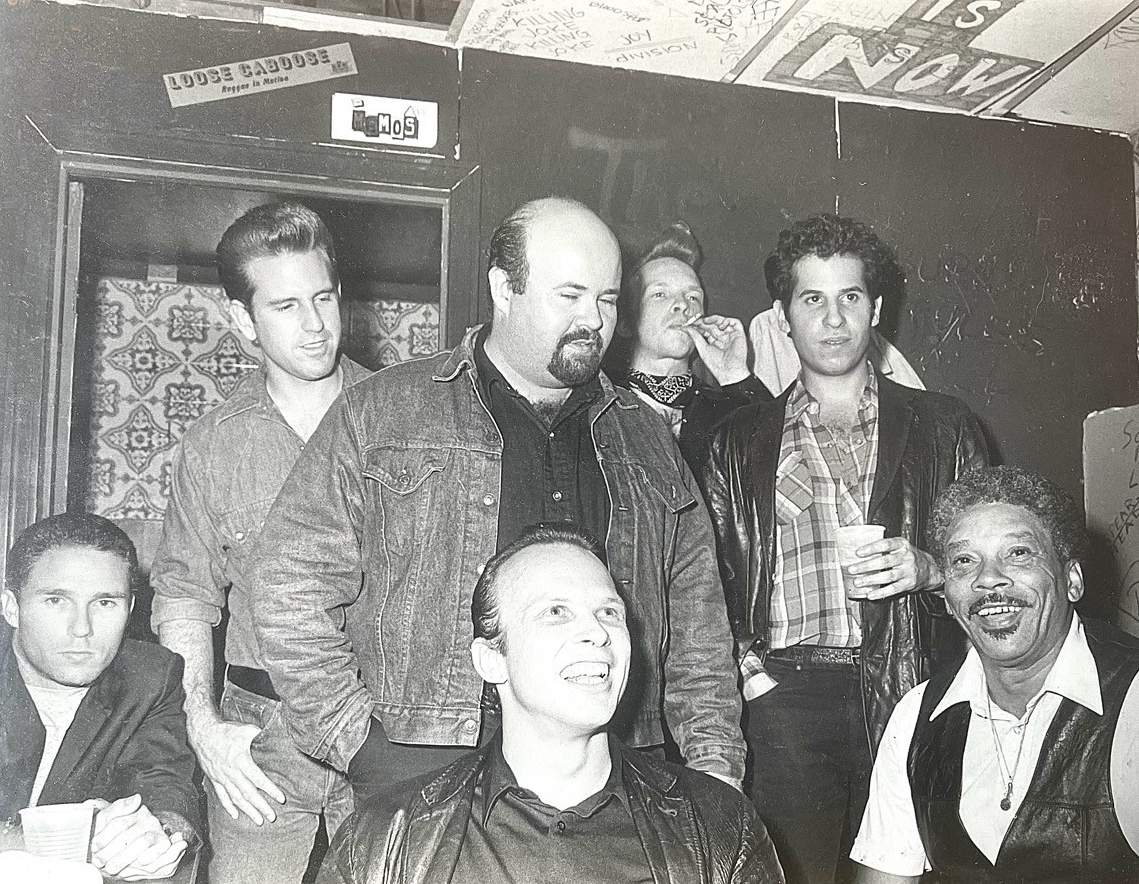
We weren’t nostalgists playing “oldies” from some bygone era, but rather, we played and recreated the music that we loved. The Blasters started as a hobby in Bill Bateman’s living room, and it was only ever intended for our own enjoyment and entertainment. And, yes, when looking back at old concert photos from those early concerts, the memories flood back with thoughts of the joy and unbridled fun that we and our fans both shared… The Blasters were a celebration!
What else currently occupies your life?
Since The Blasters stopped performing in 2022, I stay pretty close to home these days.
Klemen Breznikar
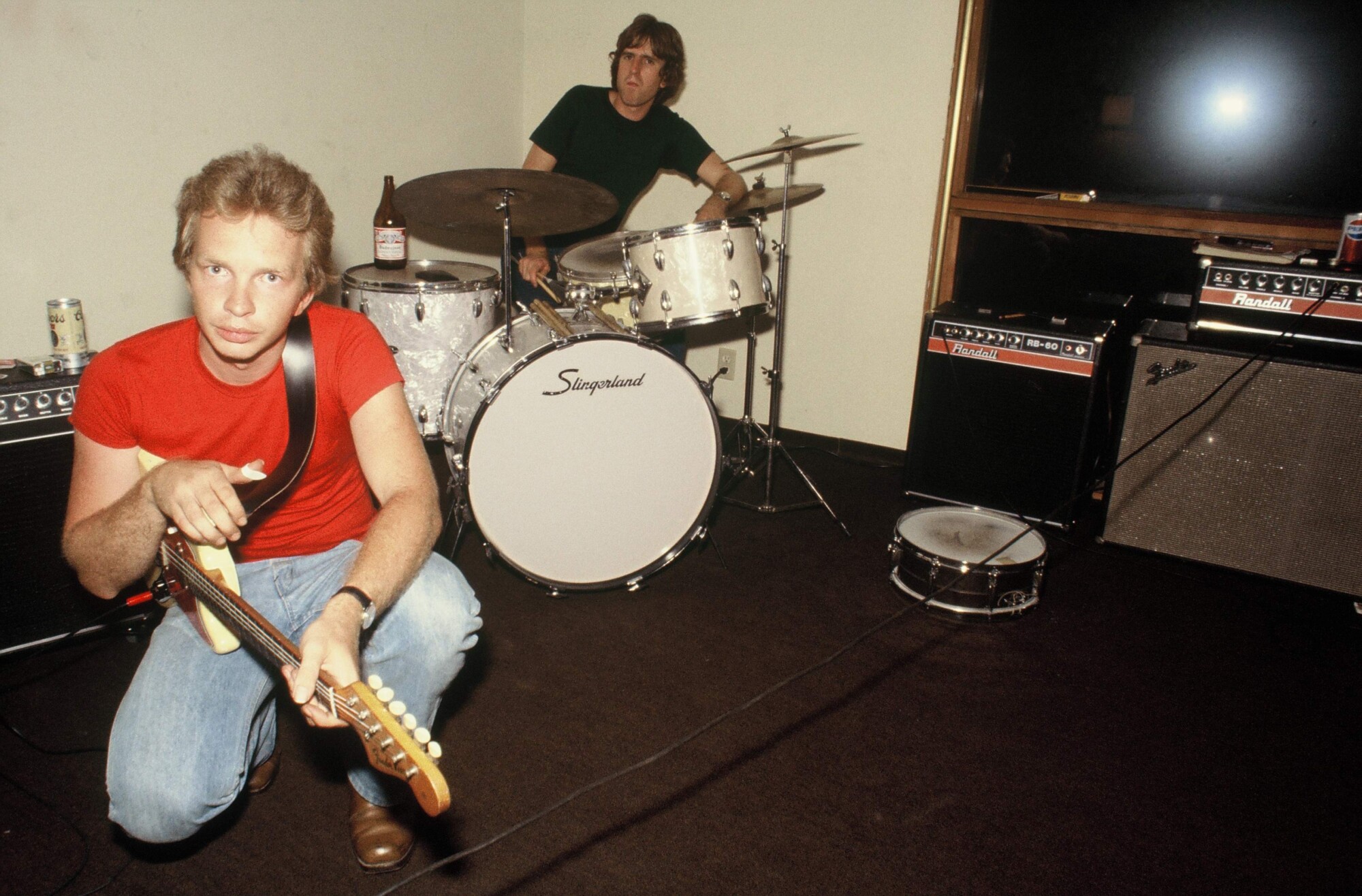
Headline photo: Dave Alvin and John Bazz (Credit: John Bazz archive)
Liberation Hall Official Website / Facebook / Instagram / Bandcamp