
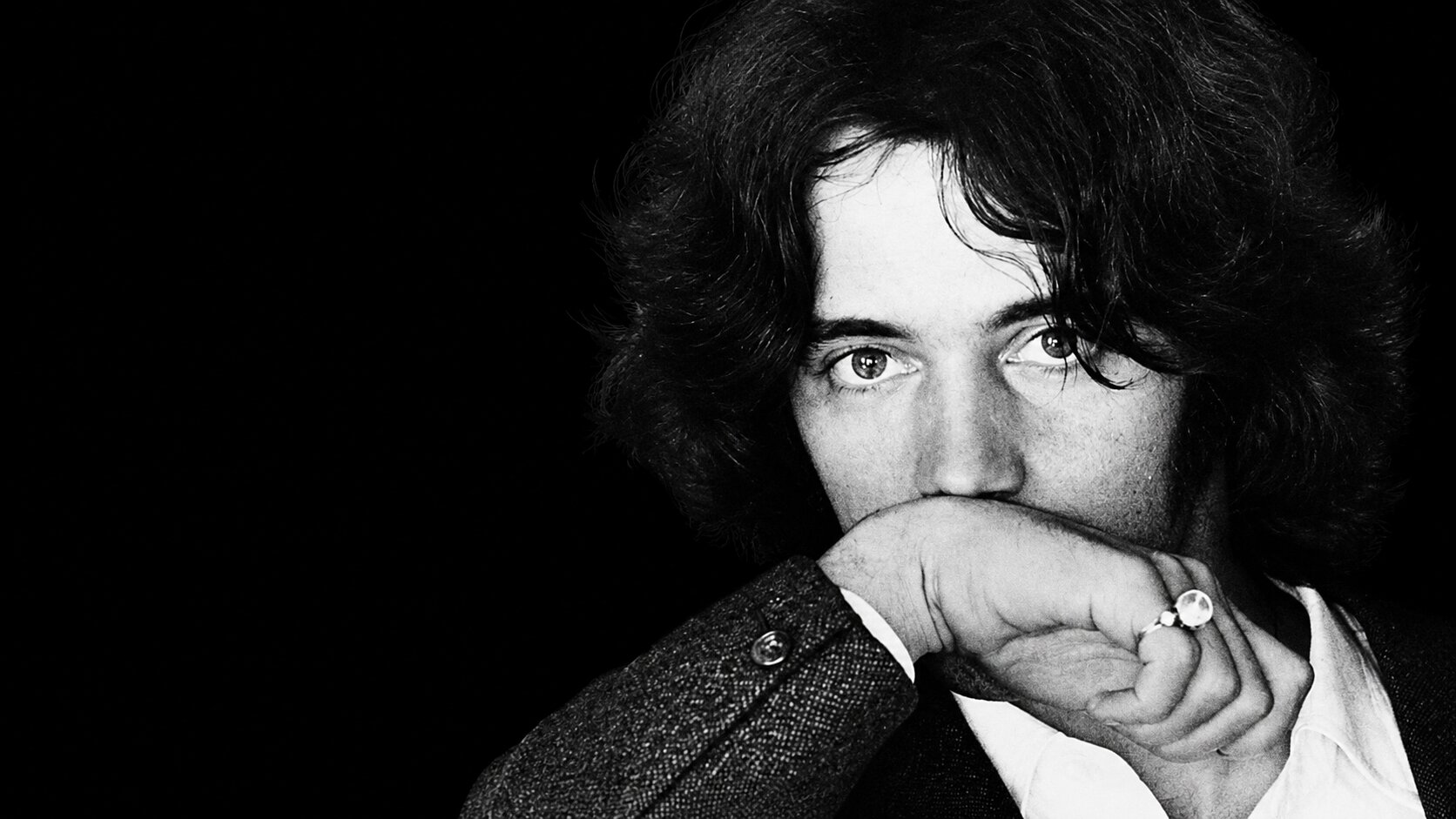

Hugh Featherstone Interview: “The Truth Must Ring Through”
Hugh Featherstone has been writing and recording songs for nearly 50 years, from his first album, ‘Empty Houses’, in 1977 to ‘the ribs of memory’, a 44-song acoustic archive drawn from work written between 1969 and 2010.
In this interview, the British-born, Belgium-based singer-songwriter talks about his early folk-rock records, his years recording in Germany and Belgium, and the old songs he is now bringing back into view.
Featherstone grew up in Epsom, England, in a musical family. He trained as a violinist and sang as a cathedral chorister in Wales, but as a teenager he was drawn to the Beatles, Bob Dylan, Leonard Cohen, Cat Stevens and the Incredible String Band. At 17, while living in Athens, he borrowed a guitar, began writing songs and busked in tavernas.
After returning to Britain, he formed a band and recorded demos with help from his brother Graham, who later became known for his work with Soundcraft mixing consoles. Featherstone released ‘Empty Houses’ in 1977, followed by ‘Largo’ in 1979 and ‘Announcer’ in 1981. His music has moved between folk, acoustic pop and rock, with an emphasis on lyrics and storytelling.
He has lived in Belgium since the 1980s and has continued to record solo and with other musicians. Most of the recordings on ‘the ribs of memory’ were made with Frank-Stefan Kimmel in Göttingen during informal weekend sessions between 2005 and 2010. Usually recorded with just voice and guitar, many were first takes.
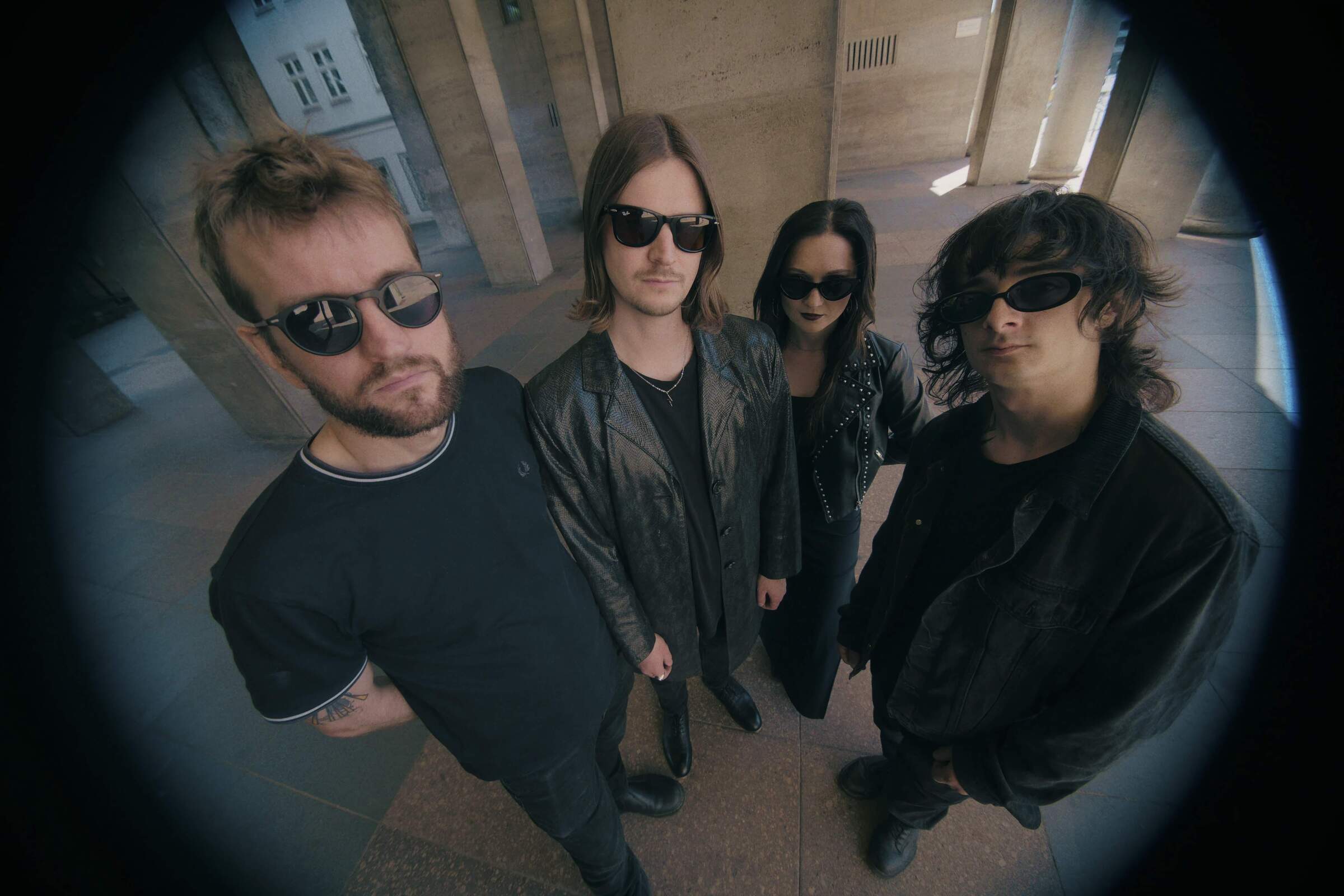
Featherstone is also working with the FeatherTones on ‘Suburban Icons’, a project that revisits songs from different points in his career. Both projects return to the same basic idea: that a song should work clearly and directly, before production adds anything else.

“A well-crafted first line is a vector for dreams.”
Your earliest material goes back to 1969, when folk music was changing in a lot of ways. What was happening around you then, and how did music first become important in your life?
Hugh Featherstone: Easy answer: music was always my life. A musical family (classical). There was often an orchestral player, a cellist, harpist or symphony percussionist sleeping on our couch because he/she couldn’t find a hotel room cheap enough nearby. We lived in Epsom, not far from Guildford and Dorking, two cultural hubs in the region made famous by Dame Edith Sitwell, Sir Ralph Vaughan Williams and John Carrol-Case. The Leith Hill Festival was a regular feature in which my parents took part as passionate amateur singers. Choirs and choral societies flourished in the post-war years. My elder brother Graham, who would later earn international renown as the founder/guru of the “British Sound” in stage and studio mixing consoles (see Soundcraft), was already an excellent pianist and church organist who set the bar high for me when I started learning the violin. That instrument and my angelic voice (yeah, right!) set me on a trajectory to cathedral chorister (Llandaff, in Wales, where they really know how to sing) and later the European Youth Orchestra in Vienna for a memorable season of English Music. At school (despite all my classical training), the Beatles, the Stones and the Who knocked my socks off! Likewise Cream, Zepp, Little Feat and Quicksilver Messenger Service. I would sneak into Banbury to catch Killing Floor at the Blues Cellar or folk acts like Ralph McTell. My love for a quiet, well-written song resonated with Donovan (whom I was fortunate to meet years later in the Greek islands), as well as Cat Stevens, Leonard Cohen, the Kinks (great lyricists as well as stone-good rockers) and, of course, above all, beneath all and all around all … Dylan, the almighty Bob.
Aged 17 and living in Athens, I borrowed a guitar (I’d taught myself to play a little at school) and immediately began writing songs to earn some money. The music just burst out of me. I wrote several songs in my first week and was surprised to earn enough in my first few days busking in tavernas to rent an old courtyard house in Anaphiotika. Leonard Cohen was a previous occupant, the lady told me. Upon returning to the UK a year later, my brother was impressed enough with my songs to help me find musicians and a roadie. We built a band and played a few college gigs (Richmond Poly, Guildford Tech, Kingston Poly, Epsom Art College, Chelsea College of Fashion, Happy Valley Festival). Graham also persuaded me to make a demo (he provided the Nagra, the mics and the console) and shop it around the record companies. I came to the attention of Island, who were keen to sign me, but only if Paul Samwell-Smith (ex-Yardbird and successful producer of Cat Stevens) would produce me. Samwell-Smith had just moved to NYC and had no intention of coming home. So, much to my great disappointment, Island declined to take the risk. They said that, without the right producer, it would be a repeat of Nick Drake, on whom they’d lost a lot of money. But to make up for breaking their gentleman’s agreement (we hadn’t yet got to the contract), they agreed to let me have two weeks of studio time at their big set-up in Hammersmith. Some of those tracks turned up on ‘Empty Houses’.
In those early years, what would we have found in your room or rehearsal space? What instruments, records, or notebooks were important to you at the time?
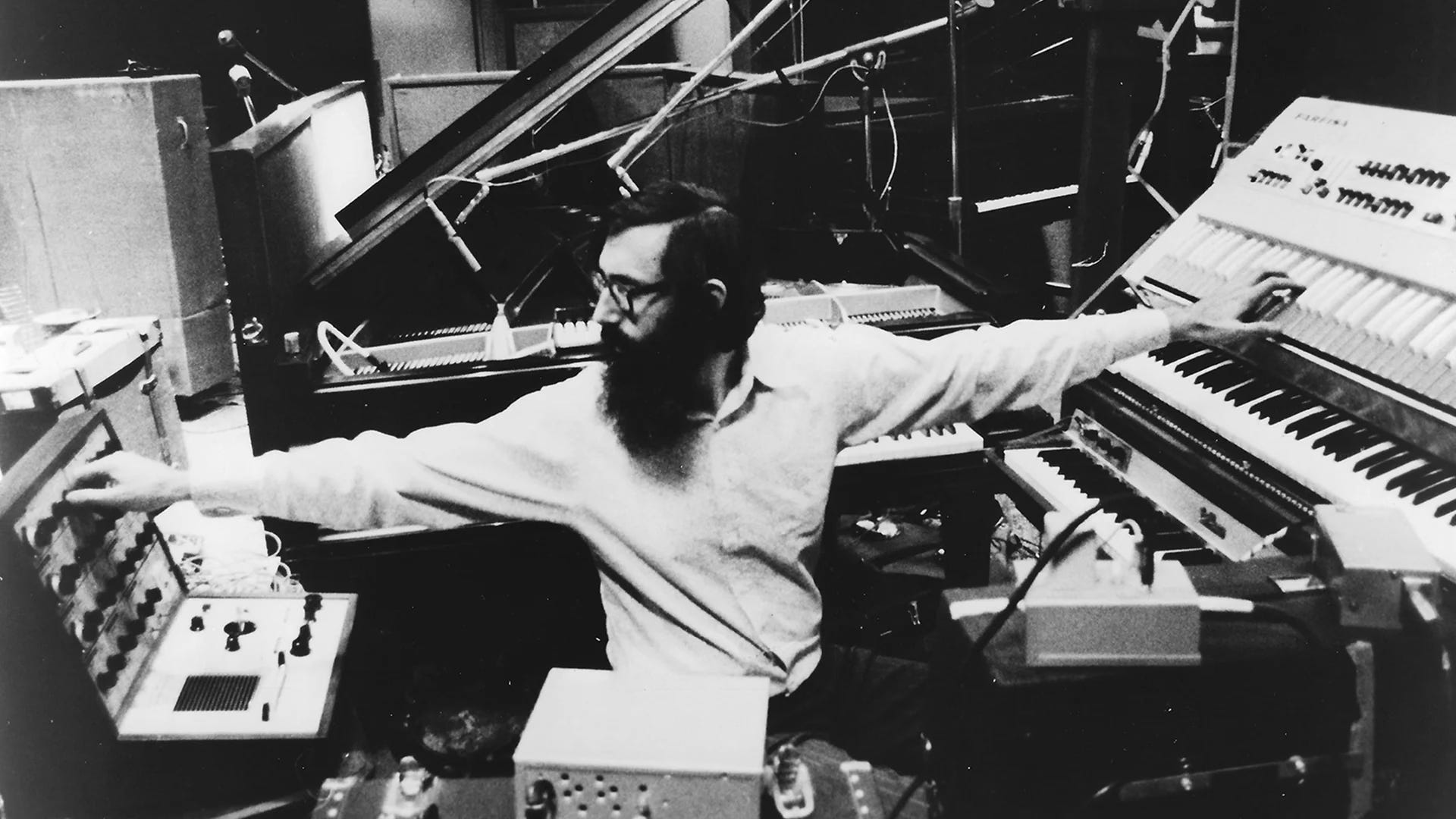
We were super lucky for a few months to have the use of a rehearsal room at the Fender Sound House in Tottenham Court Road. Mott the Hoople and Bowie guitarist Mick Ronson’s band were on the same floor. There were a Fender Rhodes piano and a Hammond B3 organ in the room. My brother was in keyboard heaven. He had just built his first synthesizer with one of the guys who founded Prophet. We used one of Graham’s early mixer designs built for Kelsey Morris. Graham’s own band, Rinky Dink & the Crystal Set, was an on-and-off concern too at that time. Their first album was getting a lot of college radio play. We had a guy called Big Roger roadie for us at a couple of gigs, which was a big help with the B3 and the Rhodes. Roger’s claim to fame was having spent an entire night up to his knees in mud cleaning Ringo’s swimming pool. Ringo had just bought a house in London, and it had a pool full of filth, but he was too “scouse” to pay for a cleaning team, so he called Roger, who had roadied for them back in the day. At that time, I listened to a lot of Van Morrison, Duncan Brown and Neil Young, but also Grateful Dead, Zappa, Captain Beefheart and lots of Sibelius. Early Led Zepp were also still a favourite, because Jimmy was a local lad who had been to school with my brother. A decade later, they met again on stage. Graham was doing Zepp’s sound with all Soundcraft stuff. “Don’t I know you from somewhere?”
However, I was also listening to and loving the Incredible String Band. Still do. My girlfriend, Sanchi, introduced me to their music, as well as Richard & Linda Thompson, Fairport Convention, Pentangle, etc. This was how my music turned very early into this mix of psychedelic folk/rock with classic sensibilities.
You had some connection to the folk scene in Darmstadt, where people like Eckehard Hoffmann helped organize events. What was that scene like to be part of in everyday life?
I hardly spoke a word of German at the time, so I can’t say that I was any use as an organizer or anything other than a small but definitely valued cog in a larger movement. I wish I could remember more names and dates, but sadly I can’t be of much use to you there. The Goldene Krone was the place where it all happened. There was a disco, a live rock’n’blues bar, which was more where my real interest lay and which hooked me up with Dono and Chris Jones, and a big room upstairs with its own bar where the folk club held weekly sessions. A couple of regular acts would get the ball rolling and then they’d bring on the evening’s guest. I was new in town and lucky to have frequent special guest status. It was there that Michael Stühr noticed me and offered to make my record. I said it was pretty much finished already, so that would be a very good investment for him. From that first album, I re-recorded ‘Night Train’ and ‘Lights Along the Highway’ for the ‘Suburban Icons’ project. I’m very happy with the results.
Kurt Eggmann engineered your first three albums, and his studio developed from a very basic setup into something more professional. How did those changes affect the way you recorded and the way you thought about sound?
Kurt engineered ‘Largo’ and ‘Announcer’. ‘Empty Houses’ was entirely London and Epsom. For David John’s ‘My Favourite Planet’ website, I wrote the following:
“‘Largo’ was my second album with Michael Stühr’s ‘ms edition’, the world’s smallest record company. The press release referred to me as ‘musikalische Einzelkämpfer’, which sounds rather quixotic, but certainly suits the way I was then.
The songs were recorded at a little two-track shoe-box studio belonging to Kurt Eggmann. The sound is typical of the period: seventies folky, lots of ‘atmosphere’ and layers of 12-string. ‘Peace on Earth’, ‘Saints’, ‘Streetcar Magic’, ‘Sunset’ and ‘Silver City’ are still among my favourite songs from that time. The last two are still in my regular programme.
My wife Martine did the cover shot and the inner sleeve notes. Don Stevenson did the graphic layout and I made the photo collage for the liner.”
David John wrote about ‘Largo’:
“Of special note on this album was the stark, spartan piano-led sound of ‘Sunset’, which rings sweet’n’sour in my head to this very day. Comparisons are odious, but I still can’t help making an immediate association with the Beatles’ ‘Long and Winding Road’, not only for the effect of the piano but also for the intense emotional charge accumulating from the arrangement of music, vocal and lyrics.
Actually, the comparison is quite useful here in that it points to some of Hugh’s artistic strengths: whereas ‘The Long and Winding Road’, one of the great masterpieces of modern popular music, is lyrically and poetically quite vague (what is this road, and to whose door should it lead? etc.), Hugh’s lyrics are much more complex, concrete, complete. He still leaves room for the listener’s imagination to fill in the narrative and emotional gaps, and thus carries on the tradition of storyteller and bard.
In fact, most of his songs tell a story, sometimes quite domestic and close-to-home, sometimes epic. The poetry, apart from being built on a superstructure of rich reference and allusion (which is what we expect from top-notch poetry), is very visual. For me, many of the songs could very well be film scripts. Just look at how many times he mentions light.”
From ‘Largo’, I took ‘Streetcar Magic’ to rework for ‘Suburban Icons I’, and the result is something truly magical: the perfect blend of the song’s natural naivete with sophisticated production values that both enhance and respect the authenticity of the original. Interesting side note: Nosie Katzman, who wrote a number of 1990s dancefloor hits for artists such as Scooter and Culture Beat (remember ‘Mr Vain’?), actually had his first studio recording experience on ‘Largo’, singing the exit harmonies on ‘Sunset’ together with his songwriting partner and mutual friend Robbie Schmidt.
From working with Kurt, I learned a lot of tradecraft. But it was tradecraft of the analogue tape era. How to reverse wind for storage. How to prepare a spliced edit. How to butt-edit. How to log your takes. How to set up a plate echo system for room simulation … No longer very useful now. Working since then with Manfred Riese, Andreas Henz, Tom Engels and Frank-Stefan Kimmel has thus been a steep learning curve for me as co-producer.
Before you made those albums, did you already know what direction you wanted to take, or did you find your voice through recording and performing?
I think that’s a fair assessment. Learning by doing. The studio first scares you by telling you what you really sound like (remember, David Byrne said passport photos tell the truth about us?), then seduces you by teaching you how you could, would, might, should sound if you take the time and expense … Each song explores new ground, new techniques. This was especially true of my third and final vinyl. Neue Deutsche Welle had firmly arrived, and Kurt was working with bands like the Rodgaus and Flatsch by the time I came in to record ‘Announcer’. In the meantime, his studio had grown from a two-track shoe box to a eight-track, high-tech cavern in Bieber/Offenbach. We stretched the technical possibilities, but also the quality margins, so much that the album won a five-star review from Audio magazine. It was the first album in Europe to be cut with Neumann’s new dB-compensating lathe system, so it sounded as good as Steely Dan’s ‘Aja’, which had recently won a Grammy.
People now describe your music as psych folk, but those labels came later. At the time, how did you think about the music you were making?
I was keen to avoid the German “Liedermacher” label. So, I tried to cultivate the Folk/Rock, Acoustic Pop and Songwriter labels. Just where the “psychedelic” thing came from, I’m not sure. OK, I experimented a lot in my early years, but I never wrote any trippy music or Lucy-in-the-Sky kind of lyrics. My songs are mostly either idealistic, romantic, freighted with home counties irony or a mixture of all three. Songs like ‘Kerosene & Caffeine’, ‘The Day You Left’, ‘Boulevard of Dreams’, ‘Shooting Stars’, ‘Out of This World’, ‘No Regrets’, ‘Conway Bridge’, ‘The Hiring Man’, ‘Getting Going, Getting Gone’, ‘Thursday at Eleven’, ‘Brighton Girls’ or ‘Take the Buick’ are well anchored in reality.
However, I do admit that ‘Garden of Eden’, ‘Streetcar Magic’, ‘Sunset’, ‘Queen of Broken Things’, ‘Boat Named After You’, ‘Trees of Knowledge’, ‘Edge of Town’, ‘Summer’s Lease’, ‘Peace on Earth’, ‘When the Kennedys Ride Again’, ‘A Corner of The Sky’, ‘Calling Home’, ‘Love is a Stranger Here’, ‘Peachy Side of The Moon’, ‘Girl in the Second Row’, ‘Out of This World’, ‘There’s a Light’, ‘Slo-Mo’, ‘Western Shore’, ‘Candy Mountain’, ‘The Foreigner Within’ or ‘Kingdom of The Blind’ might give a very different impression. My most “psychedelic” thematically is probably the entire ‘Friendly Skies’ (2008) album. Not from the sound or style. But it has an otherworldly light that shines through, and most of the tracks are more beyond this life than firmly rooted within it.
How did you usually write songs at that time? Did they begin with words, a guitar pattern, or something less clearly defined?
I typically begin with a guitar riff or chord sequence over which I sing a syllabic nonsense lyric, which at some point throws up a phrase that makes perfect sense, around which I begin to build. So, it’s a bit like monkeys writing Shakespeare. Just give them enough time and paper and they’ll get it right. Then I isolate verses to work on, a chorus to polish, a bridge that makes structural sense … The entire process from start to finish takes about three hours, including a small Dictaphone recording. However, there are some songs that I carry around with me for months like a foetus, waiting to be born. ‘Kingdom of The Blind’, ‘Take the Buick’ and ‘Summer’s Lease’ are good examples. However, a song like ‘When the Kennedys Ride Again’, which sounds like a masterpiece of musical/lyrical composition, actually arrived, all of a bundle like a FedEx parcel, within a few minutes!
When you look across your complete discography now, how do you see the path from ‘Empty Houses’ to ‘The Ribs of Memory’?
I sometimes get enquiries about my complete discography, including albums from other artists that I appear on or that feature my songs. Basically, there’s no one-stop shop where you can find this info, including sleeve notes, lyrics, etc., but www.featherstone.de (a Berlin-based fan site run by the travel journalist David John) does a pretty amazing job, with considerable detail, extra documentation and lyrics. As for the physical LPs and CDs, they are best obtained direct from me or from bandcamp.com while stocks last. Meanwhile, here are all officially catalogued entries:
Hugh Featherstone Blyth: ‘Empty Houses’ (LP), 1977
Hugh Featherstone Blyth: ‘Largo’ (LP), 1979
Hugh Featherstone Blyth: ‘Announcer’ (LP), 1981
Hugh Featherstone Blyth: ‘Late Night Hunger/Betrayal’ (45, clear blue vinyl), 1981
Hugh Featherstone Blyth: ‘Hugh Featherstone Blyth’ (LP cassette), 1983
Red Shift (HF band from ’86 to 2000): ‘West of Eden’ (CD), 1993
Featherstone: ‘Negotiations & Lovesongs’ (CD), 1995
Hugh Featherstone: ‘Me & Miss Wray’ (2xCD), 1999
Hugh Featherstone: ‘News from Nowhere’ (CD), 2000
Hugh Featherstone: ‘Landing’ (CD), 2001
Hugh Featherstone: ‘An American Dream’ (3-track CD), 2001
Hugh Featherstone & a Panel of Experts: ‘Live at the Chapel’ (CD), 2005
Slow Night: ‘Lately’ (CD), 2006
Hugh Featherstone: ‘Friendly Skies’ (CD), 2008
Hugh Featherstone & a Panel of Experts: ‘Nine on the Subprime’ (CD), 2010
Hugh Featherstone & a Panel of Experts: ‘Kerosene & Caffeine’ (2-track CD), 2010
Slow Night: ‘Winter’s Fire’ (CD), 2012
LoKal Heroes: ‘To be continued …’ (CD), 2012
LoKal Heroes: ‘LoKal Heroes & Friends Live’ (CD), 2014
LoKal Heroes: ‘Celtic & Scandic’ (CD), 2015
Slow Night: ‘Between the times’ (CD), 2015
Hugh Featherstone & The FeatherTones: ‘Suburban Icons I’ (9-track album, streaming audio), 2026
Hugh Featherstone & The FeatherTones: ‘Suburban Icons II’ (9-track album, streaming audio), 2026
Hugh Featherstone & The FeatherTones: ‘Suburban Icons III’ (9-track album, streaming audio), 2026
Hugh Featherstone: ‘the ribs of memory [cyan]’ (solo-acoustic archive, recorded 2005 to 2010), 2026
Hugh Featherstone: ‘the ribs of memory [magenta]’ (solo-acoustic archive, recorded 2005 to 2010), 2026
Hugh Featherstone: ‘the ribs of memory [yellow]’ (solo-acoustic archive, recorded 2005 to 2010), 2026
Hugh Featherstone: ‘the ribs of memory [key]’ (solo-acoustic archive, recorded 2005 to 2010), 2026
Meanwhile, under the category “Bootleg”: several rare, “unofficial” or pirated recordings of my songs, mostly from concerts, have been in circulation over the years. File under “unobtainium”, as you’ll be very lucky to stumble upon any of these in the wild. They include:
The ‘Pierre le Suit Tape’: a concert given by my band Pierre le Suit at Reading University in the early 1970s.
The ‘Up Club Tape’: recorded live at the Up Club, Bangor, North Wales, in 1975.
The ‘Best Foot Tape’: a recording of the 1975 concert by my band Best Foot at the Theatre Gwynedd, Bangor, plus some unreleased studio stuff.
The ‘Anglesey Tape’: recorded live at the Beaumont Arms, Anglesey, Wales, in 1979.
The ‘Yellow’ Tape: a demo of five songs recorded in 1985 at Studio Gam in Waismes, Belgium, produced by Gerd Fellner and fattened up with a couple of pirated tracks. (*)
‘Gam & Jam’: a very limited 1989 CD of the same material, but with some extra premixed songs co-written by Hugh and Gerd in 1982. (*)
The ‘Trans/At’ Demo: about 50 copies of this very rare CD recording of five tracks with my band Trans/At, including two unpublished songs (‘Home to stay’ and ‘Tender touch’), are out there somewhere. (*)
‘The Gabrovo Session’: a handful of songs, two otherwise unavailable, recorded at trance-house producer Milen Vassilev’s studio in Gabrovo, Bulgaria, in 1995; it features the first recording of ‘Not missing’, a highly atmospheric, chill-groove version that deserves to be heard, and maybe, one day, will. (*)
‘Walls to Fall’ CD: a live recording from the Allianz Forum Brandenburg Gate 2014 event of that name in Berlin, with seven tracks from HF & the FeatherTones, including the ‘Walls to Fall’ theme song. (*)
‘The Favourite Planet samples’: just prior to the release of ‘9 on the Subprime’, I sent David John a handful of unfinished tracks from the album. These are premixes, lacking the input of Walter Kraushaar, who was the last person to record for those sessions. But they are nonetheless diamonds in the rough and well worth a listen … for which you should visit www.featherstone.de, a very granular, dedicated section of David’s brilliant and super-informative ‘Favourite Planet’ travel site.
‘Diverse Gems’: various friends have sent me their own kitchen-table recordings over the years. These frequently include songs from way back that I no longer play or even know! They should feel free to copy and distribute as they wish, but please credit my authorship. After all, there are lots of recordings and transfers on YouTube and other sites over which I also have little to no control, so this is probably a good thing 😉
(*) Excerpts from these recordings will be included in this year’s big upload, so nothing of quality will be neglected.
PS: If you’re confused that my name appears in three variants, as Hugh Featherstone Blyth, Hugh Featherstone or just Featherstone in this discography … each represents not so much a phase I went through as my gradual realisation that the French and the Germans could not or would not pronounce my last name correctly, even if you paid them to. The fact that they couldn’t pronounce my first or second names either was an additional problem. At some point, I just thought, “Sod it! They can learn”, but Hugh Featherstone is “official”, being recognized by the GEMA, Google, my bank and all with whom I deal professionally.
There is a long gap between your early recordings and the songs collected later on ‘The Ribs of Memory’. Over that time, what stayed the same in your approach, and what changed naturally along the way?
Actually, as you can see from the discography timeline, I consistently released every two years up until 1983 and the end of my vinyl period. In 1984, we bought a big old house in Belgium (where we still live). The house required some renovation. My wife also had to start working to earn enough for us, as I could no longer run a guitar school like the one I had in Germany with thirty pupils or so, since there is afternoon school in Belgium, so schoolkids have far less free time. This was a big change. I needed to be there at home for our children while keeping a few translation jobs and guitar pupils “on the side”. Fortunately, my translation agency quickly gained an academic reputation, so I soon had a reasonable, if small, income.
Once I could afford the time to look around for musicians, a decade had passed! But I was not inactive during those ten years; I played lots of solo gigs in the Euregio and farther afield, and even started two folk bands, Black is the Colour and Spirit Level (with harpist Rheidun Schlesinger). Also, my ‘Yellow Tape’ demo project with Darmstädter wunderkind und multitalent Gerd Fellner used up quite a lot of my energy in the mid-1980s.
However, the “modern period” really began in 1988, when I met up with a wonderfully scurrilous and fun Aachen polit-rock band, Panzerknacker, with an excellent regional reputation but a big problem on the horizon. They were about to lose their singer and main writer, Ludwig Pongratz, a philosophy professor in AC, who had just been offered tenure and head of department in, of all places, … Darmstadt! So, they were about to become a band needing a singer and songwriter, and I was a singer/songwriter looking for a band. Love at first sight. They liked my music; I liked them. This was how one of the musical pillars of Die Linke Szene in NRW (Brings were once their vorgruppe at the Phillipshalle!) became Red Shift (later Hugh Featherstone’s Trans/At), an English-language transatlantic and West Coast rock band. Together, we made two tours in the DDR in ’89 and ’90 and cut the albums ‘West of Eden’ and my millennial CD ‘News from Nowhere’. It was while I was doing the mastering for ‘West of Eden’ at Creative Centre, Düsseldorf, in 1992 that the director of the studio, Manfred Riese, hearing my songs, immediately offered me an album deal and a publishing contract with Shuttle Music.
The money came at the perfect time, financing the set-up of rehearsal rooms, equipping the band and financing my next two projects: the solo double album ‘me & miss wray’ and the aforementioned ‘News from Nowhere’. It was ‘me & miss wray’ that attracted the attention of Luc Standaert of Universal Music, who was sent it by a radio DJ. Universal bought my rights from Shuttle Media for a BIG sum and paid for my next CD, ‘Landing’, a selection of re-recordings of half the songs from ‘miss wray’, produced by Frank-Stefan Kimmel, a former guitar pupil turned audio professional, with whom I would work again to great effect on ‘Friendly Skies’ and, finally, the four ‘Ribs of Memory’ CDs.
So, you see, the decade was not lost; it was fully lived. And once restarted in 1993, I didn’t stop recording until 2015. That makes 19 completed CD projects in just 22 years! It was only the advent of Donald Trump that caused me to put all my projects on hold (‘Icons’ and ‘Ribs’ especially). I didn’t know what kind of world I was writing for, so I simply stopped!
‘The Ribs of Memory: An Acoustic Archive’ is built around first takes and very little processing. You were treating the songs almost as documents, rather than as conventional productions. What led you to record them in that way?
I like the way you phrase that: “treating the songs as documents rather than productions” … Two things led to that approach. One was accepting reality. Although Frank-Stefan hosts a dazzling array of high-end audio kit, which he masters with great finesse and sensitivity, all of it sits in a spacious attic apartment in an old university town centre with sound modelling (fractal panels) and bass traps, but nothing really by way of massive sound insulation. Mostly it’s quiet outside: bicycles and small delivery vans. But you can’t bet money on that. The sudden intrusion of a police siren or the weekly round of the garbage truck, and your perfect take is compromised. The other reason was the nature of my visits: sporadic, sometimes many months apart and punctuated by coffee and conversation. However, all along we realized we were making a legacy production: songs in their simplest form, just songwriter and guitar, a catalogue.
The sessions with Frank-Stefan Kimmel between 2005 and 2010 seem to be at the heart of this project. What were those weekends actually like? Did you have a clear plan for what you wanted to record, or were you mainly capturing what happened in the moment?
As there are no parking options anywhere nearby, I would usually bring one guitar. So, the guitar I came with would set the tone of the session. For example, the few twelve-string tracks were all recorded at the same session. Otherwise, you are right, we would capture whatever I had running through my mind, as one song led by association to the next. We would do short sessions at optimal times of day. We avoided listening to the takes unless we had genuine doubts. Better to go for a walk and assess the work later as a block. That method of working in short, concentrated sessions of three or four songs led to us quickly finding that our project would expand like oxygen to fill whatever space we provided: one, two, three CDs.
You’ve mentioned that most of the recordings were first takes, and that this became a kind of liberation.
Well, it changed from being an airtight box containing two potential perfectionists to being an airy attic containing a couple of guys who just figured we might as well throw stuff at the wall and see what sticks. I performed in a more relaxed manner, where small mistakes and lyric “updates” might occur randomly and still survive the cut.
Some of the songs were rediscovered later in forgotten sessions or on old hard drives, sometimes without much memory of recording them. What is it like to come across those pieces again, and how do you relate to them now?
That was the case with the (apparently) original version of ‘Girl in the Second Row’, one of the few non-FSK productions on ‘Ribs’. Neither Tom nor I had any recollection of having recorded it, nor in what context. And, as I mention in the sleeve notes, the Galapagos Effect had left us with a vestigial branch of the song I now play: slightly different chords, a slightly different chorus, as if heard on some other timeline. I also mention, in the sleeve notes to ‘Suburban Icons’, that ‘Brighton Girls’ was written about the same time as ‘Night Train’, yet the former seems like a new song to me, unboxing it after so many decades, which led me to knock out a fresh and lively version in a few minutes, whereas I was being far too respectful of the latter, simply on account of its venerable age (50 years?) and pedigree (the sacred first album). In the end, I left much of the decision-making to Tom, so that I could have someone to blame later if anybody said, “OMG! What have you done to ‘Night Train’?” I’ve also included (on the last disc of ‘Ribs’) another unknown and uncredited recording of ‘New Year’, one of the standout tracks on ‘News from Nowhere’. This version is steady and subcutaneous, a lovely, subtle undercurrent version of the song we released in 2001. I’m guessing it was recorded earlier, but I have no idea who engineered it, where or when. All I know is that I sound super relaxed.
On a practical level, you worked with a fairly specific set of instruments for this archive, including the Launhardt & Kobs guitar that appears on most tracks.
I had been treating it with too much respect. It never goes out live with me but stays at home like a pampered cat. It needed to travel second class by rail and see the world a bit. Plus, and most importantly, the sound is very “kammermusik”, very suited to this particular production, definitely not a Rampensau kind of guitar. You want to lean in when you play as well as when you listen. But don’t get the idea it’s not loud, because it certainly is, yet somehow polite. Like a Bentley with an expensive horn.
The songs span many years. When you listen to them now, do they feel like part of one continuous story, or like separate periods in your life placed next to each other?
I guess this is a ‘Ribs of Memory’ question. Yes, it feels very much like a continuous thread. I realise that, even while developing and polishing my craft, I have not actually developed myself much or changed that much as a person. More radical and less romantic with age, maybe, but otherwise … still believing that we all deserve better. Though now I think that some of us deserve the worst that could possibly happen twixt heaven and hell! The songs all work well alongside each other … and that was a bit of a surprise.
You’re currently working on a much larger project again with ‘Suburban Icons’, a triple album. After something as stripped-down as ‘The Ribs of Memory’, what direction are you taking with this new work?
Well, this production is interesting because I’m paying for it myself; no record deal or publishing advance. That ought to be a constraint but, strangely enough, much like the “first takes only” decision on ‘Ribs’, this also turns out to be liberating. It seems I am more ready to take risks with my own cash than with someone else’s. Does that make me a responsible grownup? Maybe. Tom and I set no limits in terms of studio firepower or hours … and it shows. Although the whole thing feels very immediate, organic and spontaneous, it also manages to sound technically cultivated and polished. Quite a flex.
The FeatherTones are a big part of this feeling, also going forward: not working with a drummer, but expanding the acoustic possibilities of percussion and generated charts, varying the role of solo instruments; we’ve become an interesting prospect, both in the studio and live.
Looking back across everything, from the early recordings through to now, what has remained at the core of your writing, regardless of arrangement or production?
Humanity! Our frailty, fragility, glorious idiocy, the bargains we make with ourselves, the trade-offs between fidelity and integrity, commitment and freedom, change and nostalgia, breadth of vision and the narrow cocoon we choose whenever we have the chance … oh, and love; in particular (as comes across clearly on ‘Icons’), the ennobling and eroding effects of time on our characters and relationships.
If we were to sit down and listen through records that connect directly to your work, what would you put on?
Bob Dylan: ‘Highway 61’, ‘Planet Waves’, ‘Blood on the Tracks’, ‘Blonde on blonde’*
Neil Young: ‘After the Goldrush’, ‘Harvest’, ‘On the Beach’*
Paul Simon: ‘There goes Rhymin Simon’, ‘Graceland’, ‘Hearts and Bones’
Jackson Browne: ‘Saturate before Using’, ‘Late for the Sky’*, ‘Running on Empty’, ‘I’m Alive’
Steely Dan: ‘Pretzel Logic’, ‘The Royal Scam’*, ‘Gaucho’
Van Morrison: ‘Street Choir’, ‘A Period of Transition’, ‘Hard Nose the Highway’
Cat Stevens: ‘Tea for the Tillerman’, ‘Catch Bull at Four’
Duncan Brown: ‘Journey’*
Sheryl Crowe: ‘Tuesday Night Music Club’
Sting: ‘Ten Summoner’s Tales’, ‘Mercury Falling’
Cream: ‘Disraeli Gears’*, ‘Goodbye’
Alanis Morissette: ‘Jagged Little Pill’
Talking Heads: ‘Remain in Light’*
Smashing Pumpkins: ‘The Machines of God’
Radiohead: ‘OK Computer’*, ‘The Bends’
Donovan: ‘From a Flower to a Garden’
Chris Rea: ‘New Light through Old Windows’, ‘Auberge’
The Sundays: ‘Static & Silence’*, ‘Reading Writing & Arithmetic’
U2: ‘The Joshua Tree’, ‘Achtung Baby’, ‘Zooropa’
Randy Newman: ‘Live from the Village East’*
Tom Waits: ‘Small Change’
The Incredible String Band: ‘The Hangman’s Beautiful Daughter’*, ‘Earthspan’
Any or all of these. I’ve put an asterisk next to the eleven (yes, I have a thing about odd numbers) that I would likely take with me if I were banished to another planet today. But if you ask me tomorrow …
And finally, when you hear those earliest songs now, what stands out first?
A bit of both. I realise that ‘Silver Flute’ and ‘Edge of Town’ are perfect. Most of ‘Announcer’ I would also leave untouched. Almost everything else sounds negotiable to me. Fluid. Which is good, as I’m thinking of reinterpreting a few more ancient tracks.
Last words are yours.
By 2027, I will have been releasing records for 50 years! There are 25 of them, 19 of which are exclusively my own material. I think that makes me quite prolific, but I have nothing to measure myself against. Despite a cornucopia of songs (there must be many hundreds; what’s available on media is just the tip of the iceberg), I’m economical in the studio, preferring to add something only if I can find a reason for doing so within the context of the material or project. I try to be honest, even when I’m making stuff up. The inherent “truth” must ring through. Lyrics are important. I won’t say a thing if it’s unnecessarily hurtful, over-dramatic, trite or redundant. I like nuance, finesse and suggestion, rather than painting by numbers. A well-crafted first line is a vector for dreams.
It’s my belief that a good song is like a good dog. It can stand on its own four legs (lyric, melody, harmony, rhythm) and walk alone. It will keep you company. It will faithfully put up with your bad moods. This is the kind I’ve always striven to write: direct, relatively uncomplicated and complete, even in the simplest attire. There is nothing sillier than a dressed-up dog.
Klemen Breznikar
All images have been digitally enhanced from the originals for publication. The headline image has also been edited for presentation.
Hugh Featherstone Website / Facebook / Bandcamp


Wow! such a privilege to be here, Klemen. Thanks for your time and attention and tasteful editing. I wish you (and not just for my own sake) many, many visitors and readers who like long-form stuff. It’s a dying skill in these spiralling times, taking time to enjoy a good read. I know this from experience. As the Dead said: “What a long, strange trip it’s been” …
You were a Dean’s Scholar with David Gillfilan once upon a time, glad to havw stumbled across your music profile. Obviously your time at Llanaff was well spent. Best wishes for the future.