
Between Nada Surf and Bambi Kino: An Interview with Ira Elliott
Most people still try to define Nada Surf by ‘Popular.’ Talk to the band’s drummer, Ira Elliott, though, and you realize how quickly he moves past it. He doesn’t disown the song from 1996’s ‘High/Low,’ but he’ll call it “kind of gimmicky” without much hesitation. And he’s not wrong. The real story of Nada Surf is what they did after the hit faded.
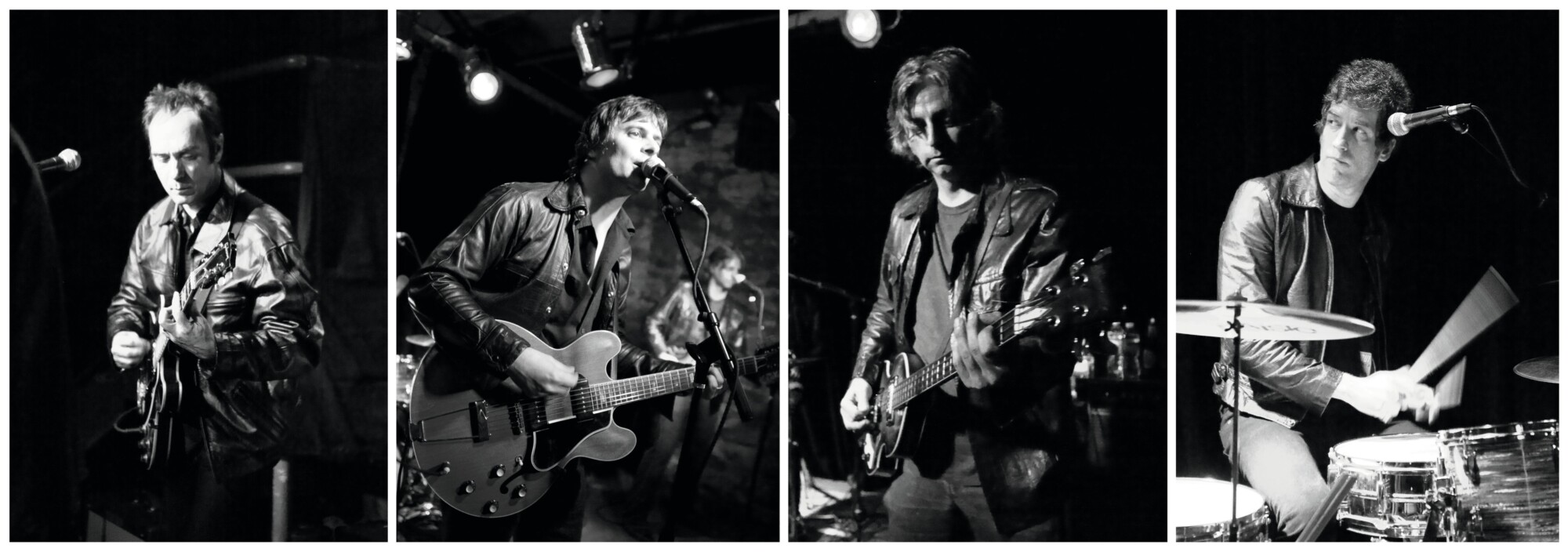
They came together in New York in the early ’90s, with Matthew Caws and Daniel Lorca building the core before Elliott stepped in behind the kit just ahead of their breakthrough. Timing did them no favors. Mid-’90s alternative rock had a taste for sarcasm and distance, and ‘Popular’ landed right in that pocket. It worked for a minute. The follow-up didn’t hit the same way, the label moved on, and they were suddenly out of step with everything around them. After that, they just kept going. Writing, recording, figuring it out. When ‘Let Go’ showed up in 2002, it felt like a band that had stopped performing the idea of itself. The songs were slower to reveal themselves; there’s a bit of plainness to them that takes a minute to register, but over time, that record turned into the one people held onto, the one that rewrote how the band was understood. Elliott is a big part of why that works, as his playing is about timing, about knowing exactly how much to give something and when to pull back. Outside the band, he follows a different impulse. Bambi Kino looks like a side project on paper, but it plays out more like an experiment. With Doug Gillard, Mark Rozzo, and Erik Paparazzi, he dug into the pre-fame sets The Beatles ran through in Hamburg. He’s said he approached it like a student, which makes sense until you see the band play. There’s nothing careful in it. Those early Beatles sets weren’t clean either. They were probably about getting through the night, night after night.
It’s the same instinct you hear in his session work. On ‘Play On: A Raspberries Tribute’ (Think Like A Key), where the goal could easily have been to dress the songs up, Elliott keeps his hands light. He said he didn’t “futz with it too much,” which sounds like an offhand comment until you think about how rare that is. He’s more interested in making sure nothing gets in the way. That might be the thread that runs through all of it. Knowing when to step in, and when not to. ‘Moon Mirror,’ the latest from Nada Surf, keeps faith with the long-standing axis of Matthew Caws, Daniel Lorca, and Ira Elliott, recorded with Ian Laughton at Rockfield Studios in Wales, and expanded by the presence of longtime collaborator Louie Lino. What emerges is a recalibration: a record that understands continuity as movement, where the concerns sharpen, the vantage shifts, and the band, knowingly, turns its gaze back on itself without settling for reflection alone. Enjoy our conversation.
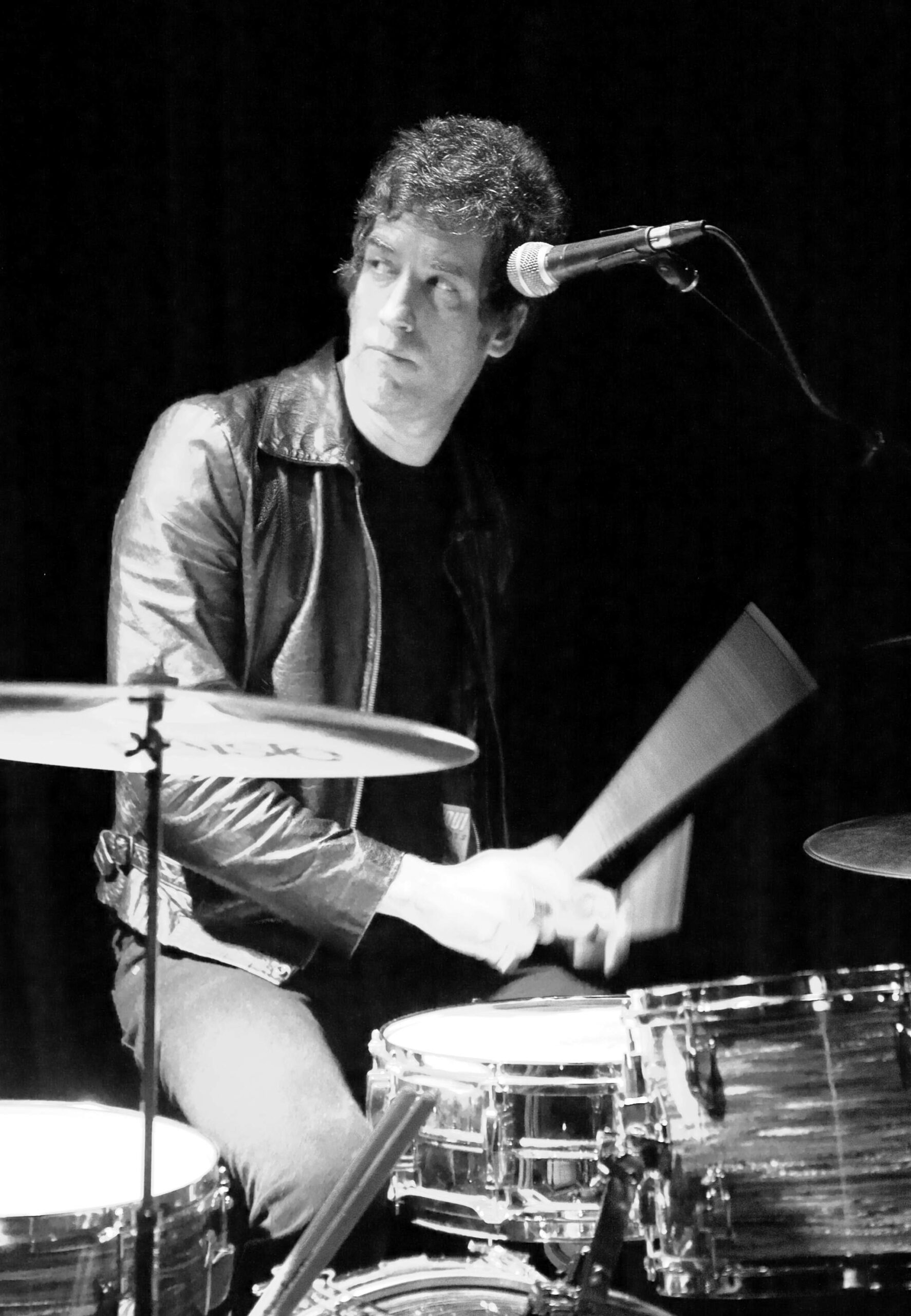
“Whatever I play, I make my own in some small way, even if I’m trying to slavishly recreate the original performance.”
Bambi Kino started as a very specific idea, going back to the pre-1962 Hamburg sets, the covers, the grind, even the multi-set format. And you’ve said pretty clearly you didn’t want it to be a tribute band, that being yourselves was actually closer to the truth of what The Beatles were at that point. When you’re deep into it now, years later, is that still something you actively think about, or has the band just naturally drifted into its own identity without needing to police it?
Ira Elliot: Yeah, after having played these songs with the band over the years, and sadly we don’t really get to play very often, we’re lucky to do maybe one show a year at this point, but the impetus stays the same. It’s just the four of us leaning into these songs with everything we’ve got. And because we play rarely, speaking for myself, I have a lot of time to think about the show, get excited about it, in order to put myself in a state of complete immersion. I’ll spend a week or two listening to things like the Star Club recordings and their early home demos, reading passages from Lewisohn and The Beatles as Musicians like a student. So when I hit the stage I’m fully Pete Worst. Ha! Which is to say, it’s possibly the most fully realized version of myself, doing what I feel I do best in front of an audience that fully appreciates what it is we’re doing. It’s pretty heady.
The whole concept came out of realising there wasn’t much marking that Hamburg anniversary, which is interesting in itself, because that period is so talked about but not often played. Once you actually started doing those long sets, multiple nights, did it change how you understood that era? Not historically, but physically, what it takes to get through it.
Well, there’s really no way to prep for something like that. As a musician in New York City where I grew up, if you played in a cover band you might play occasionally on the weekends, and if you had an original band you got whatever gigs you could, but if that was more than two or three shows in a month you were lucky. I recall in 1985 when I did my first European tour with The Fuzztones, suddenly we found ourselves playing full-throttle, hour-long sets six nights in a row, and our voices got blown out pretty quickly. Actually, the same thing happened to me in Hamburg in 2010. In all the excitement of the moment I oversang, and by the third day I could hardly talk. “Hamburg throat,” I believe they call it. And you also understand why they got attached to taking Preludin, a type of common speed there in Germany at the time. I would have loved to have scored some of that, for authenticity’s sake.
But that is the best thing and most difficult thing about how we have chosen to approach Bambi Kino. We never play a 20 or 30 minute set opening for some other band. We want for ourselves, and really for the audience, to have this experience of a band playing all night. An hour on, break, another hour, break. Three, four, maybe five sets across four or five hours. We certainly have enough material to do it. So much fun, you can’t believe it.
A lot of bands, as they get more experienced, tighten things up, refine, remove friction. This project almost asks you to go the other way, to leave things a bit exposed, a bit “rough around the edges.” Was there a moment where you caught yourselves overplaying or overthinking and had to pull it back?
Well, we play very rarely, like I mentioned. We all live all over the place now. Mark and Doug are still in New York, as we all were when this started in 2010, but now I’m in Florida, Erik is in Los Angeles, so the rehearsal for any given show is typically one three or four hour stretch in a rented space, and we are lucky to even run everything through once. The basic rule is, as long as everyone starts and stops at the same time, it’s all good. Ha! Know what I mean? The audience is not scoring us. No one cares if there’s a little mistake here or there. The pressure is off. I mean, listen to the goddamn Star Club recordings! Haha. Mistakes encouraged.
You’re all coming from bands with very strong identities, Nada Surf, Guided by Voices, Cat Power circles, and those instincts don’t just switch off. Were there points where what you naturally do as musicians didn’t quite sit right in Bambi Kino, and you had to rethink your approach?
Yeah, in Nada Surf I have pretty much free range. For the most part I feel I can do whatever I like. In this regard I feel like that is my contribution to Nada Surf. The band sounds the way it does partially due to my personality expressed through my instrument.
But these Hamburg songs demand a kind of discipline that isn’t necessary in Nada Surf. For example, when I do my homework listening through various iterations of these songs, I’m always taken aback by Ringo’s minimalism. Listen, I’m a typical drummer. When I move from a verse to a chorus, or back the other way, I’ll likely hit a crash cymbal to delineate the transition. It’s almost automatic. Ringo does not do this. Certainly in these early arrangements, if he starts on the ride or the hi-hats, he typically stays there for the whole song. His minimalist tendencies are extraordinary, and it invites a kind of focus on simplicity which I really value. It’s a zen exercise to try to do as little as possible through a drum arrangement. Holding back adds its own kind of wonderful tension. When you finally do hit some kind of fill or crash, it really counts.
There’s something interesting about playing material from a band that hadn’t fully become itself yet. It’s not the canon, it’s the process. Does that make it feel more open, or does it actually make decisions harder because there’s less to anchor to?
No, not really. Since we’re not specifically imitating the way The Beatles played these songs in 1962 as such, we just need to know the arrangements of the 60 to 75 songs that we typically play, and then we just enjoy playing them in the moment, as musicians who appreciate these songs on their own merit and also as Beatles fans playing for other Beatles fans. Those are the energies that inform the performances.
Bambi Kino has also crossed paths with people like Wally Bryson from the Raspberries, which kind of folds different strands of power pop history back into each other. When those worlds overlap like that, do you start hearing connections you didn’t notice before?
Ha! That was a really wild day with Wally in Cleveland. He demonstrated a few classic Raspberries riffs, like the opening of ‘Go All the Way,’ where you could really see his Townshend influence. I was just in awe. He was quite a character. His son Jesse is an old friend from my Brooklyn days. Great guy, guitarist, singer-songwriter.
But it’s actually pretty rare for us to have guest musicians. We do like to have guest singers occasionally. David Johansen once, that was incredible.
And where The Beatles are concerned, you can’t get very far without hearing their influence in what preceded them, so I constantly hear connections back and forth.
The Beatles seem to connect to almost everything somehow.
There’s also the ‘Play On: A Raspberries Tribute’ on Think Like A Key Records, which is a pretty different kind of project to step into. Those songs are so tightly built… when you’re working on something like that, do you feel like you have to stick close to it, or do you want to mess with it a bit?
Yeah, it was not easy finding a Raspberries song that would naturally fit with our particular aesthetic, but we liked the Beatle-esque vibe of the song we did, “Please Baby Come Back Home,” an early song of theirs I had never heard before. Besides moving the key down a few steps, we didn’t really futz with it too much as I recall.

The Raspberries always had that balance where the sweetness never tipped into softness, there was always a bit of edge holding it up. When you’re actually inside those songs, do you realise how delicate that balance is, how easy it would be to lean too far one way?
Well, I think the whole thing about The Beatles, which bands like the Raspberries and Cheap Trick understood implicitly, is you have some serious rocking going on, but you also have this Lennon/McCartney voice thing. The way their voices blended together into this other perfect thing that only those two guys together could create. Both Zander and Carmen were quite adept at channeling both Lennon and McCartney’s vocal affectations into their own band’s songs.
Remember that movie Backbeat? That really annoyed me, I’m sorry to say, because they were focused on the kind of punk energy, using some pretty heavy, scream-y dudes on the soundtrack, but that removed the sweetness of their harmony singing, which was really the wonderful balance The Beatles were able to strike right from the very start.
Ira, bringing it back to you specifically, because you’ve been part of Nada Surf for such a long stretch, and that band’s story is often told through ‘Popular’ and then everything after as a kind of reset. But what’s more interesting is how deliberately the band avoided repeating that moment and moved into something more durable. Did that experience of sidestepping expectations shape how you approach something like Bambi Kino, where expectations are kind of built into the concept?
Yeah, well the thing about ‘Popular’ was that it was kind of gimmicky. Spoken verses, big chorus. I think our label at the time was hoping we would perhaps continue to write songs like that, but we actively moved away from it. That song was really an outlier, and we didn’t want to be perceived as a gimmicky band. We didn’t really find our full identity as a band until we made our third album, ‘Let Go,’ I think it’s fair to say. And it wasn’t until 2020 that Matthew chose to return to that spoken verse form on ‘Something That I Should Do’ on’Never Not Together.’
Bambi Kino was its own little preset world in a way. The most demanding thing is simply remembering the arrangements of 80 songs. After that, little to no thinking required.
You were involved with Nada Surf from their first album onward, even though there was a different drummer on the initial demos. That puts you in a slightly different position than someone who builds a band entirely from scratch. Do you see any parallel with Bambi Kino, where you’re stepping into an idea that already has some history behind it, even if you’ve been central to shaping what it became?
Yeah, Aaron Conte played on the initial demos, but I’ve been the drummer on every Nada Surf release since the first album. When I joined the band I simply played what Aaron played, but just ironed things out a little. He tended to speed up a bit during recordings, and I was obsessed then, as I am now, with tempo precision.
But yes, since the drum parts had already been written it was super easy to just come in and not have to go through the process of building a dozen songs from the ground up. It allowed us to just play together easily from the word go. And it also gave me a window on how to approach designing drum parts for Nada Surf going forward.
But no parallel really with Bambi Kino in that regard.
I mean, I think it’s fair to say that whatever I play, I make my own in some small way, even if I’m trying to slavishly recreate the original performance.
There’s also the rhythm side of it. With Nada Surf, your playing often sits slightly under the surface, it’s not showy but it carries a lot of weight emotionally. With Bambi Kino, you’re dealing with a period where the drumming wasn’t even fully defined yet, it’s pre-Ringo as we think of him. Does that feel like freedom, or is it actually harder because there’s less of a framework to react against?
Well, design-wise it’s very different. Intention-wise. Nada Surf generally traffics in emotional landscapes, and so it behooves me to play simply and leave space. I often remind myself that no one is listening to Nada Surf records to hear the drummer. They want to hear Matthew’s melodies and his lyricism. So I feel it’s my job to frame his voice as well as I’m able, musically, gracefully, hopefully.
Ringo was a dance band drummer, and that music they were playing was designed for people to dance to, so the impetus is different.
With Nada Surf I’m trying to make you cry, and in Bambi Kino I’m trying to make you jump out of your seat and twist around spasmodically.
Nada Surf has kept the same core lineup for a long time, which usually means either total comfort or a very specific kind of tension that keeps things moving. What’s the thing in that band that still doesn’t quite resolve, that keeps it from becoming too settled?
Ha! “Specific kind of tension” hits the proverbial nail quite well. I feel like, in comparison, I’m a relatively orthodox rock musician. I started in local cover bands, school bands, summer camp bands, later with original bands. But Matthew and Daniel have really only played in original bands with each other, which they began to do in their mid-teens. They didn’t go through the same processes, and so each developed their own unique way of writing and approaching their instruments. It’s one of the things, or maybe the thing, that gives Nada Surf its particular voice, I suppose. Neither of them are ever playing something ordinary. For example, I’ve never seen Matthew employ a standard barre chord in any Nada Surf song, not that I’m aware of anyway.
So for me, I feel like I’m always continuing along my journey with my instrument. A lifelong process. I really can’t tell you how Matthew or Daniel feel in that regard. I just want to bring my best self to the table when we get together and write new things. Try not to anchor myself to the past and just play instinctively. Try to draw as much emotion out of the composition as I can, just using rhythm.
One thing that comes up in a lot of what you’ve all done, whether it’s Bambi Kino, Nada Surf, is this idea of instinct versus intention. The more experienced you get, the more you can control things, but the less you maybe want to. Do you trust your first instinct more now than you did years ago, or do you question it more?
Well, I do tend to find that the first impulse you have is often the best, but that’s not always the case. You might start in one place and end up somewhere else entirely when you’re done. So I try to do both. The first thing to do is just play without thinking about it too much. Imagine what might work and do that. And then take a step back and listen to it as if it wasn’t you. Like it? Meh. Let’s try a variation. And off you go. But you always have that original idea, or early idea, to return to if you wander off into the woods, which can easily happen.
When you’re working with material that already exists, whether it’s early Beatles sets or something like the Raspberries catalogue, what’s the quickest way to kill it? The one move that immediately makes it feel dead?
Well, I’m the drummer, so if something feels “dead,” it’s likely my fault, but luckily I almost never feel that when I play. I hope the other three back me up on that.
I can easily kill something by attempting to overplay, I suppose, but I generally make it a point not to do that. I’ve found the less I do, the more likely it is to work.
There’s always this idea that if you get close enough to the source, you’ll unlock something. But it sounds like with Bambi Kino especially, the opposite is true, that you have to bring your own history into it for it to work at all. Has that changed how you think about your own bands?
Well, like I mentioned earlier, I’ve found that even when you’re trying to hew close to the style or performance of another player, you just end up with a kind of amalgam of you plus them. You can’t completely erase yourself. I mean, I can’t. I use the actor analogy all the time. Even given the same text, night after night, a good actor brings a believable emotional spontaneity to it, and may never really do exactly the same thing the same way twice.
We hit a lot of different gears in Nada Surf, but for the most part I play in a rather controlled manner. A more cerebral style, let’s say.
Playing in Bambi Kino encourages a kind of teenage, animal intensity. You’re shooting from the hip a bit more.
Anyway, whatever I glean in one context I feel like I can apply in other contexts, so I bring the experiences back and forth.
If someone comes to Bambi Kino without any of the backstory, no Hamburg, no Beatles narrative, nothing, what do you actually want them to hear? Not what it is, but what it does?
Yeah, funny, the Beatles part of Bambi Kino is mostly imaginary. What you’re really hearing is John, Paul, and George’s great taste in music. And I simply want what Ringo wanted when people saw Rory Storm and the Hurricanes at Butlins. Get a few drinks in you and let it go, baby. Dance, sing along. Get out of yourself. Knowing the Beatles connection to these songs is not really important. It’s the propulsive nature of early rock and soul music.
Let’s say you’ve got a day off on tour and you end up at my place, which is stacked with records and a slightly obsessive hi-fi setup. What do you think we’d end up putting on first? I’ll throw in Luther Thomas Human Arts Ensemble – ‘Funky Donkey Vol. 1’ as a starting point.
Wow! You’ve got me there, my friend. I won’t even try to compete.
But then remember, I was voted “guy most likely to put on the Rockpile album” in high school.
Klemen Breznikar
Headline photo: Andrew Bicknell
Bambi Kino Official Website / Facebook / Instagram
Nada Surf Official Website / Facebook / Instagram / X / YouTube