
Sir Richard Bishop on Sun City Girls, Improvisation and ‘Hillbilly Ragas’ Interview
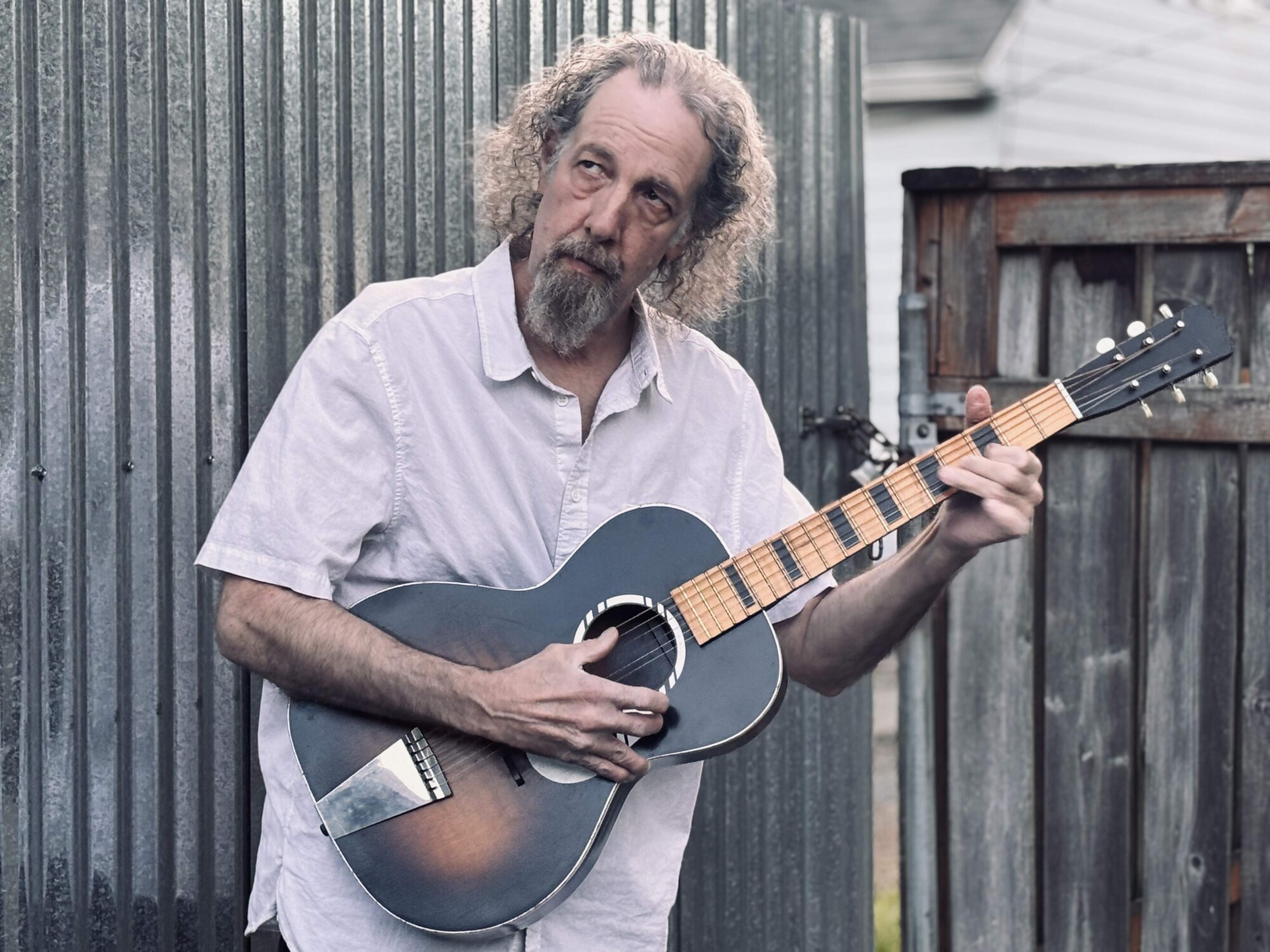
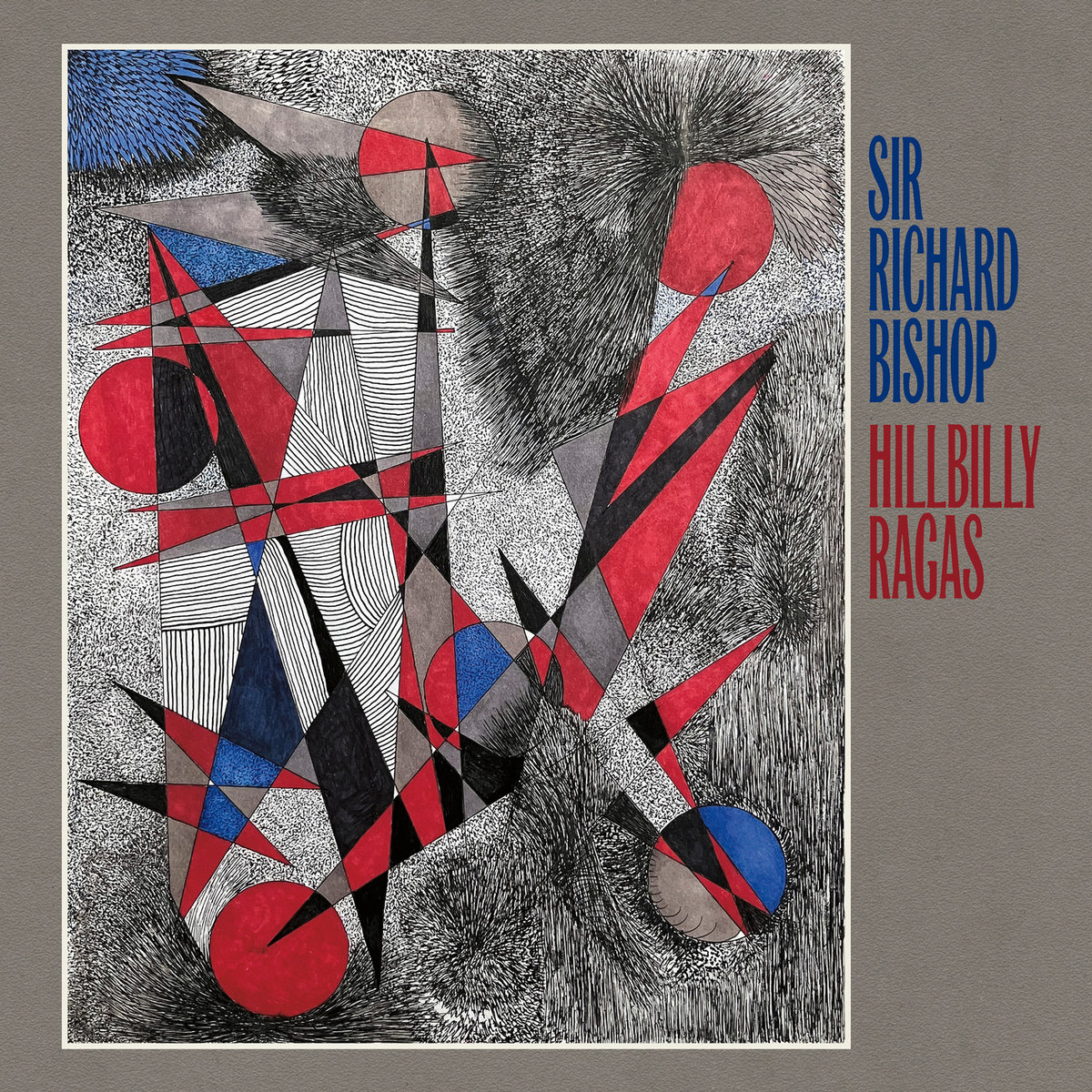
Sir Richard Bishop has spent decades sounding like a man in dialogue with some older, stranger America, one that lives in backwoods folklore, half-forgotten traditions, battered open tunings and the long afterlife of the guitar itself.
On ‘Hillbilly Ragas’ (Drag City Records), his latest solo set, he returns to that territory with a record that feels dug from the soil yet oddly unmoored. The title is a provocation and a clue. It folds the rough-hewn imagery of hillbilly music into the austere discipline of raga, then refuses to let either side settle into cliché.
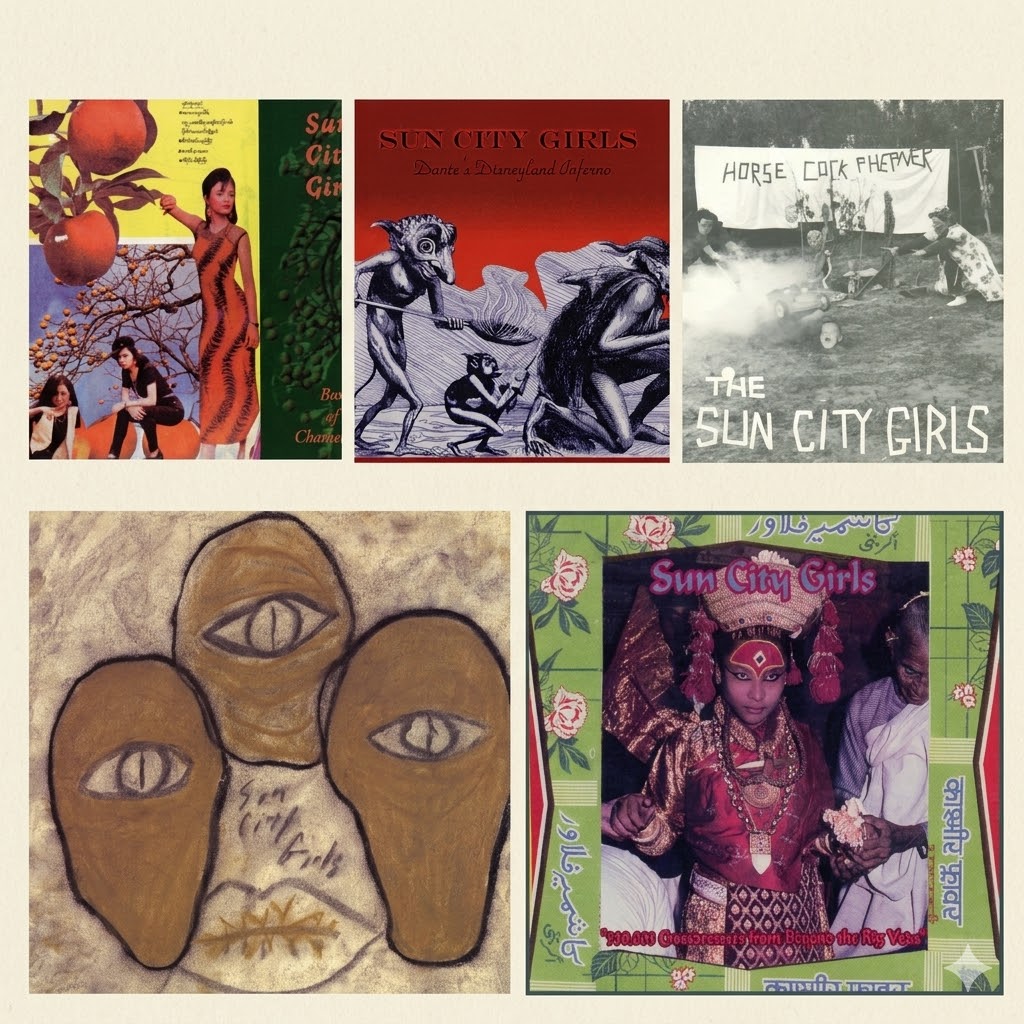
Bishop has long been hard to file. As one third of Sun City Girls, he spent years in a band where the specific frame of a genre could be bent, history twisted, and performance pushed toward something completely unpredictable, a dare, pure improvisation. The trio’s unruly path ran from brutal improvisation to surreal theater, from antagonistic punk crowds to a deep engagement with sounds from far beyond the American underground. That history matters here. ‘Hillbilly Ragas’ doesn’t mark a break from Sun City Girls so much as a continuation of one of the group’s central drives: taking established forms and pushing them somewhere less stable, less comfortable, and more alive. ‘Hillbilly Ragas’ does not sound like a retreat from Sun City Girls, but a distillation of one of the group’s core instincts: refusing to respect musical borders just because they have names.
In the interview, Bishop is blunt about the term American Primitive, a label often attached to his work. He says the music can sound “too orderly, too developed, and too safe.” That is the key pressure point in this album. Rather than treat tradition as a museum piece, Bishop treats it as material that can be worried, struck, bent out of shape, made to speak in a new dialect. He describes the record as “nine improvised pieces for solo acoustic guitar,” each one “representing a different excursion into the dark woods.” That image is definitely not decorative. It’s the album’s operating concept. These pieces do not present themselves as finished monuments, but they actually move like someone searching by touch.
There is a fierce physicality to that search. Bishop talks about “bashing the hell out of the strings,” about trying to make “a unique type of racket” that privileges rhythm, movement and dynamics over fixed melody. Yet the force is never empty aggression. His music keeps pulling toward atmosphere, toward trance, toward those charged moments when something larger than intention seems to arrive in the room. He says that when he plays live, he can become “totally lost to the world.” That is one reason his music feels alive. It is not over-explained into submission. It’s left open enough for surprise to enter.
The album also feels like a continuation of Sun City Girls’ old trickster spirit, even if Bishop now works alone. The band thrived on destabilising expectations, and that sense of mischief lingers in his solo work as a kind of shadow methodology. He’s still interested in dislodging the listener, in taking familiar forms and making them feel newly unstable. But where Sun City Girls often externalised that impulse through confrontation, Bishop now turns it inward. The result is solitary music without feeling sealed off, haunted without becoming precious.
What remains is stranger, harder, and far more compelling: a set of pieces that sound like they have been dragged into daylight from some private corner of American music and then left to crackle on their own terms.
European tour dates for March and April have recently been announced, as Sir Richard Bishop takes ‘Hillbilly Ragas’ on the road across the continent.
“I’m wrestling with the guitar just as much as with the music.”
You’ve talked about a “bloodthirsty interpretive method” when it comes to the American Primitive style on your new album, ‘Hillbilly Ragas’. It sounds like you’re not just playing the music, but wrestling with it. Can you explain the difference between playing in a style and attacking it? Is it more like a musical archaeology or a kind of spiritual possession where you’re channeling ghosts?
Sir Richard Bishop: I don’t know what it is. I’ve never really played in the American Primitive style properly, which most often consists of fingerpicking (with or without a thumb pick) and using a number of different, often lower-pitched open tunings on the guitar, with much of the standard material by John Fahey (and others) being based on historic American music styles (ragtime, blues, etc.). I have often been thrown into the American Primitive category without really feeling I belonged there. But I’ve always liked the “idea” of American Primitive. I just have had a different viewpoint of what it actually should be as opposed to what it is. Fahey defined the word “primitive” as referring to the player, one who is untrained or self-taught, but never used the word to describe the actual sound or feeling of the music. In my opinion, the majority of what is considered to be American Primitive music does not sound primitive at all. It sounds very traditional to me, and along with the particular playing techniques used, seems fully developed and quite orderly. So the phrase “American Primitive” never fit the repertoire or style of song that is associated with it, and according to Fahey’s definition, I guess it isn’t supposed to. But I always thought that “primitive” should refer to the type and sound of the music, not the player. So what is primitive music? I have no idea, but there are elements that I feel would fit the nomenclature. It should sound raw, undeveloped, experimental, unpredictable, and not tied to any particular traditional canon. The best way to begin achieving that would be to improvise.
For ‘Hillbilly Ragas,’ the idea was simple: bring the idea of “primitive” to the music, find a couple of open tunings that I hadn’t used often, and just start improvising and bashing the hell out of the strings in order to hopefully make a unique type of racket that doesn’t have any definite melodic structure but focuses more on rhythm, movement, and dynamics. Nothing is purposely being channeled. Certain things will just come through, especially if I don’t put too much thought into it. As far as possession, spiritual or otherwise, that may be a little different. I become totally lost to the world when I am playing live on stage, and there have been occasions where I couldn’t remember certain parts of a performance right after I play. If that happens, I don’t question it. I just trust that it went okay. But again, it’s never anything that is done consciously or with any pre-planned intention. I’m wrestling with the guitar just as much as with the music, but only because it has to be that way for me. I do not want to sound like John Fahey; there are plenty who are already doing that. I am not putting down any particular music style, but rather trying to create a different form (for me) of playing and sound, not as any new style of music, but rather one that could fit into a previously established genre that maybe just needs a little kick in the ass in order to open it up into other areas. Sometimes this has to be done by force!
Sun City Girls shows were always a tightrope walk between a plan and the unpredictable. You and Alan seemed to have a kind of telepathy on stage. Can you talk about that internal grammar of your improvisation? Was it a secret language of silent cues, a shared understanding of musical folklore, or was it simply a deep, crazy trust in the unknown?
It was all three of those and more. Alan and I had really only been playing together a couple of years before Sun City Girls started. We were always very close, but in the beginning of our musical collaborations we didn’t improvise very much, so there was never an indication of anything telepathic going on. But once we met and started playing with Charles Gocher, even before he was officially a Sun City Girls member, that was when things started to happen. That’s when we started our adventure into group improvisation, and we very quickly became familiar with each other’s abilities and approaches to playing music, and everybody’s particular way of doing things. I’m not sure we even recognized what was happening at first, but the more we played together we started to notice that more often than not, we were of one mind. We would often be going crazy in some mad free improvisation and then suddenly we would all stop at the exact same time before continuing on. This happened over and over. It then became easier for all of us to imagine where things might go next. It didn’t always work, but it worked way more often than when it didn’t. Each of us looked at it as a form of telepathy, but we never tried to analyze it or instigate it. It just happened, and we knew when it happened. Eventually, to accommodate these telepathic explorations, we came up with a glossary of terms and short phrases based on certain things we were doing (we called it Amuck Theory). Each word or phrase would indicate a particular type of sound, or volume level, or a certain style of attack with our instruments, etc. It was never in relation to what notes or chords to play. It was more about dynamics and the element of surprise, for us as well as the audience. Many times at live shows, instead of a list of songs, we might have a list of ideas using those words or phrases that we could understand, that would allow any of us to change the sound, direction, energy, or the tempo of a piece without warning. Eventually, especially if we were doing a completely improvised show, we didn’t even need that list. We just started playing that way. It was an open exchange. One of us could change the sound or direction of what was happening and the others knew how to respond. And anybody could change anything at any time. It became so natural that we never had to think about it. But sometimes we would all get together for a quick pre-show chat and it might have gone something like this: “Okay, let’s start with an ‘Amok’ section and then one of us can switch into ‘Imok’ mode after about 10 minutes, and then we go back and forth on that. Then Charlie, you do a ‘Bail Outta Jail’ at whatever moment you see fit and then we’ll go into a ‘13 squirts’ section and then back to Amuck. Then a completely open section for the last several minutes and then let’s end with a ‘3 man pounder’.” That little exchange may sound completely insane, but each of us knew exactly what it meant, without knowing how it would sound in the end. And if that very same chat was used at a different show, it would still be a completely different set.
“I do not want to sound like John Fahey.”
The title of your new album is an amazing oxymoron. It pairs the raw, down-home grit of American folk with the ancient, intricate discipline of Indian classical music. How do these two seemingly opposite worlds meet in your mind and on your fretboard? Do you see the “raga” not as a fixed form, but as a universal rule of exploration that can be applied to any musical dialect?
It’s both. In Indian music, the raga is definitely a fixed form, even though improvisation plays a large role. It is certainly a discipline that requires years of study and training, and I have always known that I would never be in that position because I simply don’t have that discipline or even the patience to begin that type of process. But I’ve always been an avid listener of raga music, and it has always felt familiar to me. There are certain elements of it that I have often tried to capture or at least emulate when I perform solo, knowing well that it is not a proper raga in any sense, things like using a limited number of specific notes, the slow build-up that helps to establish a certain atmosphere or a particular feeling, the various changes of tempo, working up to a climax of sound and being able to bring it down and then start the process over again, that type of thing. These elements always had a great effect on me as a listener whenever I was exposed to raga music, whether from a record or watching a live performance. And I found that experiencing a live raga performance had the ability to affect the energy and atmosphere of a room and could easily take the audience on some sort of trip. I really like the idea of that, and that is what I always try to do when playing one of my raga-styled pieces in a live setting.
And then there are the raga stylings of those from the American Primitive school (Robbie Basho, John Fahey, etc.), who were interpreting the idea of raga in their own particular way as well, based on their understanding of the raga form, using an acoustic guitar. Some of those pieces capture the feeling of an Indian raga more than others, and some are just long-form pieces with the word raga being in the title where it’s not so obvious. It’s up to the listener to determine that. Others like Sandy Bull and Peter Walker established a really interesting balance between eastern and western approaches and, in my opinion, often seemed to portray the feeling of raga a little better. And that is what I have tried to do. Most of my solo records have a raga-type piece with some kind of Indian vibe. I’ve never used the word raga in any song title, but it is obvious where the inspiration comes from. ‘Hillbilly Ragas’ is a little different because some pieces on there lean more towards the folk or hillbilly side of things, while others may have a more raga feel but not exactly an Indian sound.
You have a history of soaking up all kinds of influences, from field recordings to old psych rock. How do you bring these different worlds together without just copying them? Is the process more like a weird kind of experiment, where you absorb the essence of something and then turn it into something completely new and personal?
Similar to what I said previously, I try to capture the feeling of it. That applies to Indian, Arabic, Southeast Asian music, or anything from another musical culture. I can’t duplicate it and I don’t want to. I don’t see the point of it. So yes, if I can interpret it in a way that still honors the original source and creates some sort of similar atmosphere, to where it at least feels somewhat natural, or just different enough in the right way, then that is always a positive thing. I can usually tell if it’s not working or measuring up to where I am hoping to get it, and if that happens I just forget about it and change direction. It can still be very experimental, especially in a live situation, but it’s okay if it sometimes doesn’t work. That’s part of the challenge, and it can force me to immediately go to places I may not have thought of previously. I like the risk of it.
Sun City Girls was all about dissolving the “I” and working as a single, collective mind. As a solo artist, the focus is all on you. How has this shift affected the way you create? Is the solo work a deeper dive into your own head, or is it just the same journey, but with a different compass?
Playing solo for me is quite a bit different than playing with Alan and Charlie. When playing with those guys, somebody always had your back if needed, and we could all bounce things off of each other, and that would often determine where things went. That certainly isn’t the case when I play solo, but it has never been a burden. In fact, it can be even more liberating in a sense because you don’t have to worry about others having to react or fit into what you’re doing. It is definitely a deeper dive internally, and that’s a good situation. It can bring out things that may not have come out easily when playing in any collective. Most of my recorded solo material began as improvisations, and some of those were further developed during live shows, or just over time, without the help or influence of others. And because my springboard is always based on improvisation, I don’t always know where things are going to go. I’ve become comfortable with that approach. I’m happy to take sole credit if things go good and also willing to take the blame if things go haywire. I don’t really have any other choice!
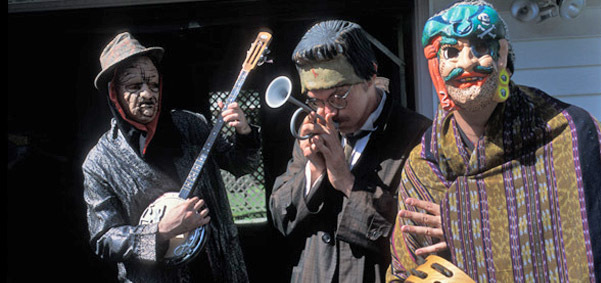
A lot of your music feels like a conversation with something otherworldly. There’s a powerful sense of myth and ritual woven into the sound. Do you think music can be a way to get in touch with the unseen world? Are you, in a way, performing a form of aural magic, summoning spirits and telling stories that exist outside of normal time?
Music has always been one of the best ways to get in touch with the unseen world. I’ve always felt that way. And stories can definitely be told through music without the need for words and often without knowledge of any storyteller. But in order for anything like that to happen, you have to be lucky enough to somehow find yourself in the proper sonic environment, a mysterious atmosphere, or some sense of place that is foreign or unfamiliar, whether visible or invisible, comfortable or uncomfortable, but something that can be felt and experienced. But I can’t make these things happen automatically by following any set formula. If it is going to happen, then it will happen naturally, or even better, supernaturally. So it’s never a conscious thing on my part. I’m not ever purposely trying to do a ritual or trying to summon anything when I play live, though I’m always open to the idea of something coming through. And things have come through. I certainly have felt it, and I have had plenty of feedback from audience members over the years who have shared their experiences of things they have felt and sometimes even seen during one of my shows. But I think it is only certain people who are receptive enough for such energies to make themselves present who will experience something out of the ordinary, while others won’t notice or feel anything at all. Either option is fine with me.
Sun City Girls’ stories and music were full of trickster figures and mythological troublemakers. This playful subversion seems to be in your solo work, too. Do you see yourself as a musical trickster? And if so, what’s the point of this creative mischief—is it to disarm the listener, to mess with expectations, or just to have a little fun with the ghosts in the machine?
The trickster ideal was much more present within Sun City Girls as opposed to my solo work, though the trickster archetype is always close at hand. In the early days it developed naturally after numerous clashes with audiences during our live shows. That was because we were playing in front of “punk” crowds and we didn’t play punk music or anything even remotely similar. So there was a natural antagonism between us and the audience. It didn’t take long for us to take advantage of that situation, and we did so by purposely trying to confuse audiences with our antics onstage, musical or otherwise. We went out of our way to piss them off, and the more that happened, the more we realized that we had a real power over them. And as much as they tried to intimidate us, it just didn’t work, and then they would get even more pissed off because of that. We were pretty relentless. Sometimes we would just bring a bunch of props and do improvisational theater performances with spoken word rants and psycho dramas that were brutal but funny as hell, but the humor was always way over their heads. They couldn’t comprehend any of it. We would mock them, bait them, and just have our way with them at will. It was something that we really enjoyed doing just to get a reaction. And we always got a reaction. And whatever they did to try to stop us, whether it was throwing things at us or trying to rush the stage, we never gave in. We always stood our ground, and we were always ready for anything, including physical confrontation if necessary, though that rarely happened. Over time some of these kids would start to appreciate it as some form of weird performance art, but that was a slow process. Then we would start doing these same kinds of things whenever we got together to rehearse. That would eventually spill over into a few studio recordings, and it was something we were always willing to do in a live situation if we wanted to, whether we needed to do it or not. But I haven’t felt the need to continue with that when I am performing solo. But I can if I have to.
“I like to start banging away just to see what happens.”
You have incredible technical skill, but your playing is often raw and gut-wrenching. There are moments where your guitar seems to scream, howl, or even cry. Do you see the instrument as an extension of your body? And do you think true musical expression is less about technical perfection and more about being willing to embrace the chaotic and the ugly?
It certainly can be an extension of my body, but what comes out is mostly based on what is going through my head at any given time. And even when nothing in particular is going through my head, the sounds that come out can be almost anything. I guess I don’t really think about it much, but it seems more emotional than physical. There are physical elements to it, of course, because I often play aggressively. I like to start banging away just to see what happens, with no expectation of what sounds are going to come out. I’m often the first to be surprised with what I hear, so I have to be ready to embrace whatever comes through, whether it is ugly or not.
I have some technical skill on the guitar, and there are times when I wish I had more, but after all these years I have become comfortable with what I have at my disposal and have been able to use that sufficiently enough to create certain sounds that maybe wouldn’t have a chance to materialize if I concentrated more on the technical side of things.
In your dense music, silence is just as important as sound. It builds tension and gives the listener a chance to breathe. Can you talk about your relationship with silence? Do you see it as a form of rebellion against the constant noise of the modern world, or as a necessary part of the story you’re telling?
I am a big fan of playing dynamically, and silent spaces can be a big part of that. Many times when I am out listening to live music in a club or wherever, it can become obvious to me that whoever is performing isn’t concerned about the idea of dynamics or the potential spaces in between notes. Sometimes it’s just a continuous barrage of noise, or just a flow of music that has no variation of speed or movement, almost to the point of you realizing that after ten minutes, and that is being kind, you have basically heard the entire set. You get the feeling that nothing is going to change. I like to create musical situations that may start quiet and gradually build up into a frenzy, and once things get to a certain point, I like to start chopping things up and changing speed again or instigating some quick stops in certain places, even if it means there is a moment of silence for only a split second. It can have a great effect on an audience. It has nothing to do with rebelling against the noise of the world or anything like that. It is more a way to make people aware that things could change in an instant and they shouldn’t become too complacent or comfortable. I like it when an audience doesn’t know what is coming next, and most of the time I don’t know either. The element of surprise and uncertainty can keep an audience engaged. It’s a really important process for me whenever I am doing a live show. It can work wonders.
A lot of your music is a direct conversation with the ghosts of musical history, from forgotten folk tunes to more obscure traditions. Do you feel a responsibility to these traditions, or do you see yourself as a liberator, freeing them from their original, rigid contexts? How do you see your music as a kind of live history, a way of exploring the past?
Again, it’s what I said earlier about Indian or Arabic music: I have great respect for these traditions and feel I can still pay homage to them without having the need to copy them exactly or try to play within the fixed and rigid rules that are built around them. I’m not knocking those rules at all. I just don’t want to be one of those people who believes that the only way to truly honor those traditions is to follow those rules and learn how to do it by the book. I have no interest in that. A perfect example would be when Sun City Girls acquired an entire Javanese gamelan orchestra, which when fully set up filled a large room, and there were enough gongs and rows of instruments for about twenty people to play at one time. And we were quite familiar with Javanese and Balinese gamelan music. But it was never our intention to try and play these instruments like the Javanese or Balinese would. We wanted to play them differently and incorporate those sounds into our own musical and theatrical traditions. It still had the sound of gamelan instruments, but to combine those sounds with our way of doing things always opened up new areas to explore. There were times where we would get some flack from people, you know, the usual accusations of cultural appropriation, that kind of thing, always from righteous socially engineered clowns who thought we were being disrespectful to the original traditions. A lot of people still think that way. Fuck ’em!
Sun City Girls’ lyrics were a strange and beautiful mix of storytelling and surrealism. In your solo instrumental work, you’re telling stories without words. How do you translate a feeling or a narrative into a purely instrumental form? Is composing like a type of writing for you, where the notes are the syntax and the melodies are the prose?
I don’t compose in any natural sense of the word. I can’t say to myself, “I’m going to write a song today.” Some people have that gift, but I’ve never been able to do that. I just start playing. The idea of syntax or prose has no meaning for me in those moments. And any wordless stories that arise out of what I play are always unannounced. I have no narrative to work with in advance. My goal is to create some sort of sound environment first, then after that anything can happen. I am more interested in the music being able to accompany or create some sort of journey as opposed to a particular story, but if a listener is able to identify a storyline from within something that I am playing, then that’s great. That’s their thing. But I really want to just take them somewhere, hopefully to a place they’ve never been before. And what they experience along the way and what they do, think, or feel when they get there is entirely up to them.
The description for ‘Hillbilly Ragas’ talks about an “excursion into the dark woods.” Is this a real journey or an internal one? And what, if anything, did you find in those woods that you didn’t know before? Do you think a musician’s path, like a shaman’s, is a solitary one, a pilgrimage into the heart of the unknown?
This journey started out as an idea first, but eventually each finished piece turned into a real excursion, at least for me, and that was all that mattered.
At the same time I was starting to record the new record, I was doing some research into my father’s side of the family tree, which was the hillbilly side of the family. This was something that, for whatever reason, I had never done. To contrast that, my mother’s side of the family, the Middle Eastern (Lebanese) side, was always talked about when I was growing up, and there was a lot of family musical history there. But I never thought about what may have been hiding musically on the other side. My father grew up in rural Tennessee, and compared to the history of my mother’s side, I didn’t know anything about his upbringing, or his father’s or grandfather’s origins. So I started to research if there was any musical history that could be traced through that side, but there were no old-timers left to ask about it. But just the process of doing this led me to the idea that maybe there was an old relative who played music but didn’t fit in, and one that nobody ever talked about, a loner, an outsider. After spending a fair amount of time with the resources I had at my disposal, old family photos and genealogical documents, I couldn’t find any reference to such an ancestor. But that didn’t mean he didn’t exist. In fact, the less I could find, the more he started to actually take shape. So that’s what I found there, and from that I was able to establish a certain folklore and mythology about this so-called musical outsider, but one that would only have any real meaning to me, and that became the driving force for the record and for current live shows that feature selections from the record. I think the shaman reference is applicable here, not only about representing a journey, or pilgrimage, into the unknown, but more importantly, returning from that journey with something from the “other side,” something that couldn’t have been accessed any other way.
Klemen Breznikar
Headline photo: Sir Richard Bishop (Credit: Mae Starr)
Sir Richard Bishop Website / Instagram / Bandcamp
Sun City Girls Website / Facebook / Bandcamp
Drag City Records Website / Facebook / Instagram / X / YouTube / Bandcamp