
Tender Ender’s ‘Black Swan’: Doomsday Pop for an Unhinged World
Tender Ender marks the solo debut of Thomas Schmidiger, a return to his piano-driven roots and love for strong melodies, filtered through three decades of life’s reality.
The result is ‘Black Swan,’ a record defined as “Doomsday Pop,” where the apocalypse is lavishly decorated to make the pain easier to swallow. The music feels fallen out of time, balancing opulence with a cynical edge. It exists in the tension between “just before the end” and the unknown aftermath, transforming the “fucked-up things” of the world into something soothing and sonorous. Amidst a backdrop of dark skies and sweet strings, Schmidiger acts as a glowing crooner on the brink of collapse. It is a cozy fever dream that ends with a haunting ultimatum: “If you won’t wake, you will sleep forever.”
“If it feels like too much it’s probably just right.”
‘Black Swan’ feels like it lives in that weird space between “just before the end” and “right after it.” How did you even start putting that feeling into music without it getting too literal?
The feeling of being at the brink of some big change was simply my reception of the Zeitgeist at the time of making the album, about seven years ago—and it still is, probably even more so. However, I realized that this feeling must have been around for decades at least: take Koyaanisqatsi (1982) for example, a non-narrative film about the beauty of nature and its destruction by mankind. Over 40 years later, its message and mood are still perfectly valid. So, “just before the end” is quite some time we’re talking about here—and we know it rather well. The interesting part then is the “right after it”: imagining a future, or rather, no-future. Although that prospect might seem uncertain or even dim, it also has a very liberating quality for me—basically, anything is possible in this after-world because it is free of reference. And maybe it’s that imaginative freedom that allows the music to express that feeling without needing too much explicit narration.
The album balances opulence with a sense of danger, creating what some describe as doomsday pop. Was that tension something you aimed for from the start, or did it just sneak in while you were playing around with piano and strings?
Using stark contrast has been a guiding principle from the start. Thus, pairing kitsch and crooning with a very dark backdrop made total sense in that regard. The liberation mentioned earlier played right into this: why not add some sweet strings and really drive it over the top? If it feels like too much, it’s probably just right. Making something excessively beautiful can easily tip over to something very unsettling. To explore that tipping point was a central theme for this album.
Your voice on ‘Black Swan’ has been described as sonorous and transformed, contrasting with the overdriven style in Dead Bunny. Can you describe the personal journey that led to this vocal evolution, and how it shaped the core of the album?
It was like picking up an old, seemingly familiar instrument, only to discover that it could do far more than I thought. Since the power-rock singing with Dead Bunny was limited mostly to the top of my range, a readjustment was due anyway. That exploration led me not only into much lower registers but into entirely new timbres I hadn’t touched before. Amidst that soul-searching, I started wondering whether there is such a thing as a personal, authentic voice at all. I then came across a recording of a studio session of David Bowie doing multiple vocal takes, impersonating singers like Bruce Springsteen or Lou Reed. It was hilarious to listen to, and at the same time it made me question the idea of one’s “real” voice—especially when thinking about Bowie and the myriad singing styles he adopted through the decades. I suppose I’ve only just begun this journey, and it’s so much fun to try things out.
The eponymous ‘Black Swan’ is framed as a freak of nature or anomaly, not necessarily a bearer of good news. How do you see this figure functioning in your music?
The time when I was making that record—it was between 2016 and early 2020—already had quite a transformative touch to it: The first presidency of Agent Orange, for example, serving as a perfect illustration of Frank Zappa’s famous quote that politics is the entertainment division of the military-industrial complex. Ironically, the following years were (and still are) packed with black swan events, which led to a significant delay of the eponymous album. On a deeper emotional level, a black swan—being that unforeseeable, tragic event—also nurtures some kind of excitement, even a romantic pull, and an atmosphere of departure.
Collaborating with Mario Hänni and Sabine Ruch seems integral to the album’s concept. How did their contributions influence the tone and narrative arcs of the songs, and were there moments where improvisation or spontaneity shaped the final recordings?
Sabine and Mario certainly contributed to the sonic variety, but they also brought their personalities and emotional sensitivity to the album. Manuel Egger, who did the mixing, played an integral part as well. Since the album is also my debut as a solo artist, those few yet very essential personal interconnections were key to moving the project forward. There was a great amount of trust, and I could just let them do their thing and practice letting go and giving up control. Most of the spontaneity, however, happened in the mixing process, since I probably needed some time to loosen the grip…
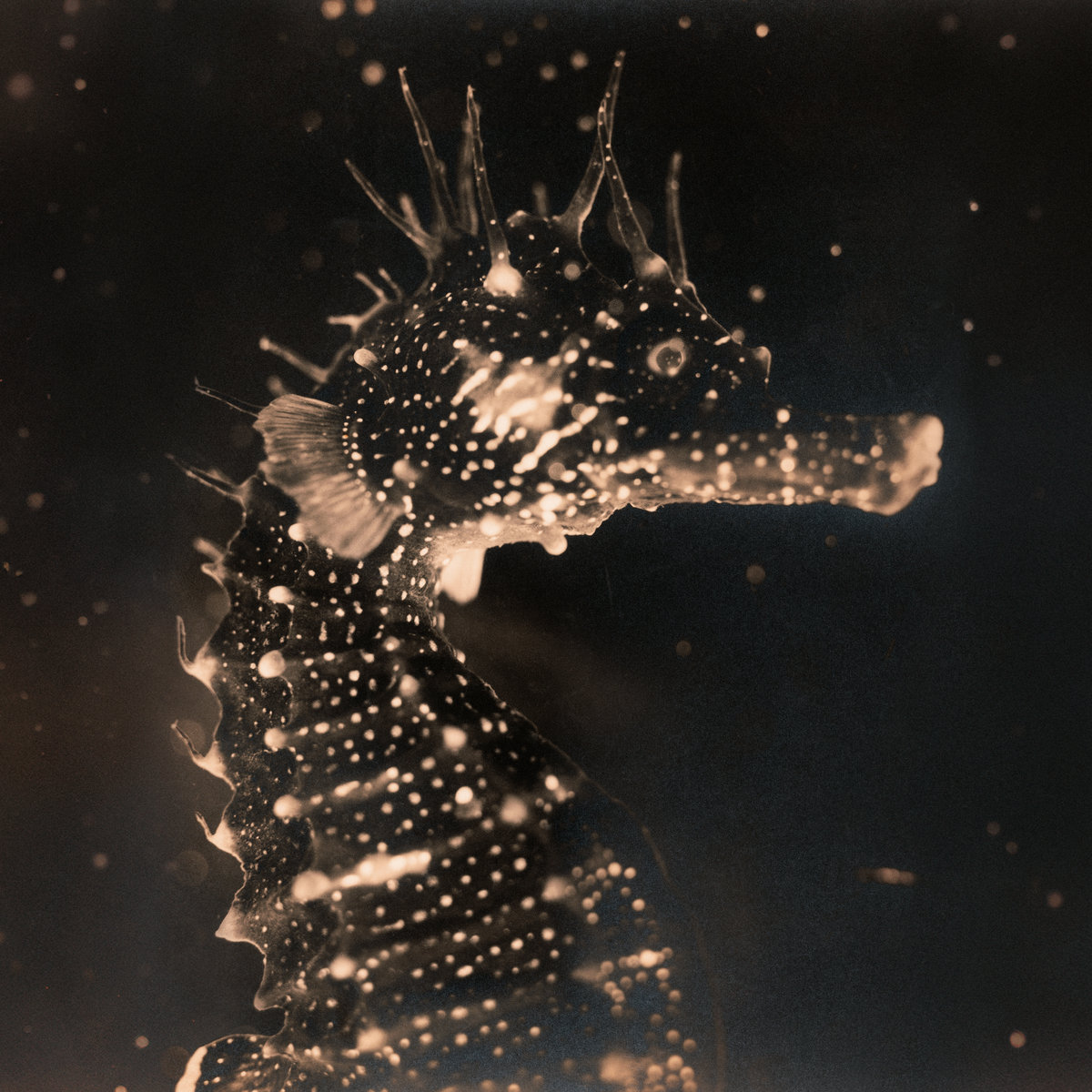
The album cover, photographed by Jean Painlevé, evokes a sense of cinematic surrealism. How important was the visual dimension to ‘Black Swan’?
It literally took years for me to settle on the album cover’s subject. But when I first saw that photograph by Jean Painlevé, things fell into place immediately. The temporal distance—the photo was taken in 1933—and the otherworldliness of the underwater scenery resonated strongly with my feeling of displacement in various dimensions. The seahorse—both a weird alien and a sophisticated, fragile creature—becomes a reminder of the need for protection and preservation. Although the album has a cinematic quality, there was never a conscious aspiration to craft a movie soundtrack. However, I can get really lost in films and TV series—especially Lynch, who is a major inspiration in that regard, which likely transpired into my music.
What’s next for you?
I’m already working on the next album, which will be released maybe as soon as next year. I’m really excited about the new material, and unlike the current album, I’m planning to perform it live.
Klemen Breznikar
Tender Ender Website / Instagram / Bandcamp
A Tree In A Field Records Website / Instagram / Bandcamp