
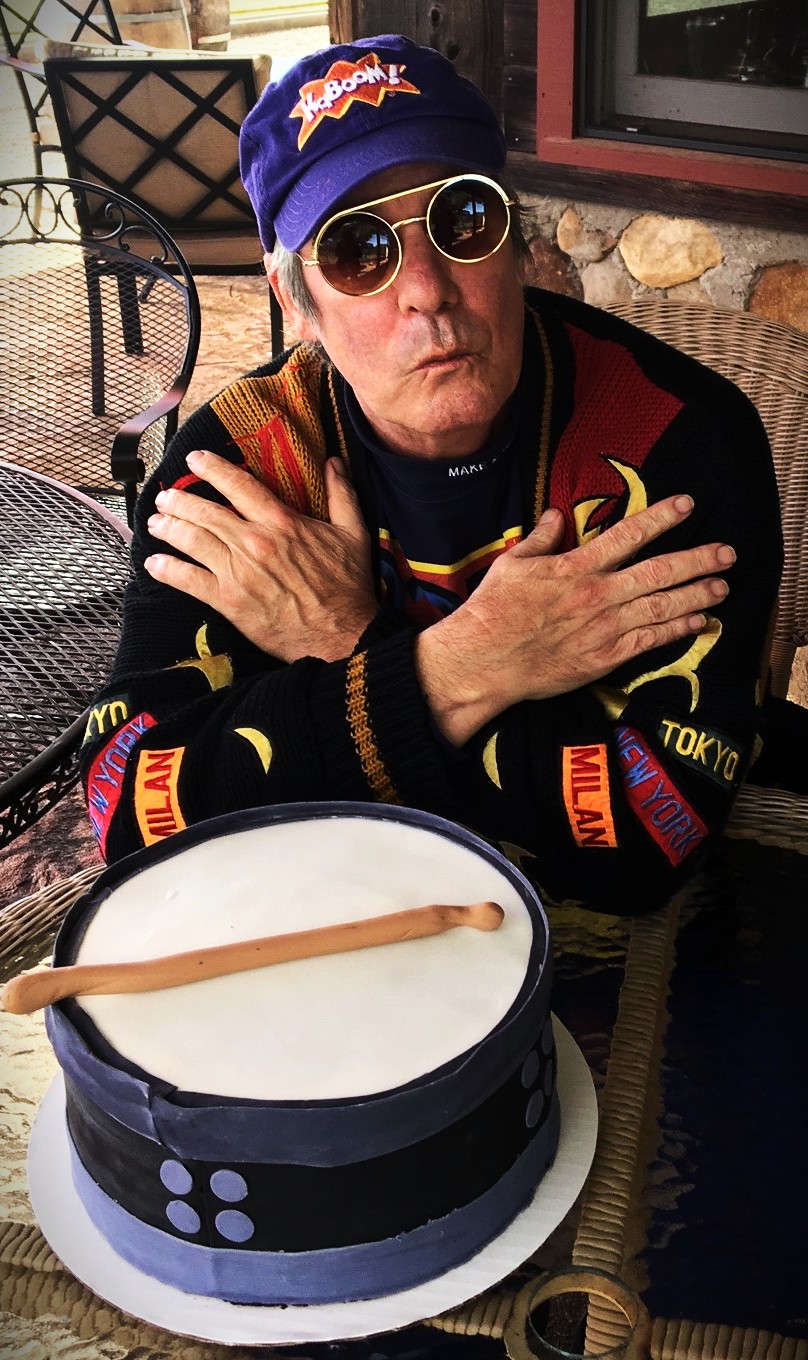

Paul Sears An Interview on His Book, The Muffins & Beyond
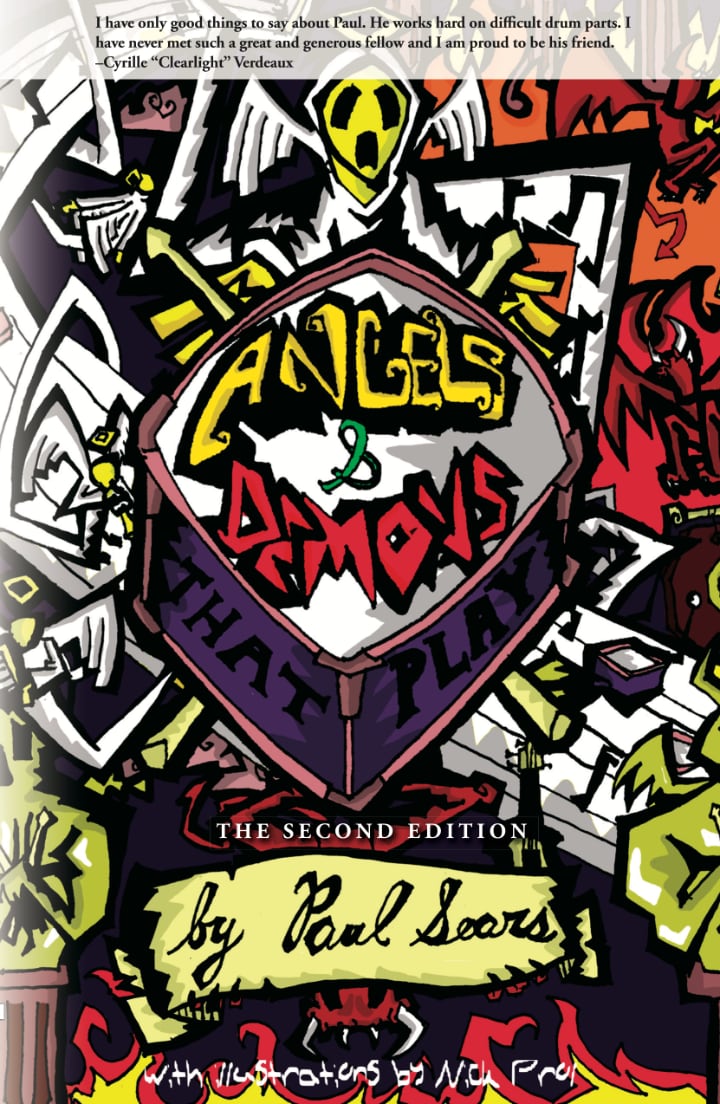
Paul Sears avoids self-aggrandizement in his memoir Angels and Demons at Play. The book reads like a long improvisation shaped by sound, chance, and lived experience.
Even its title points backward and forward at once, a “nod of respect to an old 1960s album by Sun Ra… called Angels and Demons At Play.” For Sears, music remains the single organizing force. “It is, in fact, a musical memoir as opposed to an autobiography,” he explains. Anything outside that sphere simply falls away.
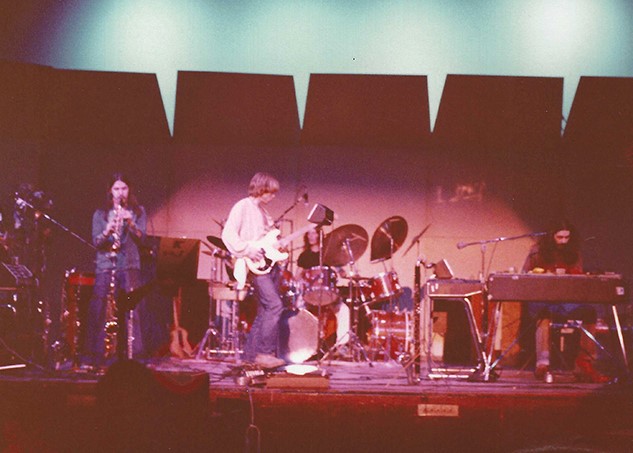
The world Sears chronicles with The Muffins thrived on curiosity and resistance to easy categorization. While sometimes called the “spiritual American cousins” of Henry Cow and Soft Machine, he remembers a sense of cultural distance. In the Washington, DC of the late seventies, punk was rising fast, wrapped in speed, attitude, and fashion, and what the band offered “just didn’t appeal to their audience.” Still, time proved generous. After years apart, Sears persuaded his bandmates to reunite. “I inveigled them to get together for a smallish reunion show in 1998, and it snowballed from there.” Concerts followed in the United States, in Italy, in France, along with several new recordings and a lifespan that extended far beyond expectation.
Underlying the memoir is a fierce belief in real musical labor. Affordable technology may have widened access, yet in Sears’ view it has also flooded the world with “cringeworthy crap.” “Nobody seems to want to work and learn to play instruments,” he says. Even so, the line holds. His sons became trained musicians, one now a teacher, evidence that something essential continues.
In this way, Angels and Demons at Play (Stairway Press) settles into memory like a familiar record placed gently on a turntable, affirming that music, patiently learned and deeply felt, continues to matter in a world that rarely stops to listen.
“Most of the people I have encountered in the music world are angels”
‘Angels and Demons at Play’ is such a striking title. Beyond telling your story, did you also imagine the book as a way to explore the inner conflicts that come with an artist’s life? What do the “angels” and “demons” of the music world mean to you personally?
Paul Sears: First, thank you for the interest in having me! The title is a nod of respect to an old 1960s album by Sun Ra called ‘Angels and Demons At Play’. Many non-musos thought I was simply riffing on the well-known author Dan Brown. Nope. I also just thought it had a nice ring to it. I have been fortunate to play live and record three albums with Marshall Allen, who ran the Sun Ra Arkestra for many years. Most of the people I have encountered in the music world are angels, although I have encountered a few demons! I also thought it emphasized the point that it is, in fact, a musical memoir as opposed to an autobiography. It’s not like I’m some famous A-list “personality” and people would care about other details of my life unrelated to music. I am also fortunate to have met, by chance, a music fan who is also a publisher.
Your memoir has been called a “muso-only autobiography.” What kind of freedom did you find in writing mainly for readers who already live inside the progressive and avant-garde world? How did that choice shape the voice of the book?
I never thought of it as targeting only the progressive and avant-garde world. I had freedom to write what I wanted, and I have played a lot of music that does not necessarily reflect those sensibilities. I just accumulated so many crazy stories over the years. I figured musos, in general, would be the only target audience for this stuff. Who else would give a damn? Chad Hutchinson, one of the NEARfest organizers, said to me one day, “Paul, you should just write a book.” That planted the seed. So I started writing down memories for the heck of it. After I, amazingly—by happenstance—met a publisher and got a book contract, I had to carry a notepad around for months to assist me with retaining memories.
The print edition includes a companion CD, turning the memoir into both a book and a listening experience. Why was it important for you to pair the stories with the actual music?
The CD inclusion was entirely Bruce Hellington’s idea. I was in the band 9353 with Bruce for many years. I thought, why not? After my publisher agreed to the concept, I then had to select music and get written permission, which took a while, from composers, producers, and record companies (including Robert Fripp) to use the music, as most of my recorded work is for other people’s records. The King Crimson tune was just done for kicks by Jonathan Sindelman and me, and originally was not intended for release. Robert Fripp kindly gave me the OK to use it.
Your musical philosophy celebrates “good music” played by real instruments rather than “the other kind.” Did writing the book feel like a way to define and protect that belief for younger musicians who might struggle with commercial pressures?
The problem is really that it is extremely cheap to produce computer-generated “digital entertainment,” and as a result, the market is flooded with what I consider to be just cringeworthy crap. I routinely encourage young people to take up actual musical instruments. Just recently a teenager said to me, “I do music too.” When I questioned this kid, he said, “freestyle rap.” It just makes me sad. Nobody seems to want to work and learn to play instruments, and that vile stuff is all over the place. No escape!
When I was a teen (1960s), tons of great bands locally and nationally were around. When my sons were young, I inundated them with everything except computer-generated digital entertainment. They both became accomplished musicians on piano, organ, guitar, and cello. If no one is around to give kids advice, they just go with the garbage the market feeds them.
My older son is a music teacher in Frome, UK. He also studied with Stockhausen in Germany. Made Dad VERY proud. Here he is: https://kosmolove.com/about-us/
Writing a memoir often means diving deep into old memories. Did the process change how you see certain moments in The Muffins’ early years or your later decision to return to the band?
Not really. The book (all from memory) occurred 20 years after the band re-formed. The Muffins recorded at my house back in 1993 (after disbanding in 1981), and after reading tons about us on the web in the mid-90s, I inveigled them to get together for a smallish reunion show in 1998, and it snowballed from there. We played NYC, festivals in the USA, Italy, and France, recorded several more albums, and lasted all the way until 2015. Sadly, bassist Billy Swann passed away not long ago.
The Muffins were once called the “spiritual American cousins” of Henry Cow and Soft Machine. What was it like trying to translate the European sensibility of the Canterbury and RIO scenes into the very different world of Washington DC in the 1970s?
That love for that and lots, lots, lots of other music just happened to be what we all had in common: Sun Ra, Miles Davis, Gong, Art Ensemble of Chicago, King Crimson, some Canterbury stuff—the tip of our little iceberg. Towards the late ’70s, what we did fell out of favor as the DC area punk scene was burgeoning. I thought it ranged from sort of great to high-school bullshit jive-ass. It came with FASHION too. We should have dreamed up avant fashion! Haha. Despite the similarities in attitude we had with some of them, what we did just didn’t appeal to their audience.
The Muffins famously believed in “the joy of creation over commercial concerns.” Given how tough that can be financially, how did the group keep its compositional focus alive for so long without big label support?
For quite a while, we all lived under the same roof, so the personal support and musical influence was always there. Rent was cheap back in the 1970s, and we all had day jobs.
Your music blends the structure of twentieth-century composition with the freedom of improvisation. How did The Muffins balance those two forces when playing live?
That depended entirely on our mood at a given time. Sometimes we opted to play none, or just a little, of our through-composed stuff.
You grew up hearing both challenging composers like Stravinsky and Stockhausen and jazz innovators like Miles Davis, John Coltrane, Bird… How did that wide range of influences show up in your writing process with Dave Newhouse and Billy Swann?
I helped more with arrangements and cues than writing. Dave Newhouse was doing most of the heavy lifting in the writing department. Tom wrote too, but more later on. We would often, as my current band CHO-ZEN FEW does now, whip up systems based on a Dave riff and then knit them together as tunes. Prior exposure to so much different music was a huge help throughout our lifespan.
The Muffins first ended in 1981 and came back in 1998 for another long run. What sparked that reunion, and how did the band’s approach shift during its second chapter?
As I mentioned, I had read a LOT of stuff about us on various newsgroups in the mid-1990s. The Internet was the motivator for me to try and con the boys into a reunion show. It took a while. In the summer of 1998, we all agreed to do a small show at Chief Ike’s Mambo Room in DC. I knew the owner, Al Jirikowic, and he remembered us from the old days. He graciously just gave us the place on a Thursday (July 16, 1998), let us run the door and keep the money. He just asked me to make sure the bartenders were tipped! Bless him.
GOOD crowd. Many folks came out of the woodwork for that. Bruce and Susie of 9353 let us rehearse in the 9353 studio nearby. The next year we did a bigger show at Phantasmagoria in Wheaton, MD, and a couple flew over from Frankfurt, Germany, to see us. WOW, I thought…
In 2000, we were simultaneously offered a gig at the Knitting Factory in Tribeca, NYC, and “The Knit” asked US to represent THEM at a festival that summer in Rome, Italy. That sort of sealed the deal to reform. Living apart in Virginia, Maryland, South Carolina, and Washington, DC meant we could only occasionally get together, but we made it happen. Most of the time at first we got together at Carl Merson’s studio in MD, and later we had “Muffin band camp” at Tom Scott’s large home in Virginia to rehearse for shows and write.
“Odd time signatures are often natural feels for me.”
You’ve said you prefer to learn by ear, even with pieces that have unusual rhythms. When you face a complex time signature, how do you turn that into something that feels natural and physical rather than mathematical?
Odd time signatures are often natural feels for me. Exposure to so much music, and playing with SO many great musicians over the years, has taught me a lot.
Your work stretches from jazz rock to avant prog and space rock. What do you change in your playing or setup when you move between the funkier, jazzier world of Chainsaw Jazz and the more fluid textures of Spirits Burning?
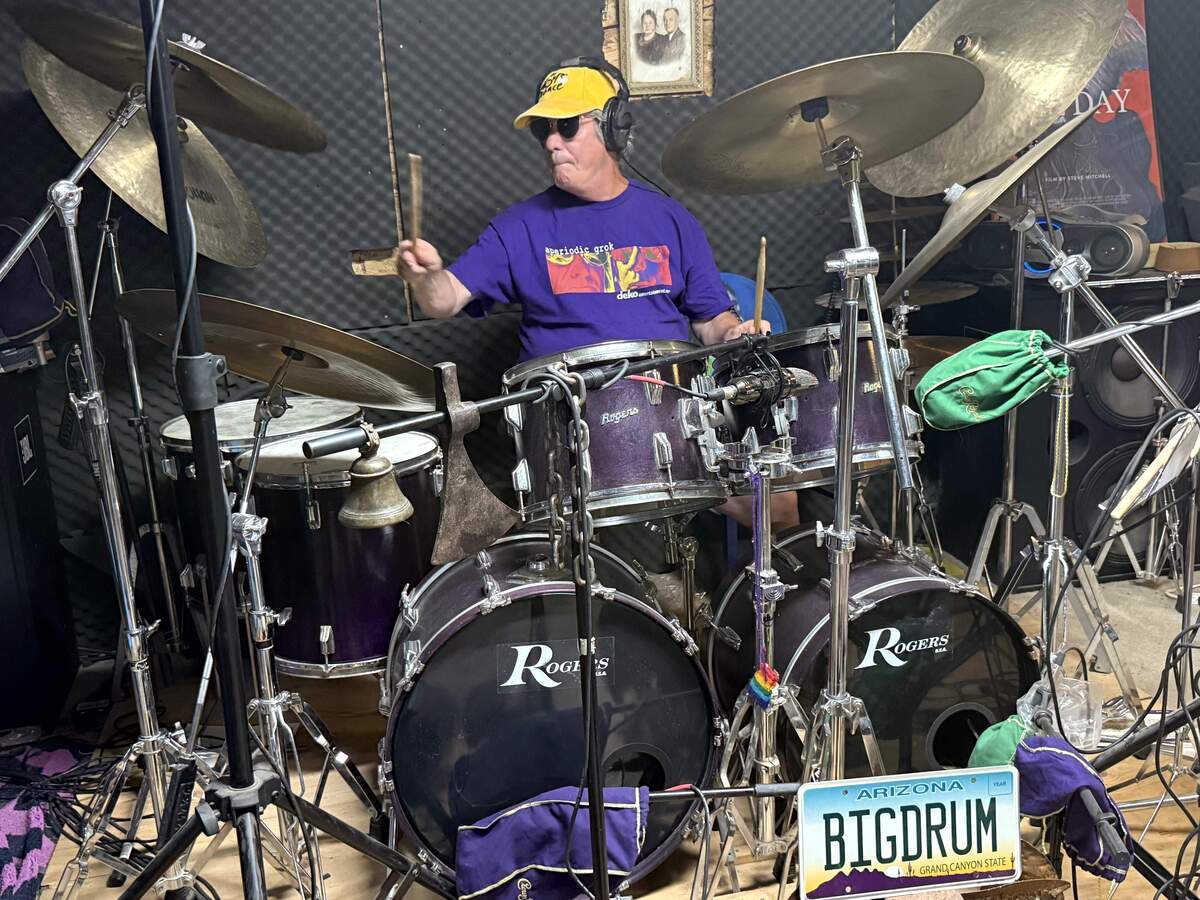
Other than sometimes using two bass drums, my setup has not changed since 1968, no matter the music. I have also been using the SAME Rogers drums since 1968. Check out an album I played on called ‘Intergalactic Bastard’ by Lobotomatic… heavy, greasy rock, that one. 26 takes in two days! I change my playing to best fit the task at hand. I have a fairly wide compass and like to play lots of different music.
However, I am not a journeyman who will play anything for money. If I am not comfortable with the music, I decline the project. I have declined stuff that included very well-known musos.
Chainsaw Jazz was known for incredibly fast and complex instrumentals. How did you keep that precision while still leaving room for humor and groove?
I wish that band had lasted longer. We worked hard on the arrangements. A lot of it came from Mark Smoot, one of the best musos I have ever worked with.
There is a live Chainsaw recording and other fun stuff, including my first recording, here: https://paulsears.bandcamp.com/
You’ve mentioned being drawn early on to twentieth-century composers like Stockhausen and Ives. Do you think of the drum kit as a compositional instrument that adds color and texture, rather than just keeping time?
Of course.
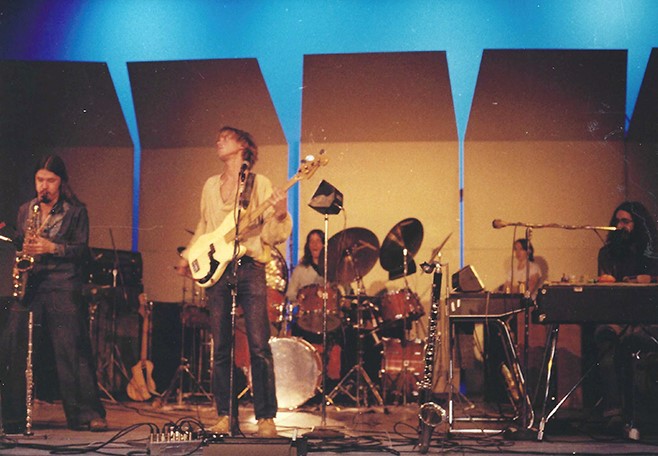
Critics described your work on ‘Aperiodic Grok’ with Tenk Van Dool as both precise and delicate. How do you keep that balance in music that can shift from beauty to chaos in a moment?
I just played what I thought the music needed, after lots of headphone practice.
You’ve collaborated with so many icons, from Fred Frith and John Greaves to Don Preston and Daevid Allen. Do you feel a sense of responsibility to connect the original avant-garde scene of the seventies with what is happening now?
Responsibility, no. My attitude and approach, definitely.
Being part of the Daevid Allen Weird Quartet for Elevenses meant working on some of Allen’s last major recordings. What was it like to share that creative space with him during that time?
Despite declining New York Gong in 1979, Daevid and I remained friends and I was honored to be included on that project. It also came out on gold vinyl not long ago.
Spirits Burning has a huge and ever-changing group of contributors, many working remotely. How does that kind of collaboration differ from the close, hands-on rehearsal process you had with The Muffins?
It is always a challenge to do remote projects. I would love to be in closer proximity to the musos involved. I will always miss The Muffins. We did a lot.
Chainsaw Jazz helped shape the early identity of Cuneiform Records. Did that group give you a chance to explore a funkier and more open side of your playing that The Muffins might not have fully allowed?
Not really. Totally different animal.
Your new album ‘Aperiodic Grok’ with Tenk Van Dool has been called a true road record and a jazz-rock hybrid. After so many years of collaboration, what thread connects the energy of that project to your earliest inspirations like Zappa or Henry Cow?
Thank you! All threads always come into play. We have a new one in gestation at the moment, … a bit different. Tenk also played on and mixed the CHO-ZEN FEW CD.
https://www.dekoentertainment.com/inthesquare/chozen-few
‘Manna Mirage’ stands as The Muffins’ first big statement… As the drummer grounding that record, did you feel that same duality between artistic dream and real-world struggle?
I never thought about it that way. The CD is MILES better sounding than the vinyl, thanks to Kit Watkins’ remastering.
In 1979, The Muffins released ‘Air Fiction,’ a rare improvisational album… What made you want to put it out alongside more structured material?
We just thought we needed another album out. Faux-leather, all-black cover, YEARS before Spinal Tap, to boot! I like it more now than I did then.
The final album of the band’s first life, ‘185,’ was produced by Fred Frith in 1981… Can you talk about that creative tension?
I love what he did. No real tension. That opinion was voiced mostly by folks outside the band. Cuneiform insisted on the remix, so we did it. Both mixes are great. I still prefer the original. The remix is a great document of how we sounded live in a good studio. The band was never tighter, before or after that period.
Looking back, The Muffins evolved from the structured debut Manna Mirage to the harder edged, RIO-influenced 185. How did your drumming adapt to that shift?
Coming from a rock background, I was thrilled that the band got heavier!
Let’s go back to the beginning. Where did you grow up, and how did music first pull you in?
I grew up in DC and my teen years were spent playing with people. There was almost a band on every block where I grew up. It’s what kids DID back then. My living room was a hangout spot! Seeing The Doors and Hendrix in smaller places was something. My favorite psych band was, and still is, the West Coast Pop Art Experimental Band. There is a cool label, Sundazed, that is re-releasing a lot of old psych that I need to check out.
There were great local bands around playing cool original stuff; Crank, Grin, Grits, Still Rovin, Sageworth and Drums, Fat City, Snake, Joy, Wayne Feeds… a ton of them. I was in three DC bands that played originals: Sane Day, Tinsel’d Sin, and right before The Muffins, Magick Theatre. See my Bandcamp page: https://paulsears.bandcamp.com/
How did The Muffins first come together?
Story best told by Tom Scott in my book, or by Dave Newhouse. They were three years into it before I met them and joined the band. I was their fourth or fifth drummer. They were out in this little suburb of DC called Gaithersburg, and I was frankly STUNNED that this Henry Cow-ish fan and music scene existed way out there, away from DC.
Moving from the East Coast to Arizona must have changed your rhythm and sense of community. How has that shift influenced your creativity?
The BIG problem at first was finding an engineer. For most of a decade I had been working with Maryland pal and engineer Carl Merson. I had built a DAW but was not at all conversant with the software. So I advertised and got VERY lucky with a young guy named Josh Medina. He could drive DAW software and even liked the music I was doing.
For the first six years (2010–16) I was in Apache Junction, an eastern suburb of Phoenix. I watched Josh like a hawk and taught myself how to record tracks. I have been doing it myself since we moved to Superior, AZ, in 2016.
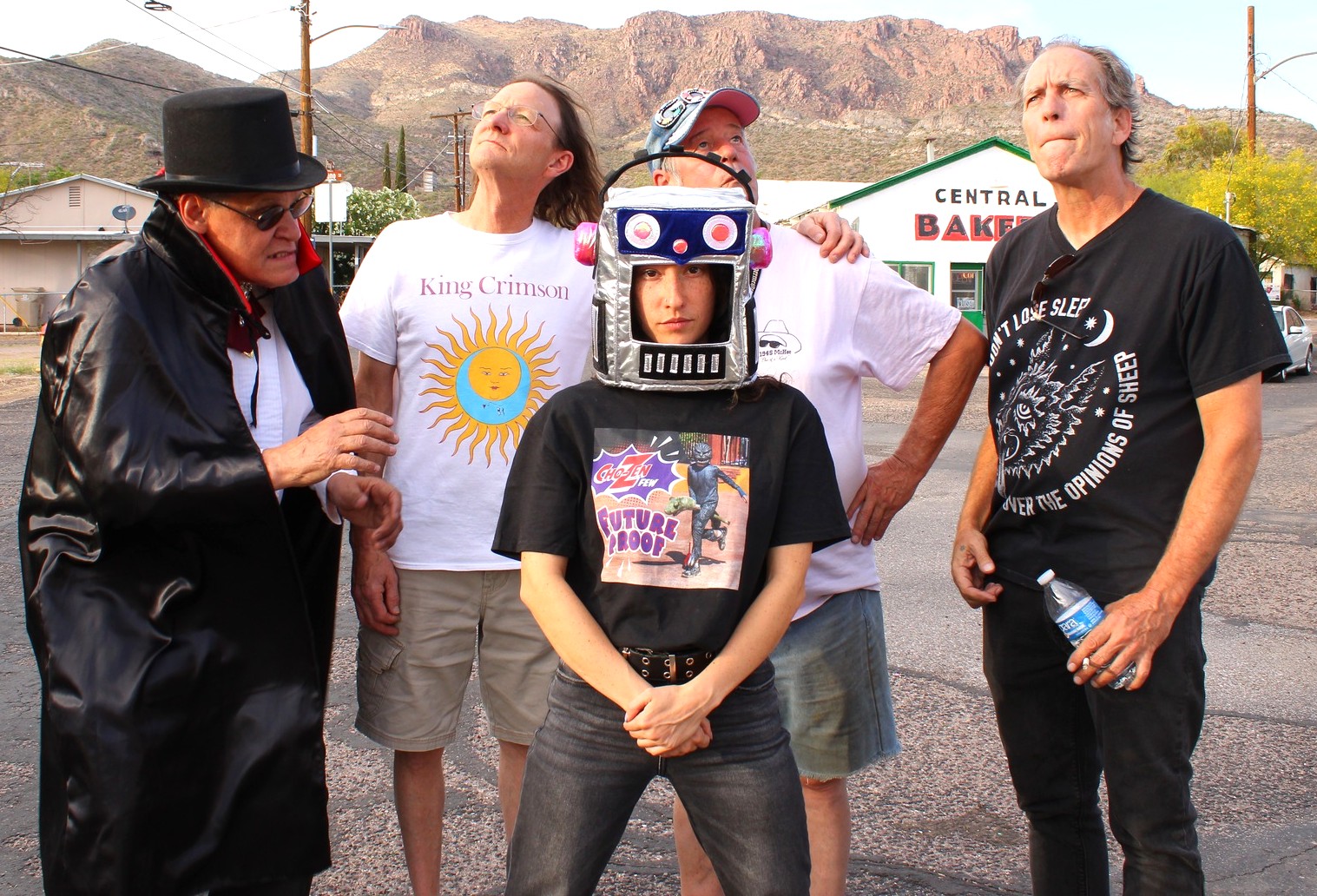
The next big problem was finding people who want to play fun music live. In 2021 I met Steve Mitchell (bass), and in 2023 Ruben Riera (saxes), and now we have a band, CHO-ZEN FEW. The search for a keys player continues… slim pickings out here in the Sonoran Desert.
What are your current musical obsessions or priorities right now?
Just practicing with my band and playing. I’m always flattered when folks ask me to play on their albums. Also playing guitar, bass, and trombone from time to time. A lot of work!
Looking back, is there a choice you made that quietly changed your path in a big way?
Marrying a woman who REALLY likes the music and supports what I do is a big thing.
What does your life look like right now, outside of the music?
I work with a small film company, Fishgate Productions, as a sound engineer, I volunteer around our small town, and in season I am a stage manager and sound engineer at the Arizona Renaissance Festival, which is a blast. Great team of people. Made many friends. Started in 2011.
And finally, imagine you come visit my little town and we stay up all night playing records. My first pick is Circuit Rider from 1980. What do you put on next?
‘This Is Not The End’ by Present, for sure… and ‘FUTURE PROOF’ by CHO-ZEN FEW.
Klemen Breznikar
Paul Sears Website
Stairway Press Website

Great interview! Paul is the best! Legendary musician & always a kind, welcoming friend.