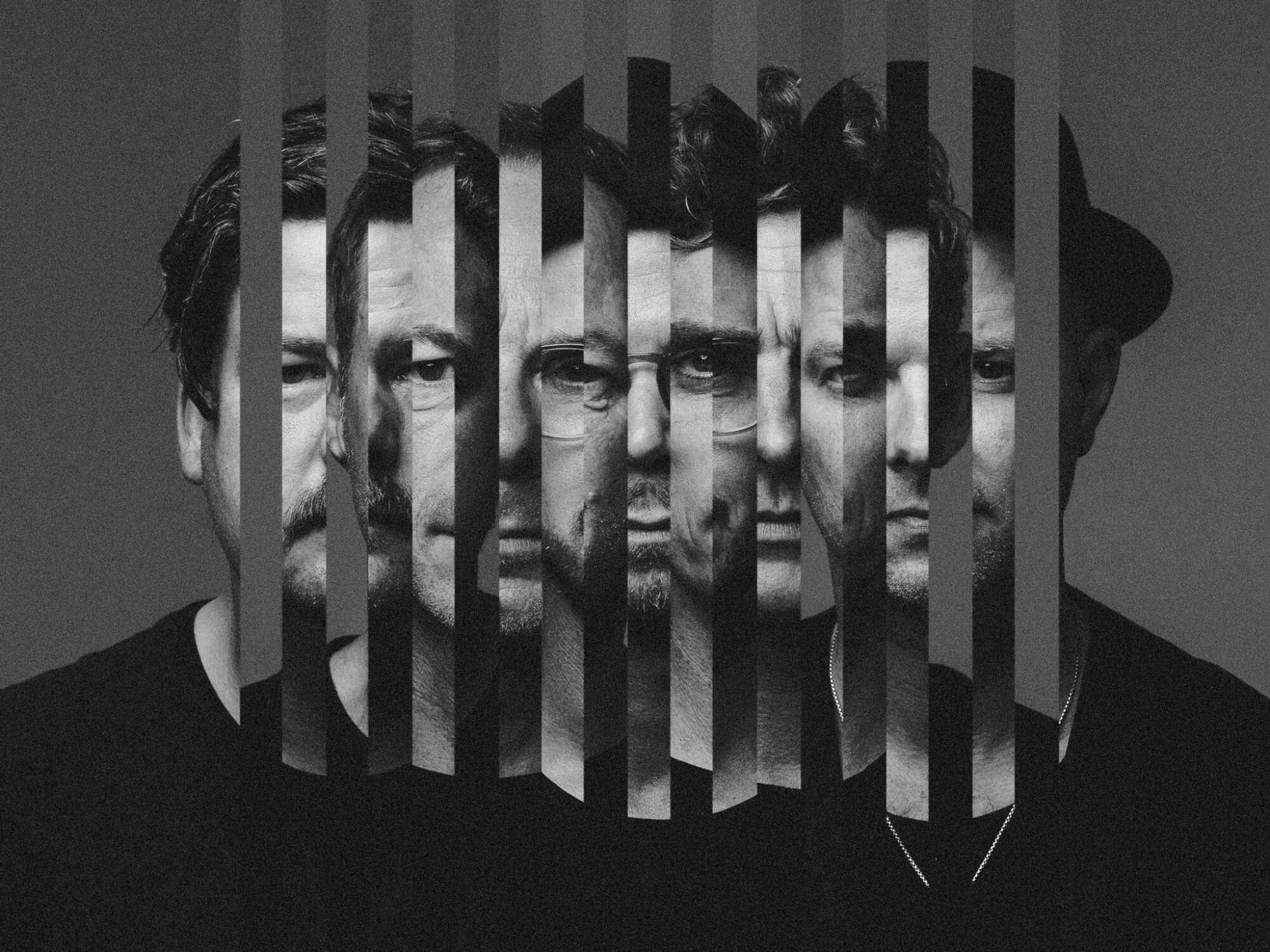

Andorra’s ‘III’: An Interview on Improvisation, Instinct and Identity
Andorra’s third album is like a system in motion, a slow forming pattern, texture, …
Recorded at Lundgaard Studios, the band absorbed the atmosphere of the space and bent it toward their own concept. Improvisation is not decoration here. It is structure. Peter Møller’s hands on both the performance and the mixing desk give the album an internal logic, like a closed circuit being rewired as it runs. “Editing meeting free music captures a lot of the balance we focus on: chaos and order,” he explains, and ‘III’ lives precisely in that tension.
There is a faint echo of krautrock’s motorik hypnosis, the polyrhythmic snap of Mingus, the cinematic drift of an unseen narrative.
“It is really a key word for us: balance.”
You’ve all worked across disciplines, from orchestral music to chamber jazz and film scoring. How does that broad background inform the way you compose as a collective? Does one discipline tend to take the lead, or is it a true fusion every time?
I think, in a broad sense, that the work we have all done over the years has been focused on capturing good ideas, whether they are improvised, composed, or arranged. For a group that does what we do, the main task is to create arrangements with a strong narrative while maintaining room for errors and happy accidents.
The warmth of analog synthesis meets digital manipulation meets traditional jazz musicianship. How do you strike that balance? Is it a conscious decision when composing, or does it emerge naturally?
The material we write usually calls for one of those types of sounds. A lot of the task for us is to strike the balance. It is really a key word for us: balance. That is what it is all about.
You recorded ‘III’ at Lundgaard Studios, one of Denmark’s most prestigious spaces. What did that setting bring to the record? Did the environment itself, its acoustics, its history, affect your approach?
The vibe at Lundgaards definitely worked its way into our music. We brought as many instruments as we could carry, lamb chops, spices, potatoes, and plenty of gin for our late-night listening session. It is a wonderful place.
Peter Møller handled the mixing himself. That is a rare choice, but one that makes perfect sense given how intricate and texturally rich your sound is. What was that process like?
Though we searched and tried different people for the task, I ended up mixing the whole thing. It was a joy to mix; I have been doing it for some time. It was also very exciting to edit a lot of the fully improvised music found on the record at specific points. The tracks felt very lively and special as soon as they were given a little structure. Editing meeting-free music captures a lot of the balance we focus on: chaos and order.
Nordic music often gets tagged as brooding or introspective, yet ‘III’ is playful, high-energy, and groove-driven. Was that a conscious rejection of certain expectations, or simply where your collective instincts took you?
There is indeed a lot of focus on quiet acoustic sounds in the Nordic genre, with stillness and reverb. To be honest, it can be quite boring to my ears. While we inevitably use that approach subconsciously, we have always aimed for more color and groove in our music because we like a big sound. We also think it widens our audience considerably.
The rhythmic complexity on ‘III’ feels effortless, almost danceable at times. How do you approach groove as a band? Is it something that emerges from jamming?
Yes, indeed. Jamming is a great place to start. For us it is always about finding a repeatable great idea and then giving it a twist, such as cutting a beat or a bar. This gives it a sense of repetition while also keeping it surprising. We aim for something like an eternal repeating pattern, similar to krautrock, electronic, or Asian music when it comes to grooves.
‘Mingus’—given the title, it is tempting to draw a connection to Charles Mingus. Is it an overt homage, or does the track carry a different significance?
It was a working title that stuck. The thing is that some of Mingus’ best and most progressive grooves were often in a quick 6/8 feel. A quick polyrhythm was often present, driving the whole thing. That inspired us to go for something similar.
The album exists both as a record and as a concert film. What drew you to the idea of a fully immersive audio-visual experience? Did the film influence the way you performed or structured the music?
We really enjoy live sessions. They are a good documentation of our work, and we have worked with some really great people on that. We had the opportunity to perform for a small audience wearing headphones in a nice space, and we could not resist doing it. While it is great to have online access, we also premiered it in a cinema. That was really fun, and we enjoyed it immensely.
Texture plays a huge role in the record. From shimmering guitars to squelching synths and thick old-school bass, there is a real depth of sonic layering. How much of that is shaped in the moment versus refined in post-production?
The core idea is already there in the performance. In a subtle way, mixing and editing can focus the attention better on the parts we want to highlight and shape the sense of space. It is super important.
Each member of Andorra has a distinct musical voice, yet the collective sound feels seamless. What is your process when arranging?
For this album, we met frequently and rehearsed bits and pieces to develop a common sound and shared idea of where we were going. Many mornings at Simon’s place involved lots of coffee and cigarettes, and we had a good time together. Arranging is indeed a collective conversation, and it is something we care deeply about.
Your debut in 2021 was a reunion of sorts—five friends finally making the record you had envisioned. How has your dynamic evolved since then? Does ‘III’ represent a refinement of your original concept or a departure from it?
It feels more like a refinement. We may have explored some musical extremities this time, with completely free collective music and more structured composed sheet music. It is the same approach but amplified over time, and we think it is our best work yet. As a whole, the three albums we have done now feel connected, so we might explore something completely different on the next one, but we will see where the music takes us.
Given your passion for blending the past and present, if you could teleport ‘III’ back in time and have it land in any musical era, where do you think it would feel most at home?
It would be fun to be part of the krautrock and early electronic scene in Germany in the early 1970s or the experimental, free, and grooving scene in early electric jazz in 1960s America.
The idea of nostalgia often comes up in discussions about modern vintage sounds, but your music does not feel like a revival. It feels like it is building something new. What is your relationship with nostalgia as composers?
Of course, we are just a small part of a larger whole. We have many musical heroes who inevitably find echoes in our music, but on the other hand, we do not want to reproduce anything or a specific genre. Ideally, we want to create it ourselves and synthesize it in our own way.
There is a sense of cinematic storytelling woven throughout the album. If ‘III’ were a film soundtrack, what kind of movie would it be? Would it have a clear narrative, or would it be more abstract and impressionistic?
We sometimes joke that some of our wilder music would be great for a series like Homeland, featuring a manic depressive CIA agent who always solves the case, though she drinks a lot of white wine, loves old jazz music, and is generally unstable. It could maybe be something like that if made in Europe.
Klemen Breznikar
Andorra Website / Facebook / Instagram / Bandcamp / YouTube
April Records Facebook / Instagram / Bandcamp / YouTube