
Jeff Lederer Interview: Bringing Dolphy, Ornette Coleman and Oliver Nelson Into the Present on His Latest Release
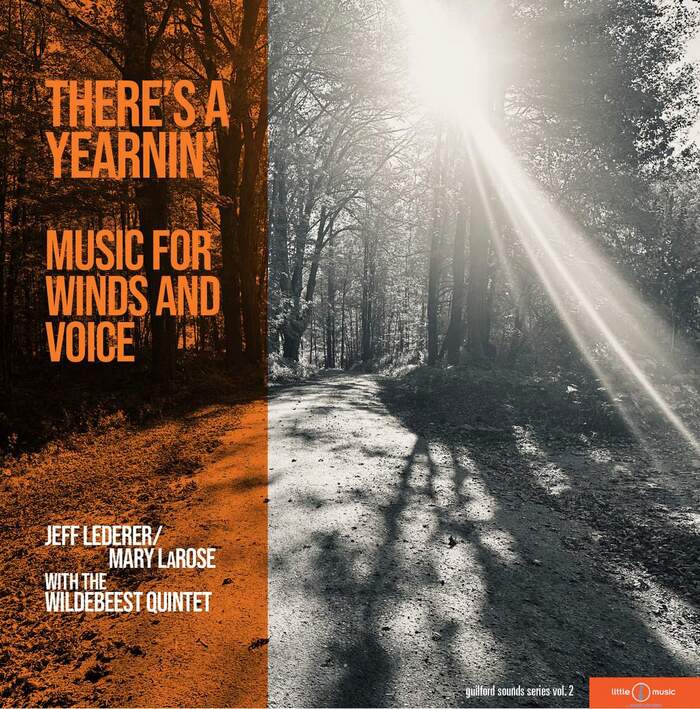
Jeff Lederer is a saxophonist, clarinetist, composer and bandleader whose work moves fluidly between jazz, contemporary composition and free improvisation. His new album, ‘There’s a Yearnin’’, with Mary LaRose and the Wildebeest Wind Quintet, reflects that breadth.
“This project has truly been in the works for over 30 years, maybe even more,” he says. It draws on his long engagement with the music of Eric Dolphy, Ornette Coleman and Oliver Nelson. While these figures are often identified primarily as improvisers, Lederer focuses on their work as composers, particularly their use of notation in larger forms.
The project developed further during work on his 2021 Dolphy recording ‘Out There’ with LaRose. At the Library of Congress, Lederer located a manuscript titled ‘Woodwind Suite, mvt. 2’, a notated chamber work for wind quintet with added clarinet. Only the second movement survives, ending with an incomplete flute cadenza. Lederer reconstructed the score for performance and added a da capo to provide a workable conclusion, while still acknowledging its unfinished nature.
The album combines this Dolphy work with Ornette Coleman’s ‘Forms and Sounds’ and arrangements of Oliver Nelson compositions for winds and voice, with lyrics by LaRose. Lederer also includes his own piece, ‘Cruxifiction (not a word)’, which relates to his studies at Oberlin with Wendell Logan and to Marian Anderson’s performance of ‘Crucifixion’.
The performances aim to balance written material with flexibility in interpretation. Lederer worked with the Wildebeest Wind Quintet to realise this approach.
The project also drew in Denardo Coleman, Oliver Nelson Jr. and George Schuller, alongside the crucial support of James Newton and the Dolphy estate, whose involvement made it possible for these works to be realised in performance and on record.
Lederer hopes listeners will meet the album on its own terms, “without expectation, without genre, without boundaries.”
“This is a musical mind on another level.”
You’ve explored a lot of different territory over the years. What was it about this project that made you want to follow it all the way through?
Jeff Lederer: This project has truly been in the works for over 30 years, maybe even more. My experience of the music of these three giants, Dolphy, Ornette Coleman, and Oliver Nelson, was always at a gut level, at the sheer audacity of what they were doing not only as improvisers, but as composers.
You’ve spoken about a long connection to the music of Eric Dolphy, Ornette Coleman, and Oliver Nelson. What first drew you to them as composers, not just as saxophonists?
The first money I ever actually earned in music was in the form of a $100 award from a local bank in Los Angeles that I was given for my rearrangement in high school of Oliver Nelson’s ‘Stolen Moments’ for the high school jazz band. There wasn’t a published arrangement at the time, and I loved the sound so much I transcribed it for my high school band. I then dove deeper into the big band catalogue of Nelson, and especially was drawn to the large-scale compositional vision he achieved in albums like ‘Afro American Sketches’. The music of Ornette Coleman actually first came to me through the ‘Skies of America’ masterpiece that my brother brought home from Berklee. Again, while I loved Ornette the improviser, it was the large architecture of his thinking in that work that really blew my mind. With Dolphy, of course, my entry point was through the albums that we all love, such as ‘Out to Lunch’, but it wasn’t until I discovered the Wind Sextet and other sketches of chamber works in the Library of Congress collections that I realized how deeply compositional Dolphy’s thinking was as well.
That earlier project, ‘Out There’ with Mary LaRose, really centered Dolphy’s music. Did this album grow out of that experience, or did it take you somewhere you didn’t expect?
Yes! This work did grow directly out of the previous Dolphy-centered recording ‘Out There’ because we did a lot of primary source research on that album, again in the Library of Congress Dolphy Collections, which were curated by the great James Newton and are open to the public. It wasn’t until George Schuller alerted me to the manuscript for the Wind Sextet that I returned to DC to explore that part of the collections and finally realized the aspirations Dolphy had for himself as a composer of large-scale notated compositions in various chamber settings, most of them unrealized in his lifetime.
When you found Dolphy’s wind sextet manuscript at the Library of Congress, what stood out to you right away when you looked at the score?
The scoring was unique in his own collection, for a standard wind quintet with an additional clarinet. There was also a piano part, but I realized quickly that the piano part was there as a kind of “study-score” or score reduction, a technique used by many classical composers. It was not intended to be played. The work has a seriously well-crafted sense of counterpoint, beautifully orchestrated in this chamber ensemble, and a harmonic sense which leans in on some of the sounds of the impressionistic composers from that world, such as Poulenc, Ravel, and Debussy, which will come as a surprise to those expecting to hear something more like ‘Hat and Beard’. This was surprising to me, but not completely, as the collections of Dolphy’s papers also included various orchestral excerpts he was practicing as a young man, such as Stravinsky’s ‘Pulcinella’ suite, as well as music by Varèse and more. Dolphy’s ears were deep in contemporary music from all perspectives.
The way the piece surfaced, through your conversation with George Schuller and then going back to find it yourself, feels very direct. What was it like to take that handwritten manuscript and bring it into a playable form?
Transcribing the piece into a format we could play from was a job I took seriously and carefully. Dolphy has relatively little in terms of articulations and dynamics in the movement, and I wanted the music to speak clearly in his own voice, respecting the manuscript. The first reading was, to say the least, a cathartic and very emotional experience for all of us in the room.
The score itself is incomplete, with missing movements and that unresolved flute cadenza. How did you approach shaping an ending, and how much did you think about what Dolphy might have intended?
This was a work in progress for Dolphy, and I did take the liberty of adding a D.C. repeat to the beginning after the flute cadenza to give this second movement of a piece, which I believe was in three movements, a sense of completion as a standalone piece, as movements 1 and 3 are not present in the collection. Still, there is a kind of unresolved feeling at the ending we created, and I think this does reflect well the unrealized potential of Dolphy the composer of large-scale notated works. Imagine what could have been if the world had been ready for Dolphy the composer? While clearly Dolphy had aspirations in this area while still a young man, he was rejected for a summer institute at USC and received direct feedback from that panel that they were not open to an African American man being part of their program. Imagine the frustration, the anger, and yet Dolphy turned to create a lifetime of incredible music. If only the life had been longer, and America had been ready.
This album brings together Dolphy, Ornette, and Nelson in one program. What made that combination feel right to you?
The web of personal connections here is fascinating. Of course, Dolphy and Ornette were connected, though after ‘Free Jazz’ there wasn’t much in terms of collaboration between these two titans of the alto saxophone. The relationship and obvious friendship between Dolphy and Oliver Nelson is clear through their many collaborations, which always feel to me like Oliver Nelson gets a special thrill in letting Dolphy run wild in his more structured compositional frameworks. The two of them are a kind of yin and yang which are so complete together. I don’t have any knowledge of interactions between Ornette and Oliver. More research is needed.
Oliver Nelson certainly feels like the one in this triad that brings more traditional structure, but his sense of the dynamic use of dissonance, creativity in voicings and orchestration, and more extended compositions indicate that he was thinking on a high level compositionally. Nelson himself only lived to 43 years old and produced a huge amount of music, both commercial and artistic.
Ornette Coleman’s ‘Forms and Sounds’ isn’t often performed. What was it like getting inside that piece and preparing it for this group?
In short, ‘Forms and Sounds’ blows my mind every time. I have loved the piece for a while from the Philadelphia Winds recording, and when I found I was moving towards working in the woodwind quintet environment, I reached out to Denardo Coleman, who graciously shared the music with me in Ornette’s manuscript. Parts only. When I asked Denardo for a score, he said that Ornette didn’t write a score, just parts, which is a miracle given the scale of the work and the incredible design and architecture of the work, both horizontally and vertically, done without a score! This is a musical mind on another level.
In rehearsing the work, which, like the Dolphy, was given without articulations or dynamics or tempo markings, I felt that it was in essence very much like a Baroque dance suite. All the movements are in binary form, and we included improvised interludes like Ornette did on trumpet in the Philadelphia recordings. In the live London set, the interludes are not present.
Your arrangements of Oliver Nelson’s music, with Mary LaRose’s lyrics, add another layer to the project. How did the two of you shape those pieces for winds and voice?
I have worked with Mary’s unique style of vocalese jazz in a variety of orchestrations, from standard bands to trombone choir, string quartet, and, in Portugal in 2017, performances with big band, orchestra, and choir. But the pure sound of voice with winds is really a thrill and feels so natural for the Nelson-esque sensibility of quirky orchestrations.
There’s a balance here between detailed notation and the freedom these composers are known for. How did you think about that balance in rehearsal and performance?
I read a fascinating short interview in which Ornette discussed the origins of the work, written due to a UK Musicians Union requirement that he use British musicians on a UK tour, so he wrote this piece for them. In it, he refers in Ornette-fashion to “improvised reading”, which may be why the London performance is so different from the Philadelphia one. I believe he is referring to all aspects of feel and interpretation, but I also believe he was fine with performers transposing pitches when they felt it. We did not take it that far, but the group certainly felt the agency to make each piece their own without fear.
The Wildebeest Wind Quintet plays a central role in bringing all of this to life. What did you hear in them that made you feel they were the right ensemble for this music?
The Wildebeest Quintet has been playing together for quite a while, and I wanted to work with them rather than just putting together a group for this project because they lend their own personality to the work so generously. I think it goes beyond “interpretation” the way classical performers might think of it. It’s more a sense of making the music your own as a group and feeling the liberty to shape the music together.
You’ve mentioned the involvement of Oliver Nelson Jr., Denardo Coleman, and George Schuller in different ways. What has it meant to have those direct connections to the composers’ legacies as you’ve worked on this?
The direct involvement of family members, these three sons, in the work is essential to my feeling that we were respecting the work and letting it move forward in ways that are organic to the very bloodlines of these composers. We will do a special night with Oliver Nelson Jr. guesting with us on flute upcoming. To hear him play the Dolphy piece will bring it to a new level and to the intersection of history, present, and future. George Schuller played a key role in connecting me with the Dolphy work, and that also has such a sense of meaning for me, as I believe Gunther Schuller was also essential in the compositional connections here with the work he did with both Ornette and Dolphy at Lenox and beyond.
The recording took place at Guilford Sound in Vermont, in a pretty distinct setting. Did that environment shape the way the group played or listened?
While Mary and I live in Brooklyn, Guilford, Vermont has been in our lives through a cabin in the woods that we take up residence in each year, and have done for the last many decades. It is an incredibly special place, and in that small town there is also an incredible world-class recording facility, Guilford Sound, which we have been working in each summer for the last three years. I have been issuing that work on my Little (i) label through the ‘Guilford Sounds’ series. Last year’s edition was my own chamber music album ‘Balls of Simplicity’. I am also co-producing a new and experimental music festival in the neighboring town of Brattleboro called NU MU each August. Our fifth year is programmed for 2026 and will be incredible. The woods of Vermont have become my essential compositional collaborator each summer, a haven for me and an inspiration.
‘Cruxifiction’ (“not a word”) reaches back to your time at Oberlin with Wendell Logan. What was it like revisiting that piece now and placing it alongside this material?
It was incredible for me to revisit this score from 1982, written under the guidance and inspiration of one of the great Black American composers, Wendell Logan, and based on Marian Anderson’s charged performance of the traditional spiritual piece ‘Crucifixion’ from both a spiritual and political perspective. I took the great liberty of adding this piece to the works by three of my heroes because I humbly want to recognize that I also share with them the impulse to create larger-scale notated works in addition to my more public activities as a loud tenor saxophone player of improvised music.
You’ve worked before at the intersection of jazz and notated music, including Los Sazones. What carried over from those earlier experiences, and what felt different this time?
Thank you for mentioning that project, in which we brought together an 11-piece salsa band with Baroque chamber orchestras in a reimagining of Vivaldi’s ‘Four Seasons’ concertos. The piece was commissioned by the Chicago Symphony and toured extensively, ending up on the stage of the Hollywood Bowl with the LA Phil. It was like a kind of fever dream for me, an incredible experience. Built into that piece was the sense of both commonality of the two musical languages, Baroque and salsa, but also the tremendous clash and collision of cultures, both musical and otherwise, which happened both in the score and sometimes on the stage! There will also be a collision between the colonial and the colonized, and it played out in real time in that piece.
In this project there isn’t that sense of cultural collision, but some of that did happen for Ornette in his ‘Skies of America’ piece, which I saw performed by the NY Phil conducted by a very disinterested Kurt Masur in the 1990s at Lincoln Center. I think there were some aesthetic collisions which Ornette anticipated and intentionally precipitated in that great work, and for that reason I don’t use the term “classical” for any of the work on this new recording of ours. It is large-scale notated aspirational work, not “classical” in terms of the colonizing culture.
These pieces come from different moments in jazz history, but you’re bringing them together in the present. When listeners hear the album now, what do you hope stays with them?
I hope listeners can take away a way of listening without expectation, without genre, without boundaries, just the way these musicians composed, with great imagination and few limitations. Yes, this recording features highly structured compositions, each with their own internal intelligence of architecture, but hopefully breathing with the same sense of surprise and “in the moment” feeling that was brought to the music when Dolphy, Ornette, and Nelson improvised.
Klemen Breznikar
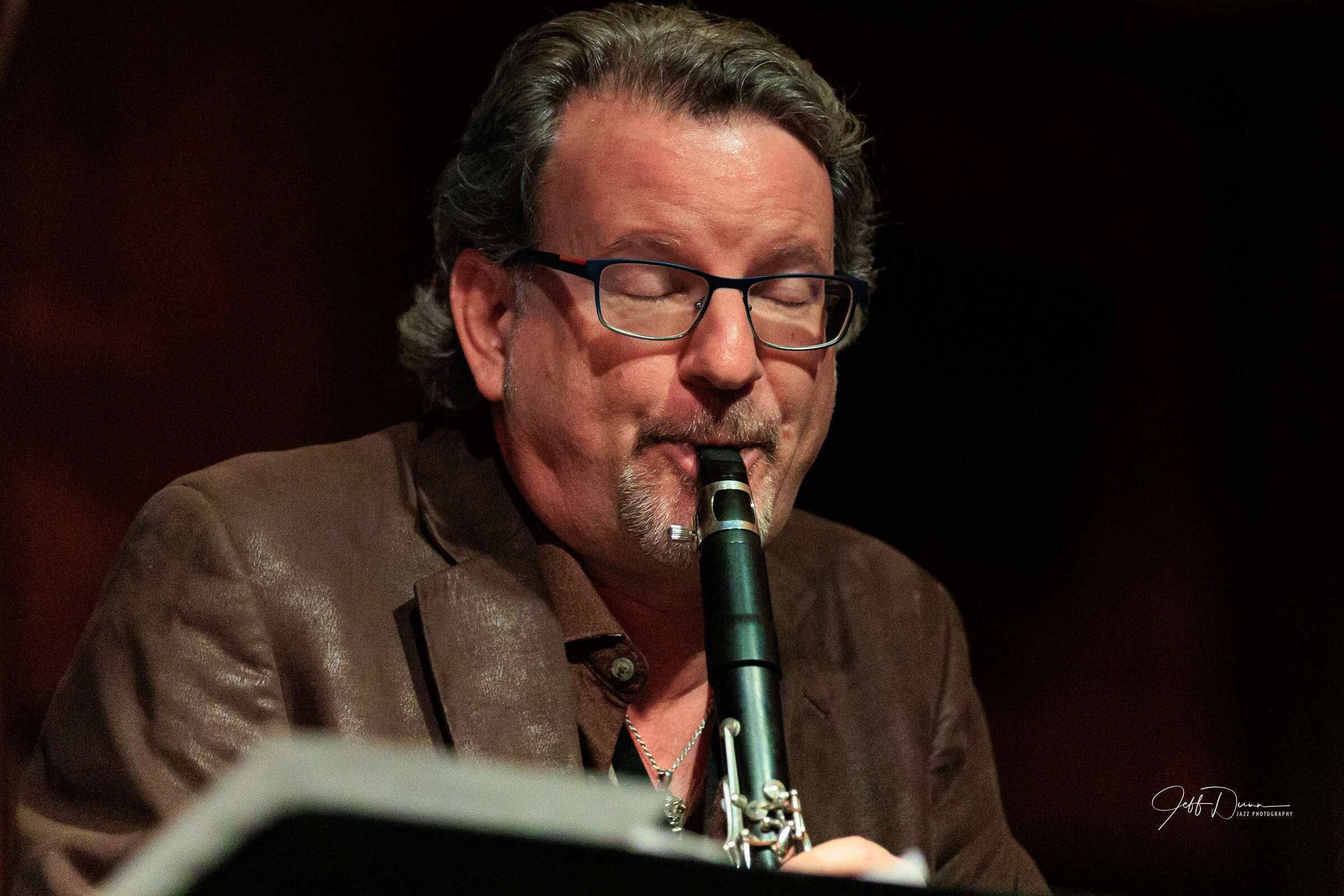
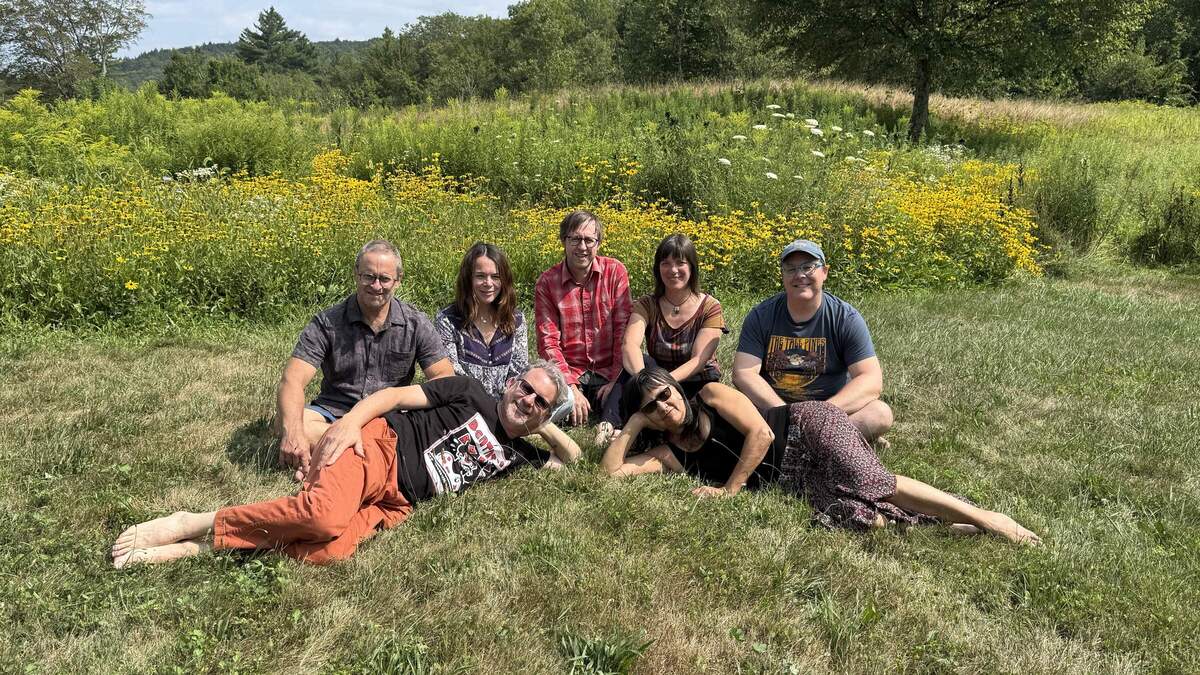
Headline photo: Jeff Lederer (Photo: Jeff Dunn)
Jeff Lederer Official Website / Facebook / Instagram / YouTube / Bandcamp