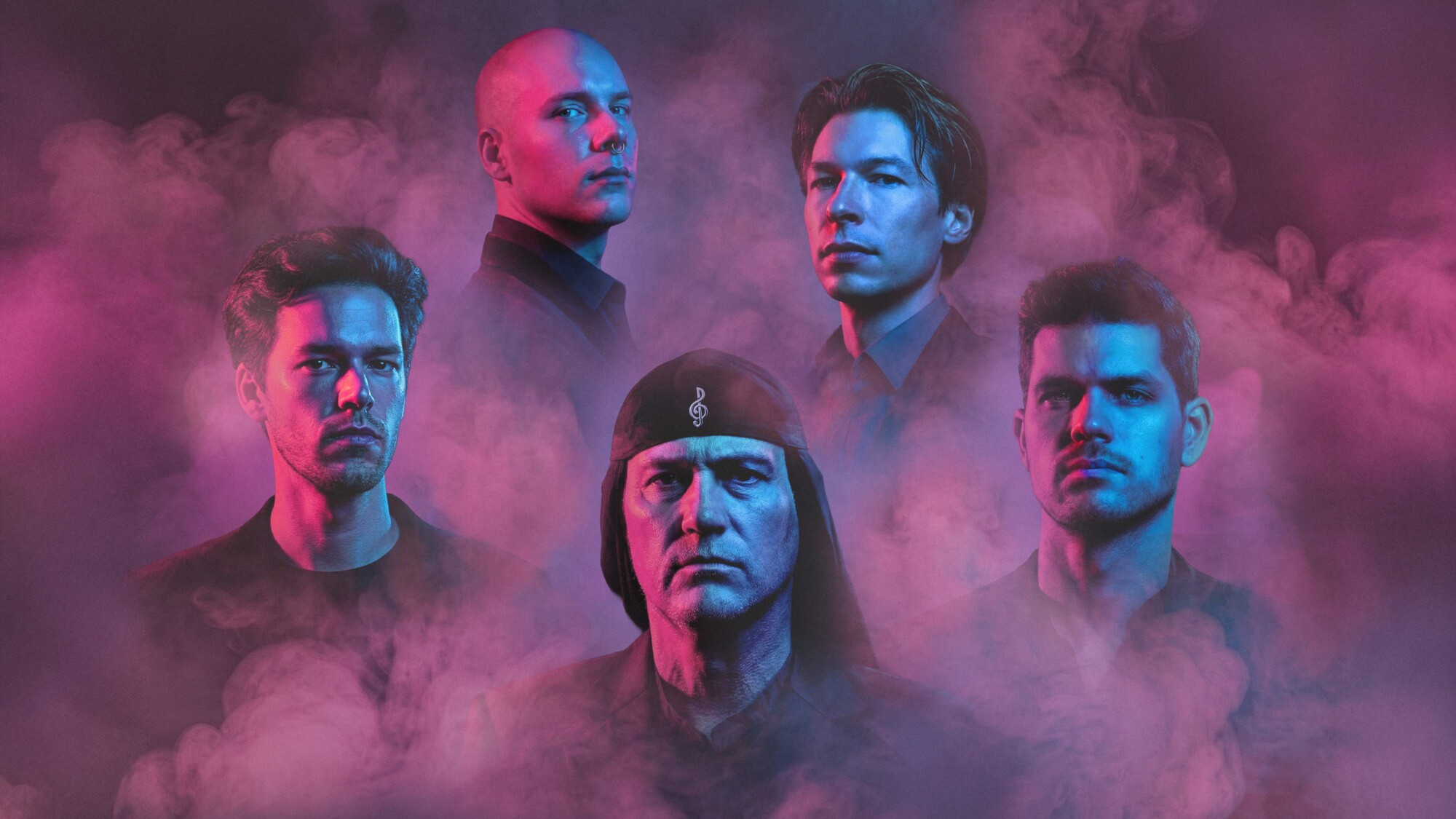

Laibach on Their New Album ‘MUSICK’: “The Old Factory Demanded Obedience. The New One Demands Permanent Engagement”
Laibach have always been hard to define, and that may be one reason they are still around today.
Formed in Trbovlje in 1980, they arrived from an industrial town in Yugoslavia with a sound and image that blurred the lines between popular music, political symbolism, propaganda, visual spectacle and contemporary art. More than four decades later, they continue to examine how these elements interact, although the cultural and technological context has changed significantly.
Their new album, ‘MUSICK’, is one of their most straightforward records in years. On the surface, it sounds closer to pop than much of their recent work, but beneath that surface it’s concerned with deeper questions about culture, technology and repetition. The album addresses themes including artificial intelligence, algorithms, digital culture and the overproduction of media. Laibach do not position themselves outside popular culture and comment from a distance. Instead, they work within its structures and conventions, using familiar musical forms to explore the social and technological forces shaping contemporary life.
That has always been part of their approach. Instead of criticising systems from the outside, Laibach tend to work within their language and imagery, reflecting them back in a way that reveals their underlying logic. As they explain in this interview: “Sometimes the best way to expose a system is to mirror it so precisely that the reflection itself becomes disturbing and uncomfortable.”
What makes ‘MUSICK’ feel particularly relevant at this moment is its engagement with artificial intelligence, algorithms and other contemporary technological concerns, but even more importantly the way it revisits questions that have occupied Laibach throughout their entire history and repositions them within a very different world. In the 1980s, their work confronted ideology, discipline, collective identity and the imposing symbolic structures of the state, examining the mechanisms through which authority presented itself and secured consent. On ‘MUSICK’, these concerns are examined in the context of a digital environment shaped by algorithms. As they note in the interview, “The old factory demanded obedience. The new one demands permanent engagement.”
The statement reflects a central theme of the album. Laibach contrast the industrial and political structures that shaped their early work with contemporary systems driven by digital platforms, data and continuous engagement. These systems work through a constant flow of information. As they note, “Censorship today often works through excess rather than prohibition,” highlighting the idea that visibility can be limited not only by suppression but also by saturation.
Laibach continue to focus on the relationship between culture, performance and power. From their origins in Trbovlje to projects in Sarajevo and Pyongyang, and now to questions around AI, they have consistently examined the political, ideological and social functions of music. ‘MUSICK’ continues that line of inquiry in a contemporary context.

“The machine no longer hides itself because it no longer needs to.”
‘MUSICK’ sounds like your most direct pop album, but also like a trap set for pop itself. When you use the language of catchy choruses, clean hooks and algorithm-friendly surfaces today, are you entering pop culture, contaminating it, or showing that it was already contaminated?
Laibach: Pop culture was never pure. It has always functioned through seduction, repetition and behavioral choreography. Algorithms did not invent this logic, they simply accelerated and automated it. With ‘MUSICK’, we wanted to inhabit the language of contemporary pop completely, not parody it from a safe distance. Catchy hooks, polished surfaces and hyper-accessible structures are already the native language of contemporary culture.
We are not contaminating pop culture; the contamination was always there. We are simply making its mechanisms more visible. Sometimes the best way to expose a system is to mirror it so precisely that the reflection itself becomes disturbing and uncomfortable.
You formed in Trbovlje in 1980, in a mining town and a socialist federation that no longer exists. Now you are making an album about AI imitation, oversupply, digital sickness and algorithmic taste. What still connects the industrial world of your beginnings with the immaterial factory of today’s platforms?
The infrastructure changed, but the logic remained surprisingly similar. Industrial society organized bodies through factories, repetition and discipline. Digital society organizes attention, behavior and desire through platforms, interfaces and continuous stimulation.
Trbovlje was built around coal, labor and ideological production. Today the process is less visible, but no less intensive. Platforms harvest data, emotions, habits and participation. Human experience itself became the raw material. What connects these worlds is standardization. Industrial modernity standardized production; digital modernity standardizes perception. The old factory demanded obedience. The new one demands permanent engagement.
Your early manifesto said that art can only escape political manipulation by speaking the language of manipulation itself. In 2026, that language is no longer only the voice of the state, the party, the army or the corporation; it’s also the voice of the feed, the prompt, the playlist and the recommendation engine. Has Laibach’s old method become more necessary, or has the system learned to absorb it?
The system has definitely learned to absorb critique. Today even resistance, irony and dissent can quickly become style, branding or entertainment. But that only makes our method more relevant. Power no longer speaks only through the state or ideology. It increasingly operates through recommendation, convenience and invisible forms of behavioral influence. The real problem today is therefore not repression, but saturation. Everything is included, recycled and made consumable. The machine no longer hides itself because it no longer needs to.
You have often worked with over-identification: taking power more seriously than power takes itself. But today ideology often appears as entertainment, wellness, irony, fandom, lifestyle or content. How do you over-identify with a system that already presents itself as a joke?
That is precisely the paradox today. In the 1980s, systems of power still depended on seriousness, authority and symbolic distance. Today power often appears relaxed, humorous and self-aware. It speaks through memes, lifestyle aesthetics, wellness culture and endless streams of content. This makes resistance more complicated, because irony itself became institutionalized. The system already mocks itself before anyone else can. Over-identification today is therefore no longer about simply exaggerating authority. It means entering the logic of contemporary culture so completely that its hidden structures become visible again. Sometimes the only way to expose manipulation is to participate in it with absolute precision.
“Censorship today often works through excess rather than prohibition.”
‘MUSICK’ includes a track called ‘Allgorhythm’, and the album seems to ask whether music is still chosen by listeners or increasingly pre-digested for them. What does resistance mean when the machine does not need to censor music, because it can simply bury it under more music?
Yes, censorship today often works through excess rather than prohibition. The system does not need to silence unwanted voices if it can dissolve them inside an endless stream of content. Visibility itself has become unstable. In that environment, resistance may no longer mean opposition in the traditional sense. It may simply mean creating moments that interrupt the flow, something strange, excessive or emotionally unresolved enough that the algorithm cannot immediately absorb or neutralize it.
The real danger is not that people are prevented from hearing music, but that everything starts sounding equally available, equally optimized and equally forgettable.
Laibach has never seemed very interested in the usual idea of originality. Your covers often take songs people think they know and make them sound stranger, heavier, and more political. Now AI can produce endless new versions of things that already exist, but without memory, risk, or real experience behind them. Does that prove something you have been saying for years, or does it make the whole question of originality too easy?
AI certainly confirms that originality was always partly a myth. Culture has always functioned through repetition, recycling, citation and recombination. No work emerges from emptiness. But AI also exposes the limits of pure replication. It can imitate styles, structures and emotional signals with extraordinary efficiency, yet something important often remains absent: consequence. Human art carries biography, contradiction, failure, desire and mortality within it. Even the most artificial works usually emerge from real historical tensions. AI produces convincing surfaces without necessarily experiencing anything at stake behind them. That is why its output can feel both fascinating and strangely empty at the same time.
The album brings in voices from very different musical worlds: Wiyaala, Senidah, Donna Marina Mårtensson, Manca Trampuš, Gregor Strasbergar and others. Laibach has always been a collective machine, but this album is unusually porous. How do you decide when another voice strengthens the machine, and when it threatens to humanize it too much?
Laibach was never interested in purity. The group operates more like a structure that absorbs different energies, identities and tonalities into its own logic. What matters is tension. A collaborator should not disappear inside Laibach, but neither should Laibach disappear inside the collaborator. The productive space exists somewhere between those two conditions.
On ‘MUSICK’, the contrast between voices became essential because the album itself deals with circulation, hybridity and unstable identity. Contemporary pop culture already operates through constant collaboration, exchange and recombination. The album simply reflects that condition in a more conscious form.
The title ‘MUSICK’ suggests both devotion and nausea: music as addiction, disease, medicine and compulsion. After more than four decades, do you still believe in music as a serious political or philosophical force, or has music become mainly a symptom of the world it once tried to change?
Music was always both. It can inspire collective imagination, emotional transformation and political identification, but it also reflects the structures of the society that produces it. Today music often behaves less like revelation and more like atmosphere, a permanent background stream accompanying consumption, work, distraction and self-management. But precisely because of this saturation, music still retains enormous power. A melody can organize emotion more efficiently than ideology itself.
Perhaps music no longer changes the world in the heroic sense imagined by earlier generations. But it still shapes the emotional architecture through which reality is experienced. That is not a small thing.
One of the album’s most striking titles is ‘Luigi Mangione’. Laibach has often dealt with the way real people can quickly turn into symbols or larger cultural figures in the public mind. When you use a name that is still so present and sensitive, how do you think about the responsibility that comes with it?
An artist cannot fully control how symbols circulate once they enter public space. Contemporary culture transforms people into narratives almost instantly, often before reality itself has settled. Our interest is not in exploiting private tragedy, but in observing how media systems manufacture meaning around individuals. A person can rapidly become an ideological surface onto which fear, desire, anger or fantasy are projected.
The responsibility of the artist is therefore not necessarily to provide moral certainty, but to remain conscious of the mechanisms through which collective mythology is constructed.
From Sarajevo in 1995 to Pyongyang in 2015, Laibach have repeatedly entered places where music cannot be separated from diplomacy, propaganda, trauma or danger. Do you see those performances as concerts, state visits, theatre, experiments in misunderstanding, or something else entirely?
Probably all of these things simultaneously. Laibach concerts were never simply musical events. They are situations in which political, cultural and symbolic systems temporarily collide. What interested us in places like Sarajevo or Pyongyang was not provocation for its own sake, but the possibility of entering highly charged environments where meaning could no longer remain stable or comfortable. In such contexts, performance becomes a kind of living negotiation between different interpretations of history, ideology and identity. Misunderstanding is not a failure there, it is part of the structure itself.
“Laibach could become obsolete the moment society no longer requires mirrors.”
The NSK State was created as a state in time, without territory. Today millions of people live in digital “states” shaped by platforms, currencies, fandoms, conspiracy communities and algorithmic borders. Looking back, was NSK a utopian artwork, a warning, or an early model of the political forms we now inhabit?
All three. Within NSK, we understood very early that identity and belonging were already becoming detached from geography. States were no longer experienced only through territory, but through symbols, rituals, information systems and participation. What once appeared abstract or fictional now feels almost ordinary. Millions of people today inhabit virtual communities with their own languages, rules, loyalties and mythologies. Digital platforms increasingly function as supranational structures with enormous political and psychological influence. NSK State did not predict this future in a technological sense. But it recognized that political reality was becoming theatrical, decentralized and psychologically constructed long before social media accelerated those tendencies.
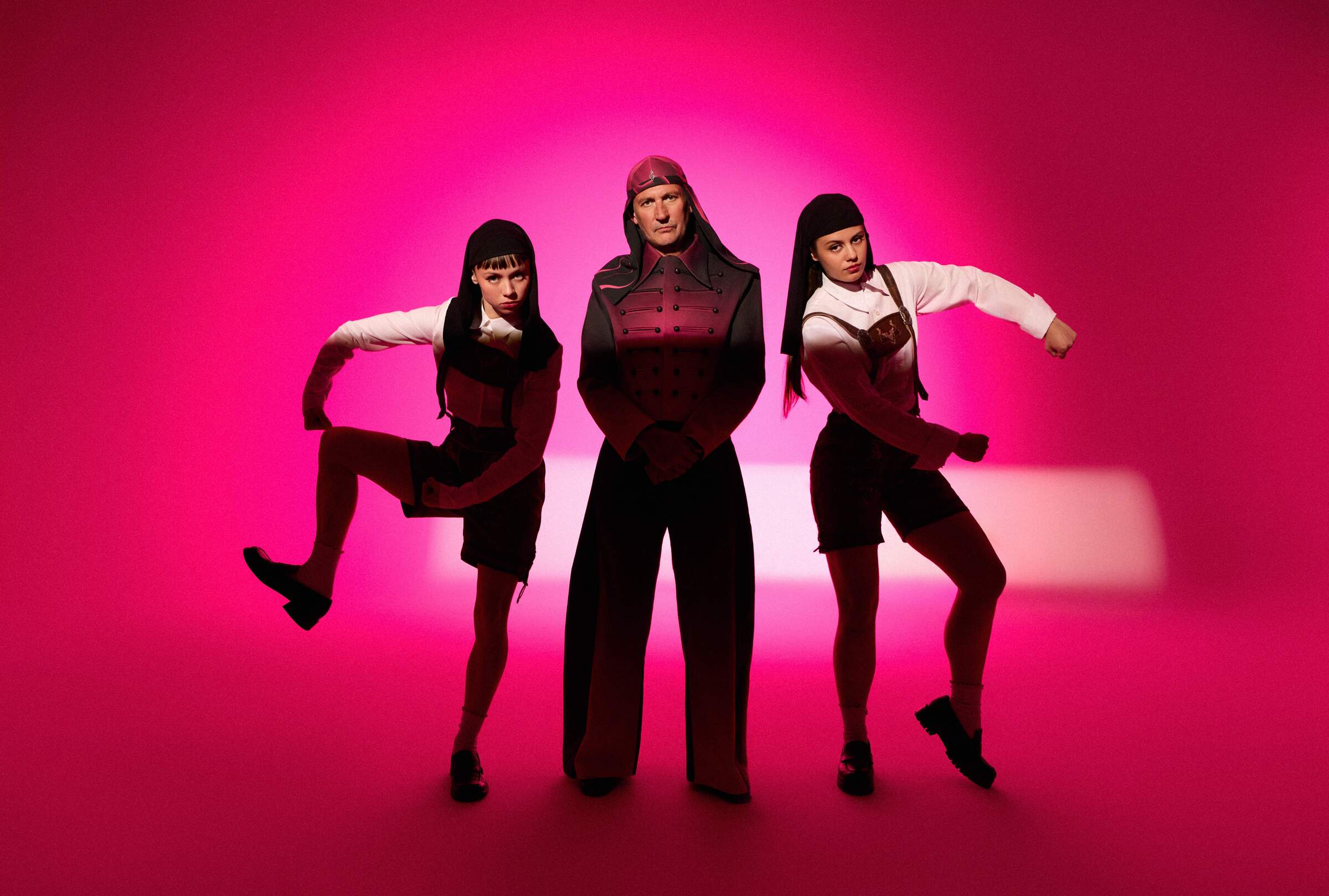
Laibach has survived socialism, post-socialism, nationalism, liberal capitalism, the internet, the culture wars and now AI. Many artists evolve by changing their language; Laibach often seems to survive by forcing each era to reveal that it was already speaking Laibach. What, if anything, could still make Laibach obsolete?
Laibach could become obsolete the moment society no longer requires mirrors.
As long as systems continue producing rituals of power, spectacle, control, identity and collective emotion, our language remains understandable. The forms change, but the underlying mechanisms persist.
Perhaps the real danger for Laibach is not censorship or technological change, but total transparency, a world in which ideology no longer hides behind symbols because people fully understand how systems shape them and still consciously embrace them.
But humanity does not seem to function that way. People continuously desire myths, authority, belonging and emotional choreography. As long as that remains true, Laibach will probably continue sounding strangely contemporary.
Klemen Breznikar
Headline photo: Nika H. Praper and Ludvik
Laibach Website / Facebook / Instagram / X / YouTube / Bandcamp
Mute Records Website / Facebook / Instagram / X / YouTube / Bandcamp