

Bob Hughes: ‘My Old Man’, ‘The Kids Are OK!’, and the Story Behind the Reissues
Seelie Court / Good Time Records have reissued Bob Hughes’ 1976 private-press album ‘My Old Man’ on vinyl and as a limited double CD with bonus rehearsal material. Today also sees the CD release of ‘The Kids Are OK!’, the 1978 follow-up credited to The Bob Hughes Band, presented in a cardboard wallet with archive imagery and detailed liner notes.
In the next few paragraphs, I will try to bring some of Bob Hughes’ story to life, though the fuller picture, with all its details, voices and connections, is explored far more thoroughly in Michael Björn’s liner notes.
The new editions put two remarkable records back into circulation, and they also bring Bob Hughes back into view as something more than a hard-to-find name known mainly to collectors. He was not part of the usual British folk story, at least not in any conventional sense. He worked closer to home. His songs came from family, friends, work, children and memory. Hughes wrote from the life around him, and the records feel like opening a book of stories that were never expected to travel very far.
I coordinated these reissues, while Michael Björn wrote the liner notes and carried out the main research, drawing on interviews, memories and archive material. His work, with the memories of Ron Turner, notes from Roger Nunn and information from Bob’s son Rob Hughes, gave the story its shape. Parts of this liner-note text also connect back to material originally published in Shindig! #172, which is worth noting because this is a story that has taken time to gather properly.
Bob Hughes was born in Haverhill, Suffolk, in 1944. According to the research carried out for these reissues, his father came from Wigtown in Scotland and had been a drummer in the King’s Own Scottish Borders Pipe Band. His mother, Jeannie, was from Haverhill. Bob grew up in a small post-war market town of just over 4,000 people, where children largely made their own entertainment and the weekly market was one of the few regular events that broke the routine.
The recreation ground was one of the main places where they did it. Years later, when Hughes began thinking and writing seriously about how children use space, take risks and invent their own worlds, those early experiences were never very far away. In 1970, Hughes started the Puddlebrook Adventure Playground in Haverhill, and he later became a respected writer on children’s play and playwork. His book ‘Notes for Adventure Playworkers’ appeared in 1975, just before the first album. For Hughes, play was not something soft or ornamental. It meant space, risk, imagination and freedom. Those ideas are never too far away from the songs. The adults in them often seem to be looking for the same things again.
Music came early, through friends and records. As a teenager, Bob, then known as Hughie, gathered with friends around a record player at Pip and Will’s house on Chauntry Road. Everyone brought 45s and listened closely. In the early 1960s he also met local musician Howard Evans, who helped him develop as a guitarist. By the middle of the decade, Bob and Roger Nunn were spending time with Nigel Thorne, whose collection included Joan Baez, Carolyn Hester and Bob Dylan. Dylan’s political songs made a strong impression, but Bob brought that influence back home to Suffolk and made it part of his own songs.
That is one of the most interesting things about his music. You can hear American folk revival, Dylan-era writing, Johnny Cash, road songs and the occasional beat-literary shadow, but the centre of gravity remains English. His best songs sound local, even when they are dreaming of somewhere else.
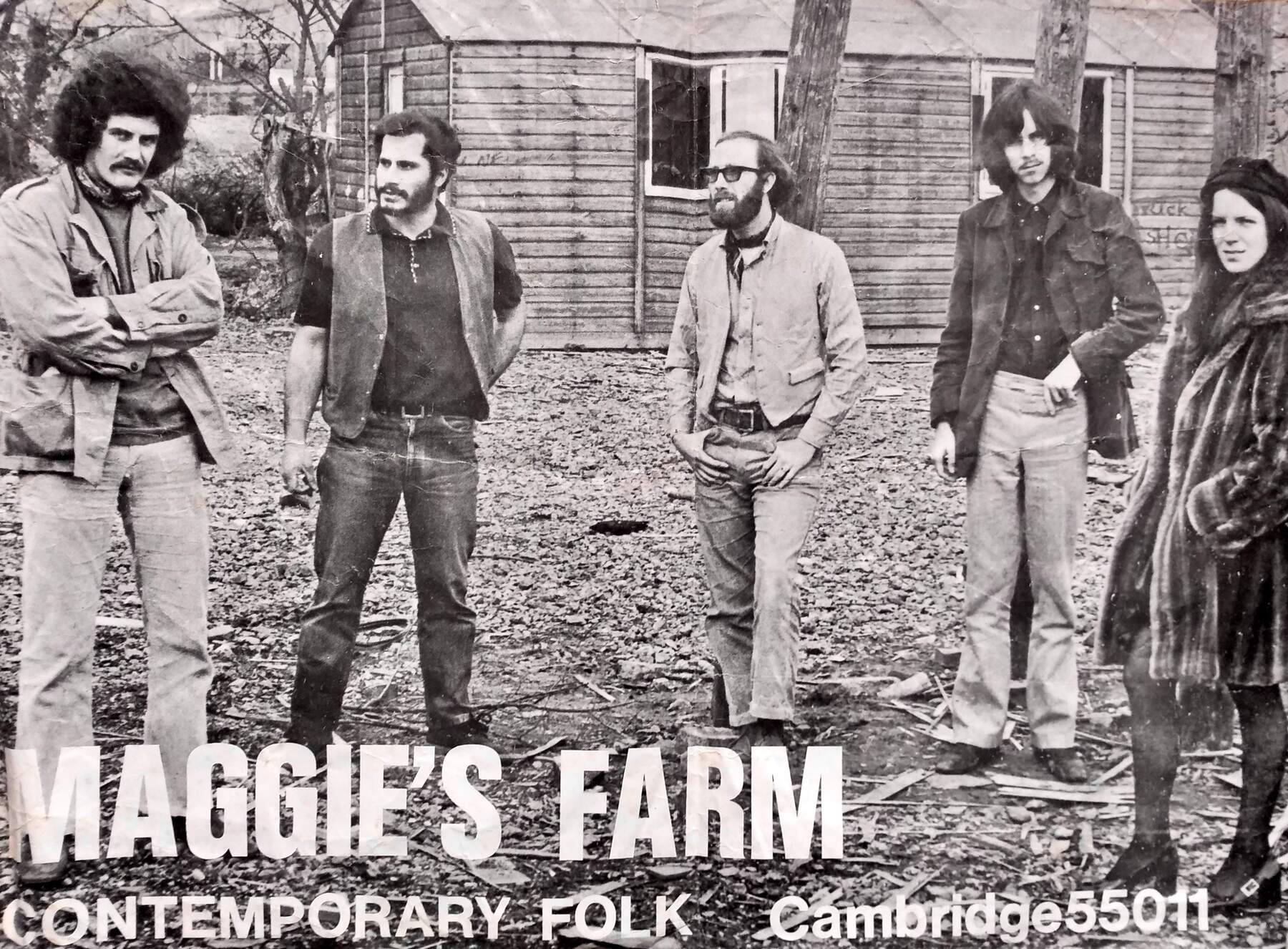
By the late 1960s and early 1970s, Bob was performing in folk clubs. He played with Tony Preston as a folk and comedy duo, and Ron Turner remembered them as entertaining; he also recalled that Bob and Tony once toured Germany. Bob then became involved with Maggie’s Farm, a Cambridge-based group formed by Turner, Carmine “Chic” Cinque and Maggie Pilmer. The group leaned towards American material, including Dylan and The Band, but Bob brought in a more English folk feeling.
Maggie’s Farm did not last in that form. Bob stayed in Haverhill, while Turner moved to London, but the two kept playing together from time to time around Suffolk and Essex. Turner would become one of the key musicians on ‘My Old Man’, and later one of the main witnesses to the story.
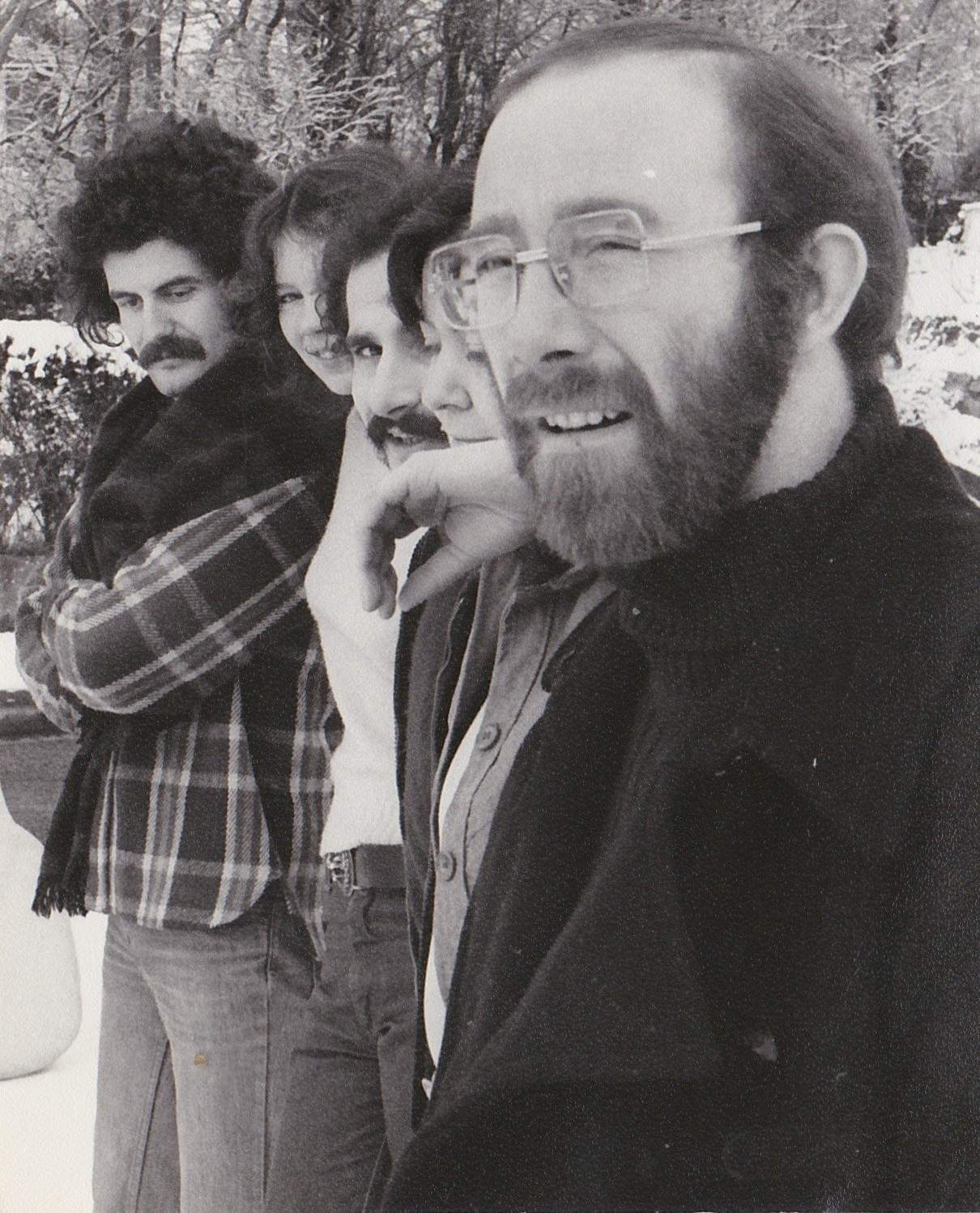
Before ‘My Old Man’, Bob was involved in the Hooknorton album ‘In For A Penny’. He contributed two songs, ‘High And Dry’ and ‘High Clay Lands’, but left the project after recording them. The Hooknorton rehearsals had taken place in a house Bob owned in Norwich, where he was then working for the City Council, and the album took longer to come together because there were more people involved. Bob’s own album moved more quickly. He asked Turner to join him, Chic Cinque added vocals, and the songs that became ‘My Old Man’ were rehearsed and recorded with little room for waste.
The album was recorded in August 1976 at Spaceward Studios in Victoria Street, Cambridge. The set-up was simple: Bob Hughes on vocals and guitar, Ron “The Boy” Turner on lead guitar and Carmine “Chic” Cinque on extra vocals. Gary Lucas engineered the session, Bob produced it, and George Peckham at The Master Room in London mastered the original album. The original cover drawing was by Robbie Hughes. For this reissue, the audio was mastered by Mint Audio and the artwork was prepared by Martin Robert Cook.
The new editions give the album proper context in different ways. For those who want the original record as it first appeared, there is also a vinyl reissue presenting the album without bonus material. The double CD expands the picture. Disc one contains the original album, while disc two gathers the rehearsal tapes, recorded at Bob’s home rather than Spaceward Studios with the same three musicians, and with Chic Cinque also acting as tape operator. That extra material lets the listener hear the songs closer to the room they came from.
‘My Old Man’ is raw in its delivery, and that gives it much of its loner-folk charm. The record is built mainly around two guitars and Bob’s voice. He sings close to the listener, warm in places and distant in others. At times it feels almost too honest. The album has often been placed near names like Nick Drake or John Martyn, but Bob’s songs have a different character. They are less misty, less romantic and more grounded. The songs draw on personal experience, local settings and everyday relationships, reflecting the subjects that recur throughout Hughes’ writing.
The album opens with ‘Satori’, which Bob later linked to Jack Kerouac. ‘Pierre Laval’ brings in politics and anger. ‘Drifting Away’, ‘Why Don’t We Do It’, ‘High And Dry’ and ‘That’s How Life Flows’ are about relationships under pressure.
‘Send Away My Passport’, subtitled ‘The “Espleshally” Track’ on the original album, adds another distinctive voice to the record, its humour and character sitting comfortably alongside the more reflective material elsewhere on the album.
‘High Clay Lands’ is one of the strongest pieces on the album, drawing from Suffolk history, country childhood and family stories. ‘Dear Friend’ moves into prison-song territory and carries a Soledad Brothers edge in Bob’s own explanation. ‘Ask For God’ has a ballad quality and a nod towards Johnny Cash. ‘You’re Following Me’ looks at a woman from Bob’s hometown with sympathy, desire and unease. The title track, ‘My Old Man’, is the emotional centre, reaching back to Bob’s father, Scotland and music as family memory. Bob later called it his favourite track, adding that “it does me in.”
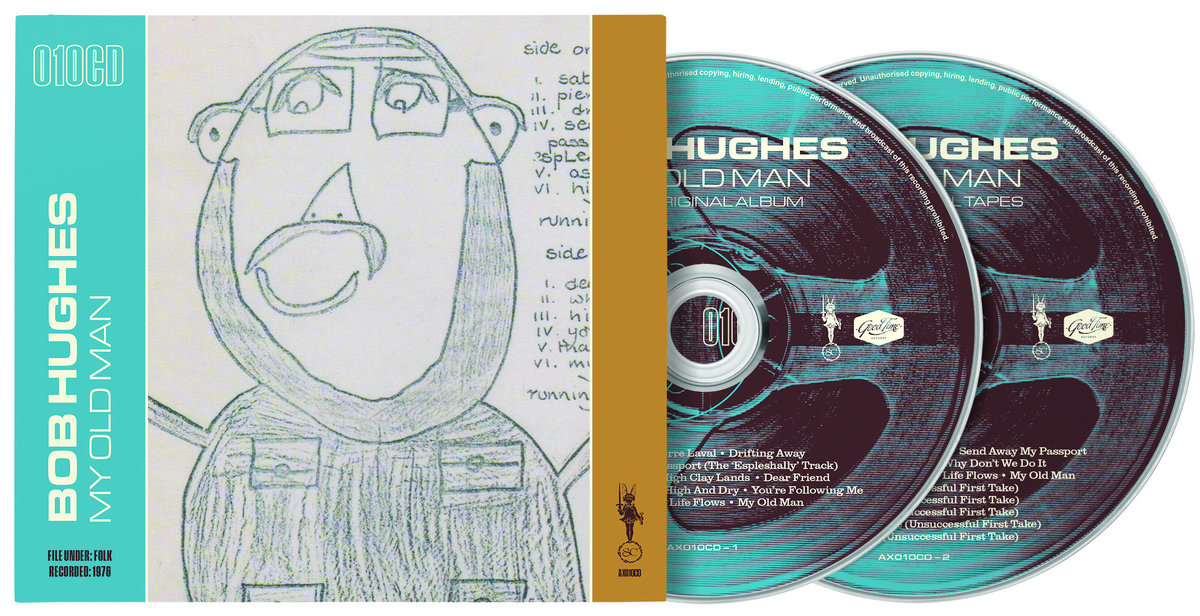
The original album was privately issued in fewer than 100 copies. Its small pressing meant that original copies became scarce and were rarely seen outside specialist collector circles.
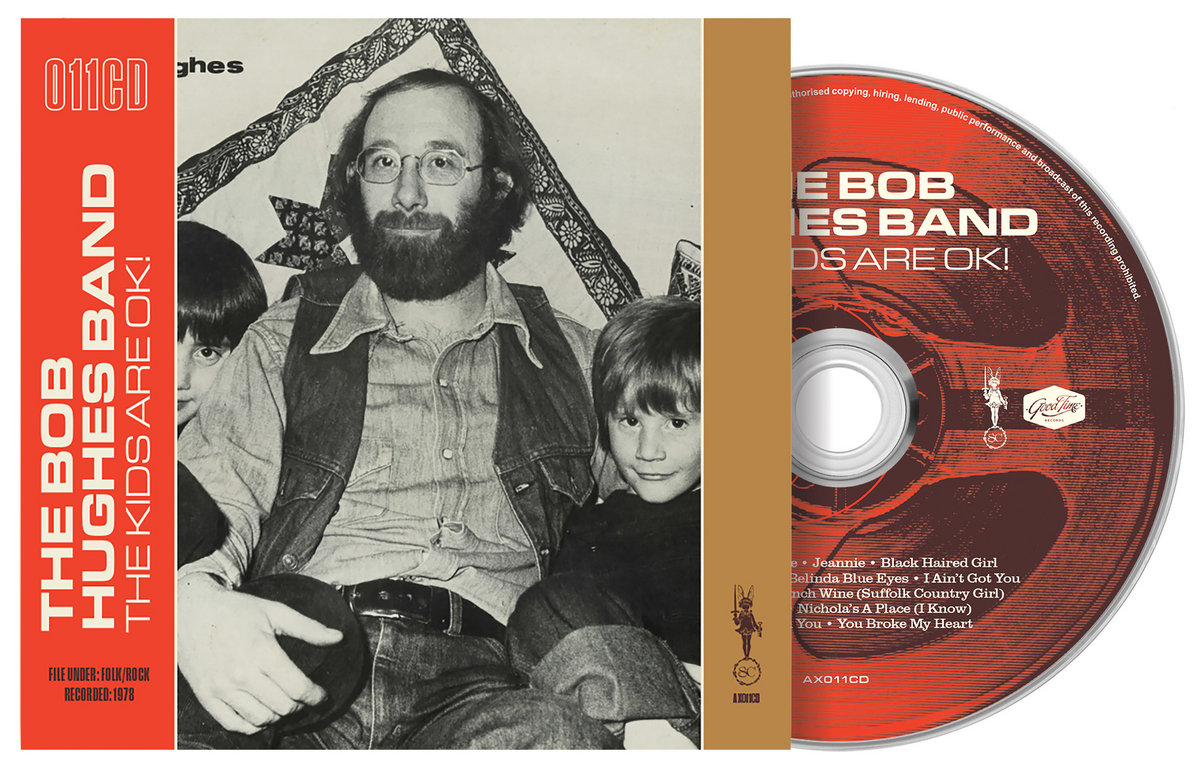
Two years later came ‘The Kids Are OK!’, released by The Bob Hughes Band on the small Puddlebrook label. By 1978, Bob had moved into a band setting. The songs are still personal, but the record has a fuller sound, with electric guitars, bass, drums and keyboards alongside Bob’s 12-string, six-string and vocals. The line-up featured John Kaliski and Alan “Bucket” Buxton on lead guitar, bass and vocals, Gary Moore on drums and Adrian Nash on keyboards and vocals, with Ron Turner returning on lead guitar for ‘Jeannie’, ‘Losing You’ and ‘Nichola’s A Place (I Know)’.
The album was recorded at Spaceward Studios in February 1978, with Gary Lucas and Mike Kemp engineering. Carmine Cinque provided the photography, and the original typesetting was credited with thanks to Richard Markell and Ian Fletcher. The fantastic reissue liner notes are again by Michael Björn, who interviewed Ron Turner on December 4, 2025, while Rob Hughes provided additional information. Rob and Matthew, Bob Hughes’ children, appear on the cover.
The original sleeve notes include a detailed list of acknowledgements. He thanked Keith, his children Rob and Maf, Ricky, John, Gary, Alan and Adrian, Gearbox Music in Halstead for the supply of sound equipment, and Ron Turner for “beautiful guitar playing” on ‘Jeannie’, ‘Losing You’ and ‘Nichola’. He also thanked Neville Martin, Chris McPhee, Jeannie Hughes and the New Astley Club in Newmarket.
By the time of ‘The Kids Are OK!’, Bob’s marriage was breaking down and he was facing separation from his two young children. The title reflects those circumstances. It sounds like a father trying to reassure himself with music.
‘The Kids Are OK!’ opens with ‘When I Get There’, a song centred on travel, distance and arrival. Bob later described it as being full of optimism, fantasy, trucks and bad weather, which is about right. ‘Jeannie’ looks back to his mother and family life, while ‘Black Haired Girl’ brings in a more western feel. The title track, listed as ‘The Kids Are O.K.’, sits at the heart of the album. It is simple: the kids are all right, or at least that is what Bob needed to believe.
‘Belinda Blue Eyes’ was written about Belinda, who Bob noted had died in a traffic accident in Spain. ‘I Ain’t Got You’ and ‘Losing You’ draw on blues influences. ‘French Wine’, also known as ‘Suffolk Country Girl’, deals with the aftermath of a relationship and the possibility of starting again. ‘Jacqueline’ became one of the better-known songs on the album, while ‘Nichola’s A Place (I Know)’ is among its most personal pieces. ‘In Love With You’ and ‘You Broke My Heart’ close the record with the same straightforward approach found throughout the album.
‘The Kids Are OK!’ presents a more expansive sound than its predecessor, with electric guitars, bass, drums and keyboards supporting Bob Hughes’ songwriting. Although the arrangements are fuller, the songs remain rooted in personal experiences and everyday concerns, continuing themes that run throughout his work.
The link between Bob Hughes the playworker and Bob Hughes the songwriter should not be overstated, but it should not be ignored either. His professional life asked what children need in order to grow. His songs often ask what adults lose when they forget those needs. Space, trust, play, love, belonging and freedom all appear in different forms. So do guilt and responsibility. In his songs, escape is rarely easy. Someone is usually left behind.
That is why the records stand apart from many private-press folk albums of the time. Their distinctiveness lies less in any attempt at obscurity or mystique than in the circumstances of their making. Both albums were recorded at Spaceward Studios in Cambridge, involved musicians drawn from Bob Hughes’ immediate circle, and were issued on a small scale with artwork and production shaped by family, friends and local collaborators. Folk clubs, regional networks and modest recording budgets formed part of the environment from which they emerged. The songs themselves are rooted in identifiable experiences, places and relationships, giving the records a documentary quality that remains one of their defining characteristics.
After the two 1970s albums, Bob continued to write and record. During the 1980s and 1990s, he taped more material, much of it at Linden Sounds Studio in Rosgill, Cumbria. In 2008, his childhood friend Roger Nunn helped bring some of those recordings together on private CD-R releases: ‘Breakfast At Stan’s’, ‘Black Water Out-Takes’ and ‘Songs From The Orange Stairs’. Bob himself described the three as a compilation containing, in his opinion, some great songs.
Bob Hughes died in 2022. Within the field of playwork, he was widely respected as a writer, practitioner and theorist whose work helped shape modern thinking about children’s play. Among private-press collectors, he became known for ‘My Old Man’, the independently released 1976 album that remained largely unknown outside specialist circles for many years. Beyond those public identities, he was also a father, friend, colleague and family member whose life extended far beyond the records and publications that survive him.
These reissues bring those parts of the story together. ‘My Old Man’ and ‘The Kids Are OK!’ document two distinct periods in Bob Hughes’ life and songwriting, from the sparse, largely acoustic recordings of 1976 to the fuller band sound of 1978. They also preserve a small but distinctive chapter of independent British music-making.
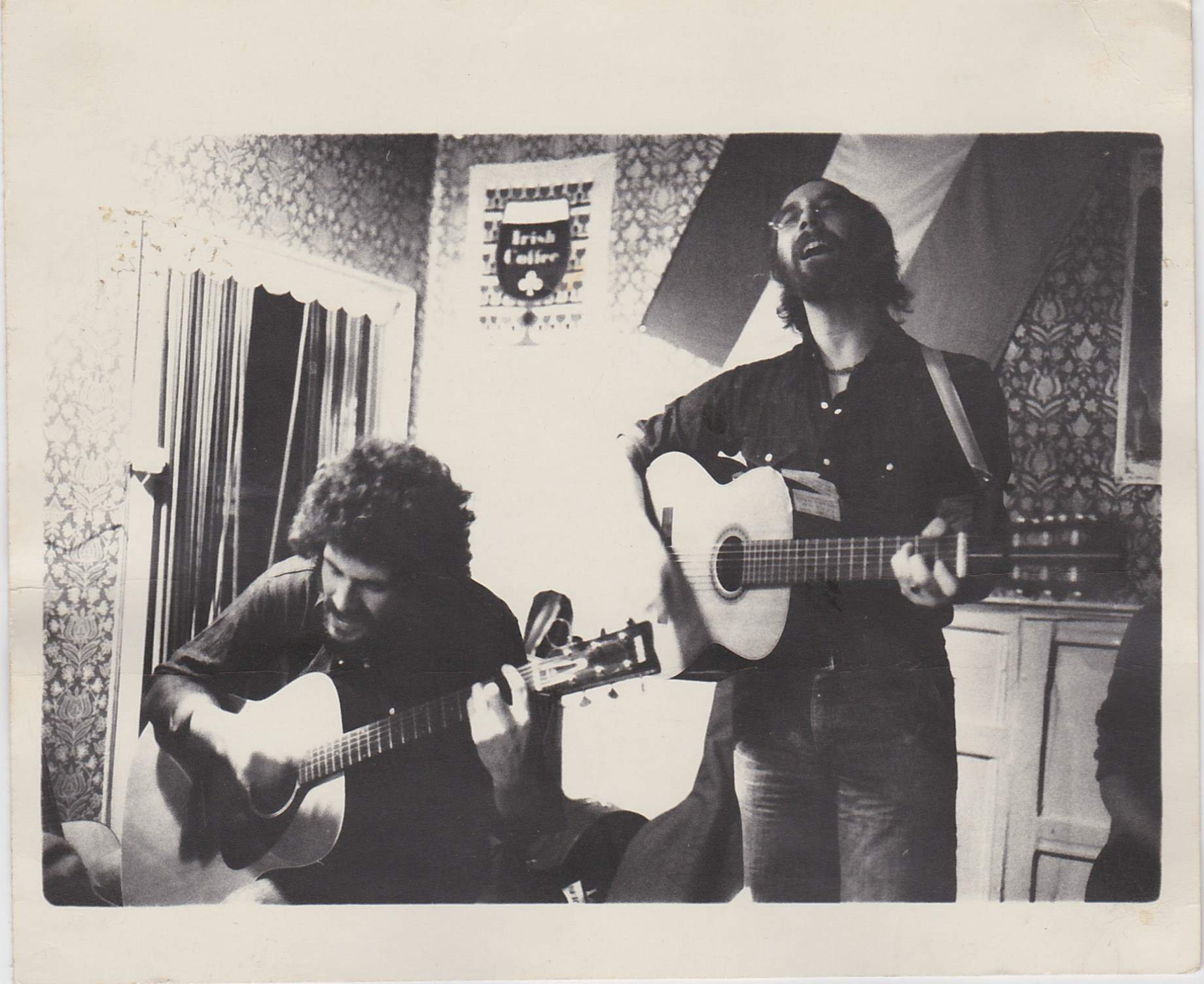
With both albums now available again, listeners have the opportunity to hear them in their original context and to reassess Bob Hughes’ contribution as a songwriter, musician and recorder of everyday experience.
Klemen Breznikar
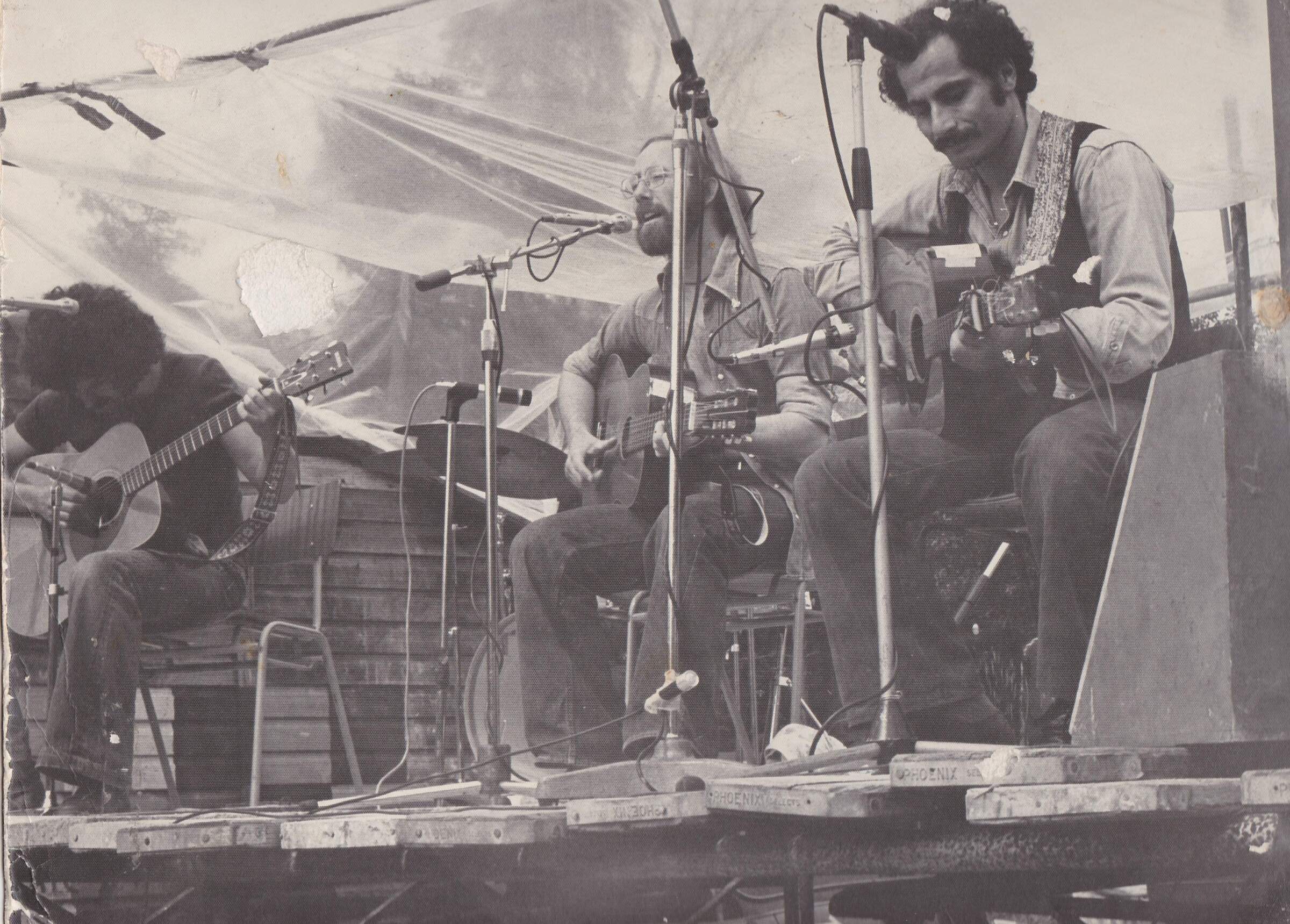
Headline photo: From left: Ron Turner, Bob Hughes and Carmine Cinque at the Puddlebrook festival, 1977. (Credit: Seelie Court / Good Time Records)
Seelie Court Facebook / Instagram
Good Time Records Website / Facebook / Instagram

 Andy Kill
Thanks for bringing the history of a beautiful balladeer to my attention. I was immediately drawn to “The Kids Are Ok” on a VW commercial and wanted to look into the music more. Now 50 years on as a 63 year old Brit living in the USA I’m a fan!