
Alcyona Mick and Liam Noble Find Their Own Orbit on ‘Distant Plains’
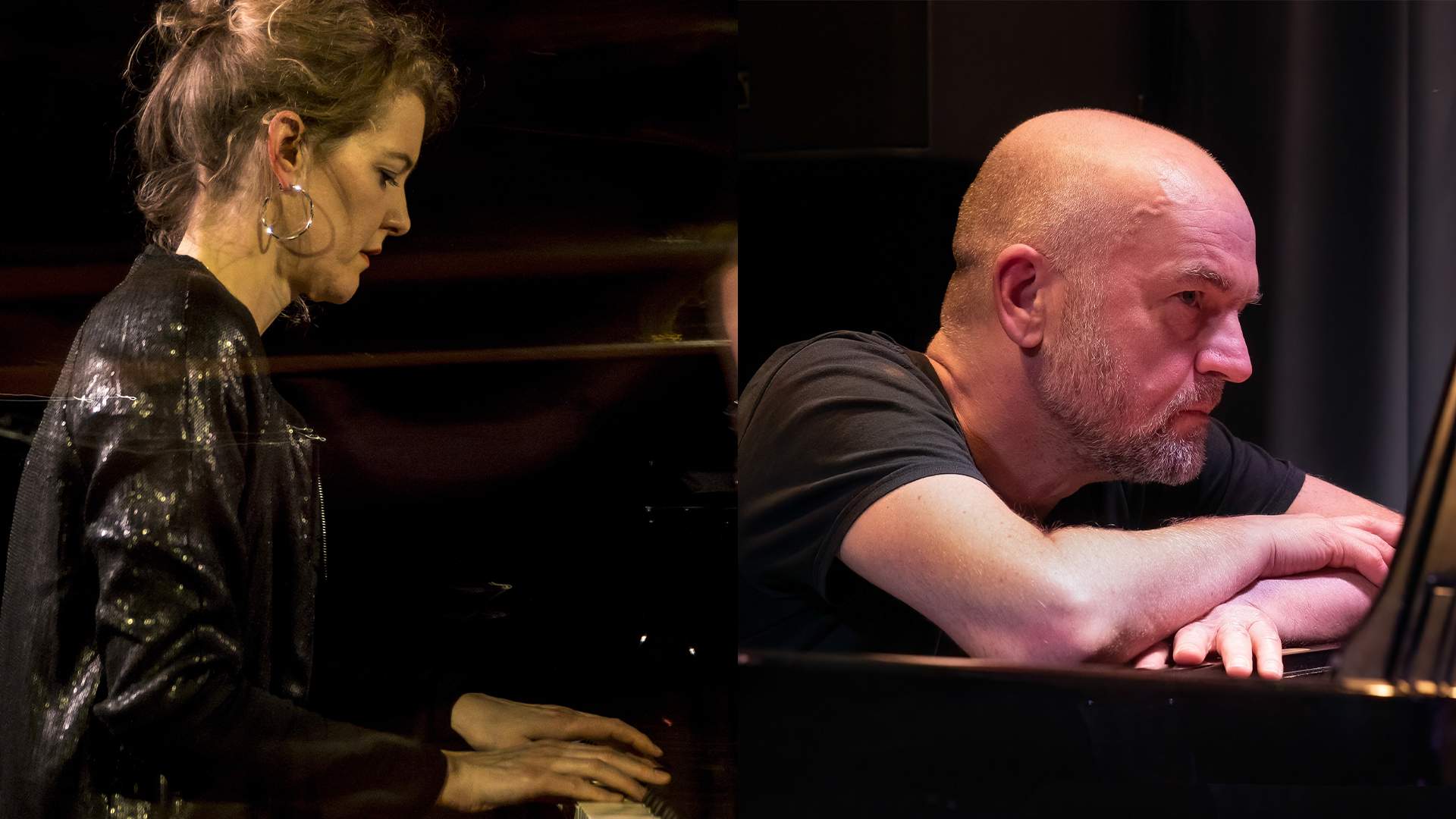
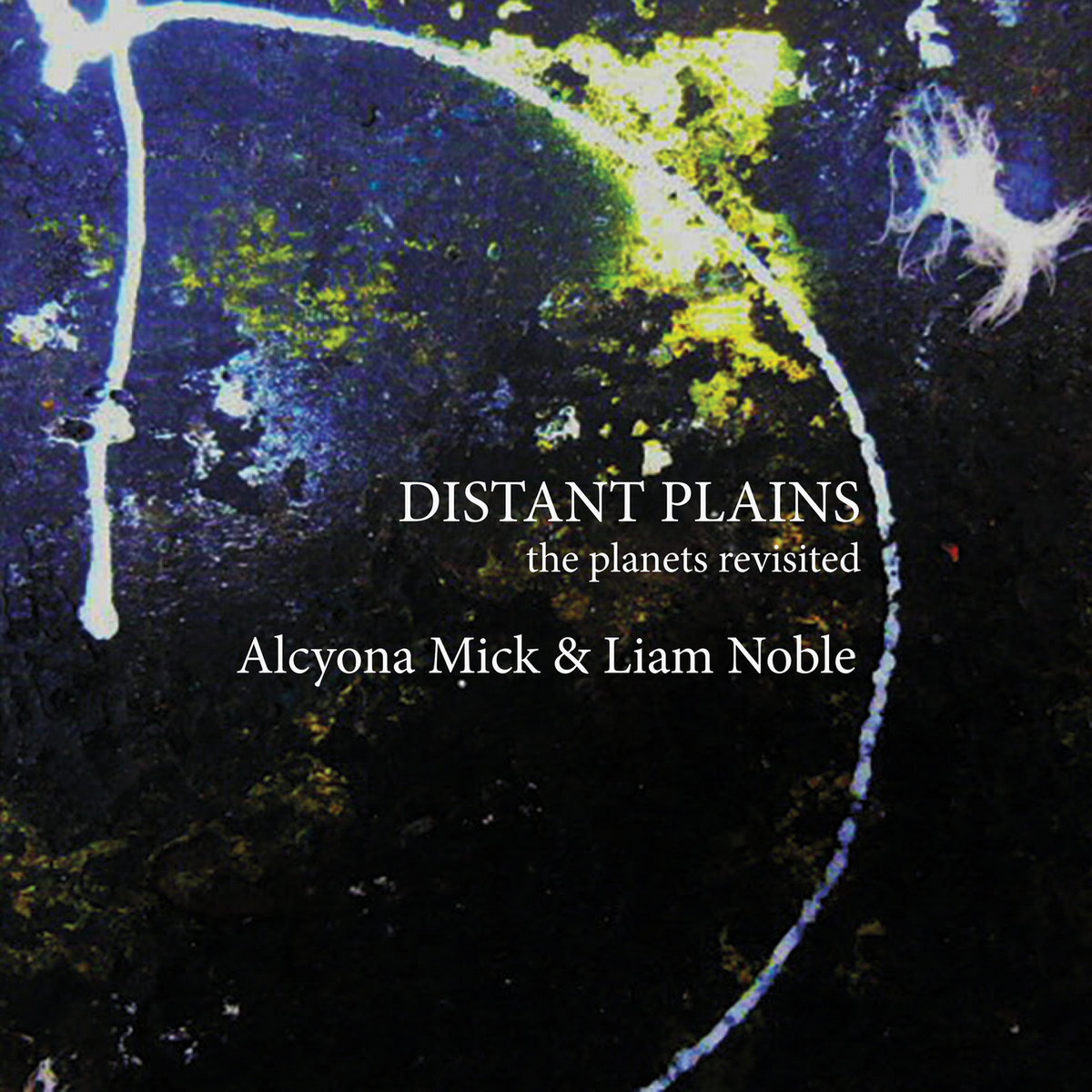
Alcyona Mick and Liam Noble’s new album, ‘Distant Plains’, takes Gustav Holst’s ‘The Planets’ as its starting point.
Released by Caliban Sounds in April 2026, the album follows the same seven planetary titles as Holst’s suite and features improvised performances by Mick and Noble on two pianos.
The album was produced by Penny Rimbaud, who asked Mick and Noble to draw on Holst’s music without quoting it directly. It was recorded at Abbey Road Studios, and most of the tracks are first takes.
Alcyona Mick is a pianist and composer working in jazz, improvisation and film music. Liam Noble is a pianist, composer and teacher with a long career in British jazz. They first met in 1999, when Mick was Noble’s student. On ‘Distant Plains’, they perform together as an improvising two-piano duo.
In the interview, Alcyona Mick says the sound of the room and the two pianos became part of the music. She also remembers the intensity of trying to move away from Holst’s large orchestral sound while still keeping its presence in mind. Liam Noble talks about the value of holding back, leaving space and not rushing to fill every silence.
That is what gives ‘Distant Plains’ its character. It’s not a grand reinterpretation of ‘The Planets’, and it does not need to be. Instead, it’s a record about two musicians reacting to an idea, a room and each other in real time.
The album runs from ‘Mars, the Bringer of War’ to ‘Neptune, the Mystic’, with Eve Libertine appearing on the final track. Its lead single, ‘Uranus, the Magician’, gives a clear sense of the album’s open, searching mood.
As Noble puts it: “The music emerges from silence, always.”
“Space and sound certainly affect us.”
You’ve said the music seemed to come together on its own that day at Abbey Road. When you listen back now, does it still feel like your music, or like something that emerged between you and Liam?
Alcyona Mick: I think any collaboration always ends up finding its own sound world as a collective thing.
A two-piano improvised album with up to four hands creating the music at once and shaping that into a musical state that we could both agree on together was certainly a fun and intense challenge.
Some of the planets came together more easily: Venus, Saturn, Neptune, but Jupiter and Uranus were more tricky.
Liam was once your teacher, and now you’re making music together as equals. Did that history feel present while you were playing?
Alcyona Mick: I’d love to say it didn’t make me self-conscious, but it did a bit. I know Liam’s playing really well and admire him so much as a musician, but that didn’t make this any easier!
I think Liam and I bumped into each other occasionally, but that was part of the fun of doing this album on two pianos. Stuff that we would normally go for wasn’t necessarily going to work together, so we had to reach in the sock drawer for something else. Having recently done an improvised album with Kate Shortt, I thought this might be a bit similar, but it ended up actually being a totally different approach.
Holst is an influence throughout the album, but you never directly quote his music. Did you ever have to pull back from something that sounded too close, or did it naturally stay more abstract?
Alcyona Mick: I don’t think at any point that Liam and I were in danger of a direct quote, but the Holst cloud was definitely hanging over us, well, certainly me, after we listened to each track in the booth. The music is so intense that it’s hard not to be affected by it. I think if Penny had just said “Mars” and we’d gone in and recorded it, the music would have come out completely differently. This was part of the journey: navigating away from the soundworld of very full orchestral music.
Abbey Road has such a strong atmosphere of its own. Did being in that space affect the way you played, even in small ways?
Alcyona Mick: Space and sound certainly affect us. Each piano is unique, each room is unique, and I know I play differently on every piano because it has its own sound quality and changes the music. That’s a challenge with every gig and recording, and the Abbey Road studio played into that.
Since so much of the album was recorded in first takes, did you ever feel tempted to try something again, but decide to keep the first version?
Alcyona Mick: There were a couple where we did extra takes. I think Mercury threw a spanner in the works for some reason, and we had to do that one again. Some of them were so intense that we didn’t want to redo them.
You’ve joked about the pastries and the small details of that day shaping the music. Do you think this record could only have happened in those particular circumstances, or would it have found its way out somehow?
Alcyona Mick: When I remember a session or a gig, there are things that stick out in my memory as being part of the experience, and the pastries were one of those things because we ate them while we were listening to Holst in the booth. The over-richness joined up with the daunting feeling of having to come up with something relating to the suite.
When I spoke to Penny Rimbaud, he talked about stripping things back to see what remains. In a simple setting like this, what do you find yourself relying on most?
Alcyona Mick: Yes, maybe that thing of letting go and trying not to think too hard about it having to be a certain way. Just allowing the music to happen, which can be hard to do. Having lots of ideas running around one’s head all at once, but not being able to play them all, or any of them.
Penny also talked about trust as something practical. When you were making this record together, what did that trust look like in the room?
Alcyona Mick: We had to get to that trusting point, and that can take a while, adjusting to the space, to each other and to the pianos.
I think we looked at each other through the little window between the pianos at one point and started laughing, and that really helped.
Liam, you’ve worked with Penny Rimbaud for decades. What was it about this project that made you feel it might take you somewhere new?
Liam Noble: If I’m honest, I had no idea where it would go. And that’s quite a good start for me; you have to have faith that something will happen! Being a jazz musician and improviser, you get used to being self-sufficient, of expressing yourself. I guess this is partly doing that and partly rising to the challenge of a concept from outside yourself, which is a lot of fun but also quite challenging. With Penny, I think I’ve always met him in the middle: something between what he is hearing and what I can provide. With Alcyona, there’s also that process going on, a separate, and splendid, layer of unpredictability! But yeah, Penny’s prompts are quite specific, but they can go anywhere!
On ‘Distant Plains’, there are moments where time seems to slow down or stop. Were you deliberately creating that feeling, or did it happen naturally as you played?
Liam Noble: That’s a great question! With improvised music, it always feels to me like there’s no defined resting place, like a key or a mood, but a sense of drifting from one to the other. I think it’s very tempting to move things forward. It’s like you’ll play something and think, no, I don’t like that, let’s find something else … and sometimes you have to, but on the other hand, it’s great to play with someone like Alcyona who senses the value of holding back, that you need to somehow be economical with ideas as much as if you were playing any other music. Most things in music sound better played again, with a bit of space around them, I think.
You’ve said that Alcyona can challenge you in a useful way. Was there a moment in these sessions when her playing made you let go of an idea you would normally have followed?
Liam Noble: I guess by “problematic” I meant the idea of proposing a problem that suggests various solutions. The comfort of playing with a musician you trust is that you can either go with them or consciously play something else … there’s a lot of etiquette in improvising where someone does something, and there’s no inherent meaning to it. Music is not a language in that sense: you have to decide; do they want me to change what I’m doing or stay where I am and pursue the friction? It’s a question that can never be really answered, but for me, knowing that either option is embraced is the secret ingredient to good improvisation.
You were responding to Holst without directly quoting his music. While you were playing, were you still thinking about the suite, or did you have to let it go completely?
Liam Noble: It was pretty weird at first, especially with pieces like “Mars”, where there’s a very strong and very famous idea that runs through it. Often, I would imagine a verbal description of what happens in the original score and somehow work from that. But I also realised that there was lots in this piece I didn’t know very well. Once we started playing, I think we got into the purely musical processes more, but the programmatic nature of the task often came back to me mid-piece as a gentle reminder.
A lot of piano duo records are built around either contrast or balance, but this one feels different. While you were playing, how did you think about your role alongside Alcyona’s?
I try not to think too much about it, or if I do, it’s before we play … almost like a preparation to work. I feel like sometimes it’s good to get a certain “hat” on in particular situations: I think I’m quite a reactive player, and person in general, so I often listen to music the day before that I know will get me in the headspace for the session. I think roles can be fluid in this situation, and whilst it’s hard to know who played what when you listen back, it’s also hard to know while you’re doing it, which is quite a trippy feeling. Two pianos blend very easily into a big mush, so I think we were both dancing around each other to avoid that happening too often, swapping between foreground and background, or between stasis and movement.
You’ve spent years working between structure and improvisation, but this project seems to take away even the comfort of a shared musical language. Did that leave you feeling more exposed than you expected?
Liam Noble: Yes, it felt very exposed indeed, and when you’re in that position, you need to know someone has your back, so I felt lucky to have Alcyona there … that doesn’t mean that someone is “helping you out”, but more that they will make something happen. I think there’s always a kind of language at work, various references that define your sound, but as you mentioned in an earlier question, the ideal is that you have to constantly rework those ideas to accommodate the direction of the other player. In my experience, it usually sounds better listening back than it felt whilst playing. I think comfort is overrated!
When I spoke to Penny Rimbaud, he talked about stripping things back to see what remains. In a setting like this, what do you find yourself relying on most?
Liam Noble: I don’t think I have a definitive answer to this one, but I think the acceptance of silence as an equal part of the music is key. It’s something that’s easy to take for granted, but you really notice it when it’s not there. The idea of playing “in the moment” that is often bandied about, to me, it’s about being able to play, stop, reflect, let the listener know that you don’t have it all sorted out in advance! The music emerges from silence, always.
Penny also talked about trust as something practical. In the studio that day, what did trust between you actually look like?
Liam Noble: Well, I know what it sounded like, I guess. Alcyona and I have known each other a long time, and it helps that we have mutual admiration for each other’s work … but in the end, it’s just listening as attentively as possible, responding as musically as possible. I feel like the image of a blackbird listening for worms on a lawn is quite a good one, like listening with your whole body and feeling vibrations in the air. It’s like any other conversation too: like when you first meet someone, you’re not sure if you can tell that joke, and so there’s a lot of energy used in trying to figure out how to get on with someone. For us, that’s mostly all been sorted out in a way, so we can just listen and play without social, or musical, anxiety interrupting the flow!
Klemen Breznikar
Alcyona Mick Website / Facebook / Instagram / YouTube
Liam Noble Facebook / Bandcamp
Caliban Sounds Facebook / Instagram / Bandcamp