
Dr Space: Øresund Space Collective, Improvisation and ‘Wicked Sonic Bulls’
Øresund Space Collective is an improvisational space rock collective centred around Dr Space, the musical name of Scott Heller.
Rather than working with a fixed line-up, the group has included many musicians over the years, with Heller overseeing much of its recorded output. In the interview, he explains: “We have had 115 people play in the collective over the 22 years, so it is not really a band, as such.” He also says that decisions about releases are usually made by him, Hasse Horrigmoe and Jonathan Segel.
The group’s current release plans include ‘Progably You’re Wrong’, a 2LP/2CD album drawn from studio recordings made in Portugal in 2022. Heller mixed the album and describes its title track as “one of our best pieces in some years.” Øresund Space Collective also has releases planned for 2026, including material from other studio sessions and a split LP with Psychedelic Source Recordings.
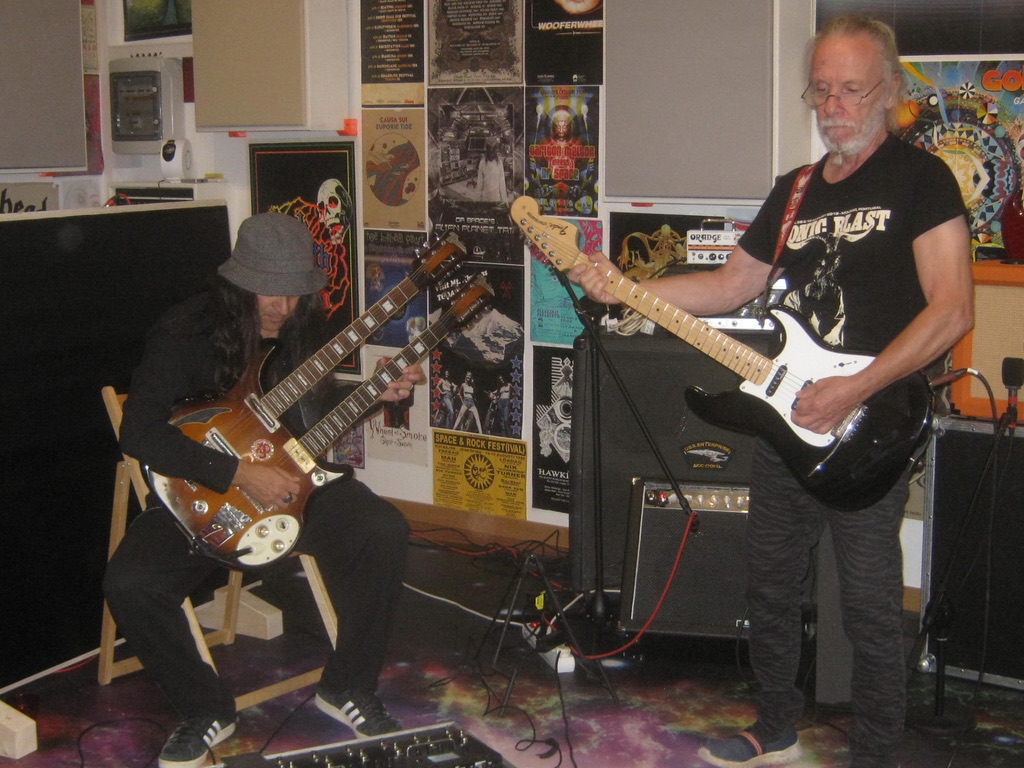
Alongside Øresund Space Collective, Heller continues to work on separate collaborations. One of his latest projects is ‘Dr Space’s Wicked Sonic Bulls’, recorded at Estúdio Paraíso Nas Nuvens in central Portugal on 10 January 2026. The session featured Heller on analogue and digital synths, modular synth, Hammond and Mellotron; Tom Ashurst on Telecaster, effects and loops; Darren Butler on drums; and Martin Weaver on bass.
The recording consists of five improvised pieces, ranging from just over three minutes to 30 minutes. The musicians brought links to Sonic Trip Project, China Bull Shop, Here & Now, Hawklords, Wicked Lady, Dark, Doctors of Space and Øresund Space Collective. Heller says the session was arranged only two days beforehand: “I think we all really clicked right away.” He adds: “It was really all just totally freeform.” The result is a studio document of four musicians playing together for the first time in this configuration.
“Someone has to steer the ship. Over the years, that has been left to me.”
The tracks on ‘Progably You’re Wrong’ move in some unexpected directions, particularly ‘Stars Explode in the Fridge’. As those recordings date back to 2022, what is it like revisiting them now? Do they feel connected to a particular time in your life, or do they still feel current to you?
This was an epic recording session, with a lot of ØSC members coming down to Portugal for the first time. The studio had only been open for three months, and not everything had really been worked out here. Different people came and went after three to five days, and then another batch would arrive, so there were a lot of different people and line-ups in the various jams, with Hasse (Tangle Edge) and Jiri trading off bass on the days they were both here. We had a lot of keyboard players: Mogens, Pär, me and Larry. There were also lots of guitar players: Jonathan, Luis (Saturnia), Martin (Wicked Lady), Tim (Agusa) and Mattias (Änglagård). A lot of these guys play multiple instruments as well, so Jonathan might play bass, lap steel or violin, while Hasse played congas and percussion, etc. There were 18 hours of music recorded. Phew.
This is the third major release from these sessions and perhaps the last, even though there are a lot of other jams. A few have been released to Bandcamp subscribers only. As for revisiting it, this album was one that I mixed, while Jonathan mixed the other releases, so I spent a lot of hours with this music. Hasse was also crucial in helping me choose the tracks and adjust the mixes. I have just approved the test pressing, and I am pretty proud of this one, especially the title track, which I think is one of our best pieces in some years. Like the 65-minute ‘Everyone Is Evil’, which I also rate highly.
There is plenty of room for the music to develop across the record, including the 30-plus-minute bonus piece ‘Down Around Over and About’. When you listen back to these longer improvisations, do you ever consider editing or reshaping them, or is leaving the performance intact an important part of the process?
Well, for the last 10 years or so, it has mainly been Hasse, Jonathan and me deciding on all of the music to be released. It is generally very difficult to get people to listen to 18 hours of music and give constructive feedback, or any feedback, so they let us do the hard work and sort through it, mix it, and then present what we think will make a good release. I try to be as democratic as I can and give people time and access to all the music and mixes, but in the end, I make a lot of the decisions, of course.
We have had 115 people play in the collective over the past 22 years, so it is not really a band as such. Jonathan has said quite a few times that ØSC is Dr Space. I am the face of the band, the director and the one people associate with ØSC. Someone has to steer the ship. Over the years, that has been left to me. I hope that, when I am no longer capable, or when I am dead, someone else will take over and keep the musical collective going. Time will tell, but for now, we have lots of music to release.
As for the bonus material, it is too expensive to put out four-LP sets each time, and a lot of this music deserves to be heard by the fans, not just left in the archive. As Jerry Garcia once said, “After we have made the music, it now belongs to the fans.” I feel the same way.
The Wicked Sonic Bulls session was recorded in just a couple of hours during the morning, which gives it a different feel from the other material. Did the music come together immediately, or did it take some time for everyone to settle into the session? There is a sense of looseness in the recording, but also a clear focus.
This was a very fun and spontaneous session. I basically only knew two days ahead that it was going to happen, and I was lucky that Martin (Wicked Lady) was free. I only knew Darren (Sonic Trip Project), not his son Tom (ex-Hawklords, Here & Now, China Bull Shop), although I saw him play guitar with Here & Now at Kozfest. They were passing through Portugal and stopped by for one day. I think we all really clicked right away, and we never discussed anything as far as ideas. It was really all just totally freeform. A key was discussed to play in, but that was it. It was fun. I hope this can be at least a CD release, maybe later this year.
Several of the musicians involved in the session have connections to bands including Hawklords and Wicked Lady. Did that shared history influence the way the session developed, even indirectly, or did the focus remain entirely on the improvisation as it happened?
Indeed! Martin (Wicked Lady, Dark) and I have been making music together since 2018, so we know what to expect from each other. Martin is such a great musician and electronics genius, building his own synths, guitars, basses, pedals, amps, etc. Tom was fantastic on guitar, even though he played bass in Hawklords and in China Bull Shop. I loved his use of his looper. His dad was just rock solid on drums. It was literally a short soundcheck, and then we just played for 90 minutes and it was over. Fun.
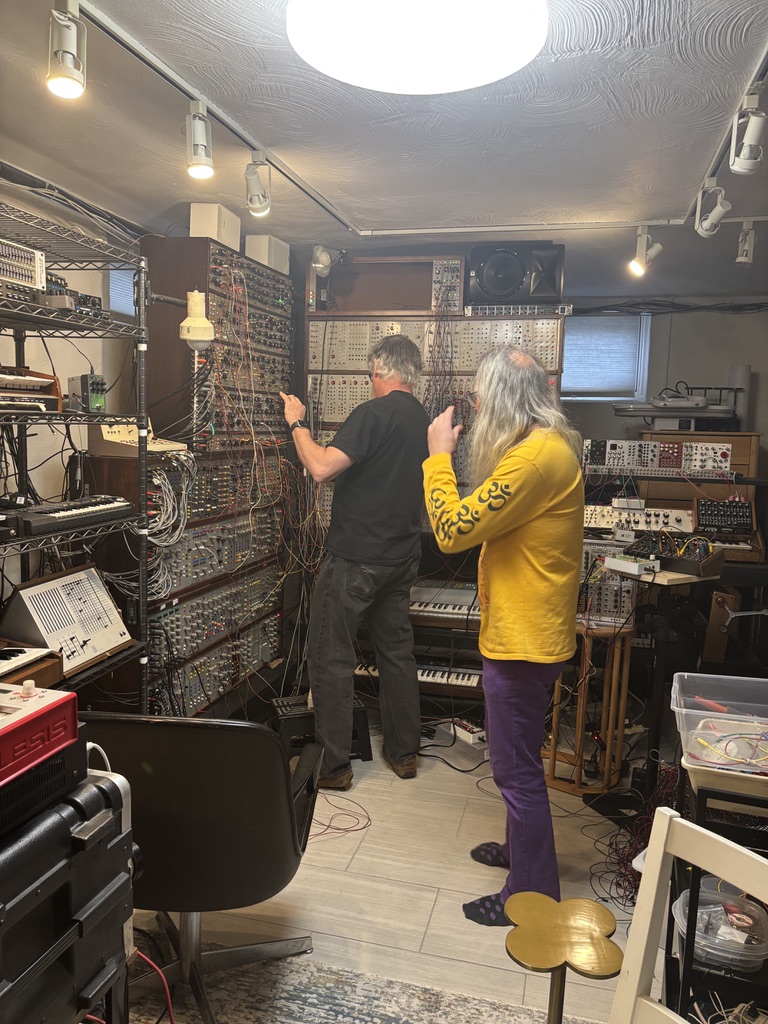
With ‘Liquid Planetscapes’, the process changed again: three days with Joe Paradiso, building modular sound environments and then clearing them before beginning again. Was it ever difficult to let go of a setup or idea that was working particularly well, or was that temporary approach an important part of the project?
I think Joe is the only person in the world who truly understands that amazing instrument he has built, so we approached it like starting a new painting. Once we felt we had exhausted our ideas about how to get the most out of a patch, whether that took one hour or more than two hours, we would move on. I do not think there was any frustration at all. It was more about the excitement of seeing what we might create next and where we could take the music.
With an instrument like this, you can never totally recreate something you have done, as it is far too complex. Even if you had all the patch cables in the same places, you would never get the frequency and resonance knobs, or the amount of control voltage being sent, to be exactly the same. In our case, a lot of different guitar pedals were also used, and you would never get exactly the same settings. It was so much fun, and such a learning experience. There will be two more albums for sure from these sessions.
The Scion module uses biosignals from your body to influence the patch. How did that affect your sense of control during the recording? Did it feel like an instrument you were directing, or did it lead the music in unexpected directions?
The Scion module is really cool, as you can attach a Band-Aid-like sensor to your body, or it has a place where you can simply put your finger. You can control many different control voltage signals going out, gates and much more. Since you have no idea what signal or strength is coming from your body, it can act a bit like a random noise generator at times.
What surprised me, though, was how strong the effect sometimes was, almost pausing the oscillations and disrupting the flow of the sounds. Not always in a good way.
You have described the pedals as giving the sound a certain “glow”. During those sessions, were you working towards a particular sonic character, or did the sound emerge through the process of playing and experimenting together?
This is really a question for Joe, as he was the one using the pedals most of the time, not me. But as for chasing a specific sonic character, for sure: each time we had all-new patches, we wanted to get something quite different from what we had done before.
‘Movement 14’, which is the track on the CD, came at the end of the session, and it was probably the most complex and, in some ways, the most interesting patch we made, where it all sort of came together after the three days. I did not want to let this one end, as it was just a moving, pulsating, interesting piece of music that we could have kept recording for hours. Fun. We certainly came up with some stuff that we had not expected. I think we both could have just kept going if we had not had to stop. Joe was so incredible and cool. Loved it.
‘Imperfect Pyramid I’ was created by exchanging parts between musicians who had known each other for years but had not previously worked together. Did that familiarity make the collaboration easier, or did the remote process require a different kind of listening and response?
I know Rob’s music well, as I have heard more than 100 of his CD-R albums, and they are very diverse. But I think his recent collaborations with Dan Greene have really led the way for the direction of this music. Rob has been hearing what I have been doing for years as well. I am not sure about Dan.
Since none of this music was made with all of us in the same room, it was more about each person knowing what might fit the pieces they had sent to me to play on. Our next CD-R has two more experimental pieces, where I sent them synth pieces and they added stuff to them. So we worked the other way around.
The use of dulcimer and the more open, drifting sections give ‘Imperfect Pyramid I’ a sound that differs from your more cosmic recordings. When adding your synth parts, were you aiming to complement that existing atmosphere, or to introduce a contrasting element?
For me, it was a little of both. I tried to play some stuff that fit with the melodies, but also to strike out and try more interesting and unexpected sounds and textures. In so much music today, people just play what fits all too well and what you have heard before, and it becomes too predictable. I find that boring. I need to find something unexpected in music, not just the same thing.
I really like the sort of Middle Eastern feel on some of the tracks, as I have never worked in those scales much. ‘West Space and Love’ is the closest, yet it is quite different, with the master sitar player KG Westman.
As a bit of a sidetrack, Martin and I, in Doctors of Space, are making what I feel is the most unique music we have made over the past eight years. It is really hard to describe how we started as a space rock band and evolved into experimental industrial electronica.
These projects were made in very different settings: a familiar studio in Portugal, a one-off session near Boston, remote collaborations and short improvised recordings. How important is that variation to your creative process? Do different environments change the way you approach the music?
I am just lucky, as a non-trained musician, to be able to make music with great musicians and to be accepted. I collaborate with a lot of different people and projects, and I try to bring my best spontaneous performance to each recording. I am never afraid to try something totally crazy, and over the last two years I have acquired a lot of new synths and modules that I have barely explored.
I cannot see myself ever getting bored, and I am always looking forward to the next musical challenge. For sure, to answer the last part, I feel the latter: that each piece of music can pull a different version of me out. For instance, with ‘Lamp of the Universe Meets Dr Space’, when Craig sent me these two long tracks, I really feel like I went outside the norm and tried lots of crazy ideas. I have no idea how much of this will end up on the record when Craig has time to finish it, but we will see.
There are a lot of interesting records still to come this year, with three ØSC albums in the next few months, hopefully ‘BMC Studio Jams Vol 4’ from the material we recorded last week, ‘UMMA’ on Echodelik with Pepe and Chino from La Ira de Dios, ‘The Univerzals’, a Danish band whose members have played in ØSC and on whose record I play on three tracks, and at least one possible solo CD. A couple of digital-only Doctors of Space albums have been prepared from our 2025 studio sessions, and ‘Dr Space Mad Elf Mess’ is due on Sound Effect Records in the summer.
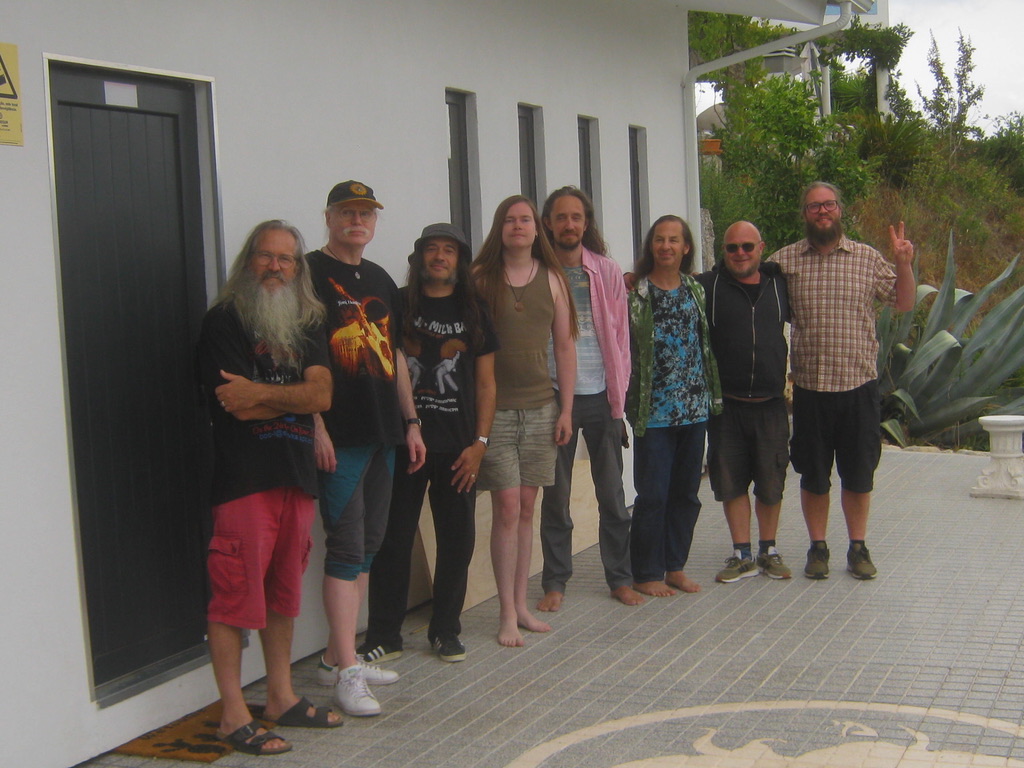
What else currently occupies your life?
Organic gardening, maintaining our land, our dogs, my wife, going back to school to get a diploma in audio engineering, enjoying some craft beers and life in general. Thanks for this opportunity, Klemen. Peace.
Klemen Breznikar
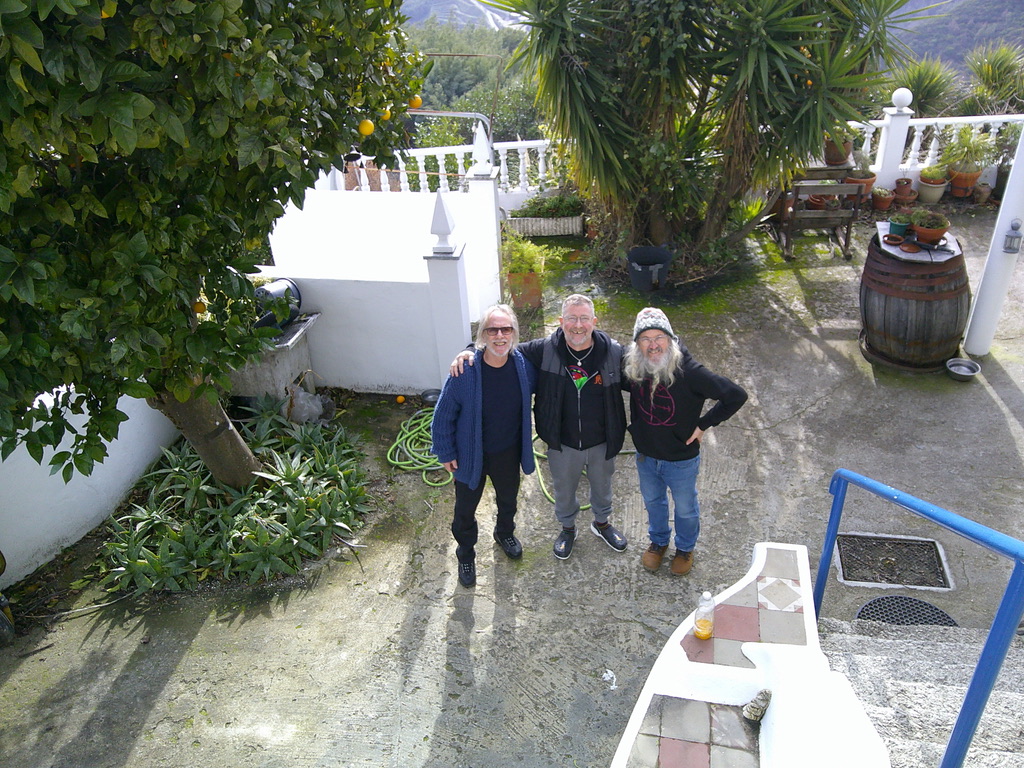
Headline photo: Three of the four Wicked Sonic Bulls.
Øresund Space Collective Official Website / Facebook / Instagram / Bandcamp
Space Rock Productions Website