
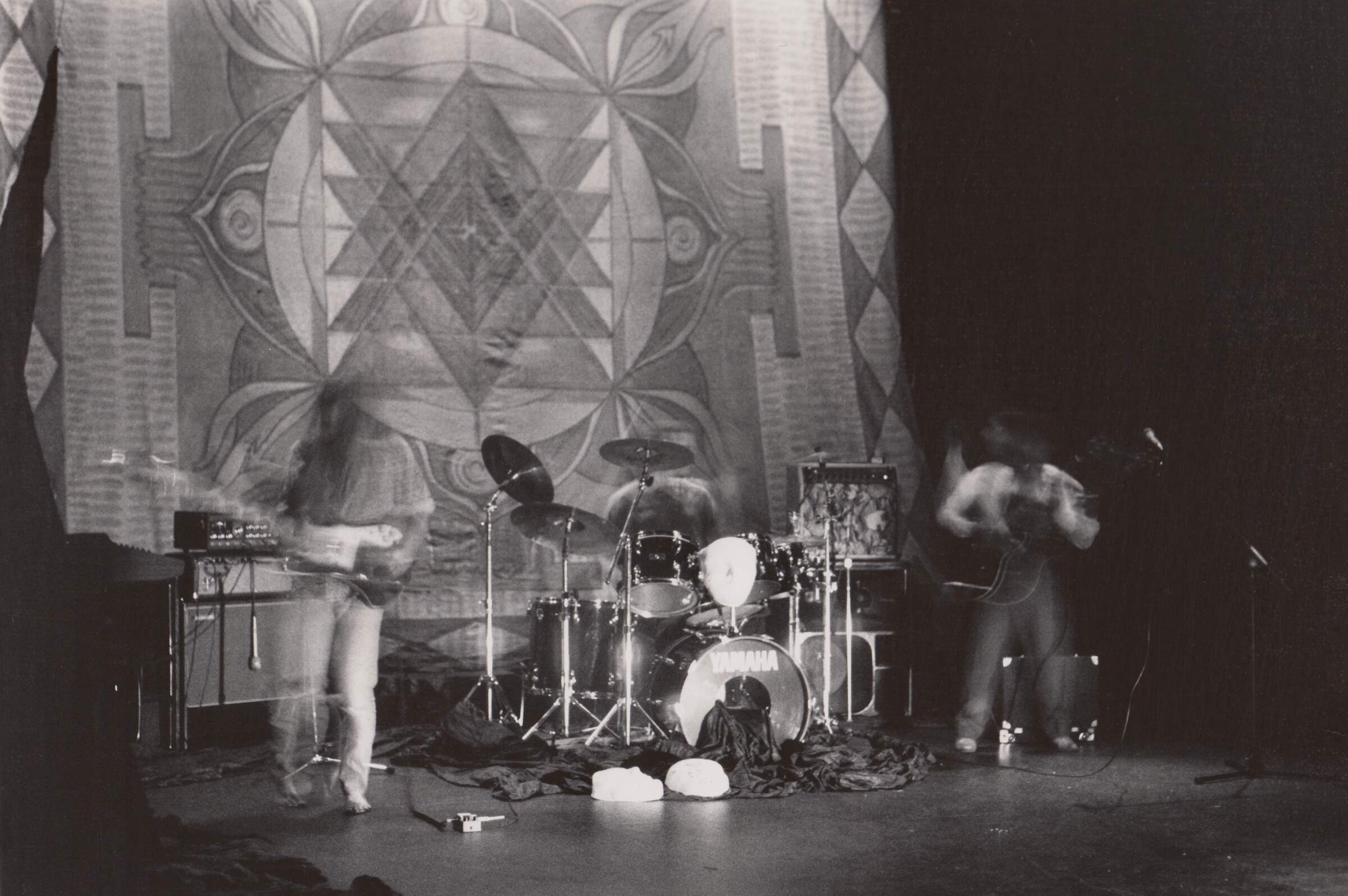

The Gathering: Another Time, Another Place
In the blur of the late 1980s and early 90s, great bands seem to disappear as soon as they arrived.
The changing landscape did not always provide sure footing for those whose music veered beyond expectations. The Gathering, hailing from Winston-Salem, North Carolina were one of those groups, and is finally getting around to telling their story.
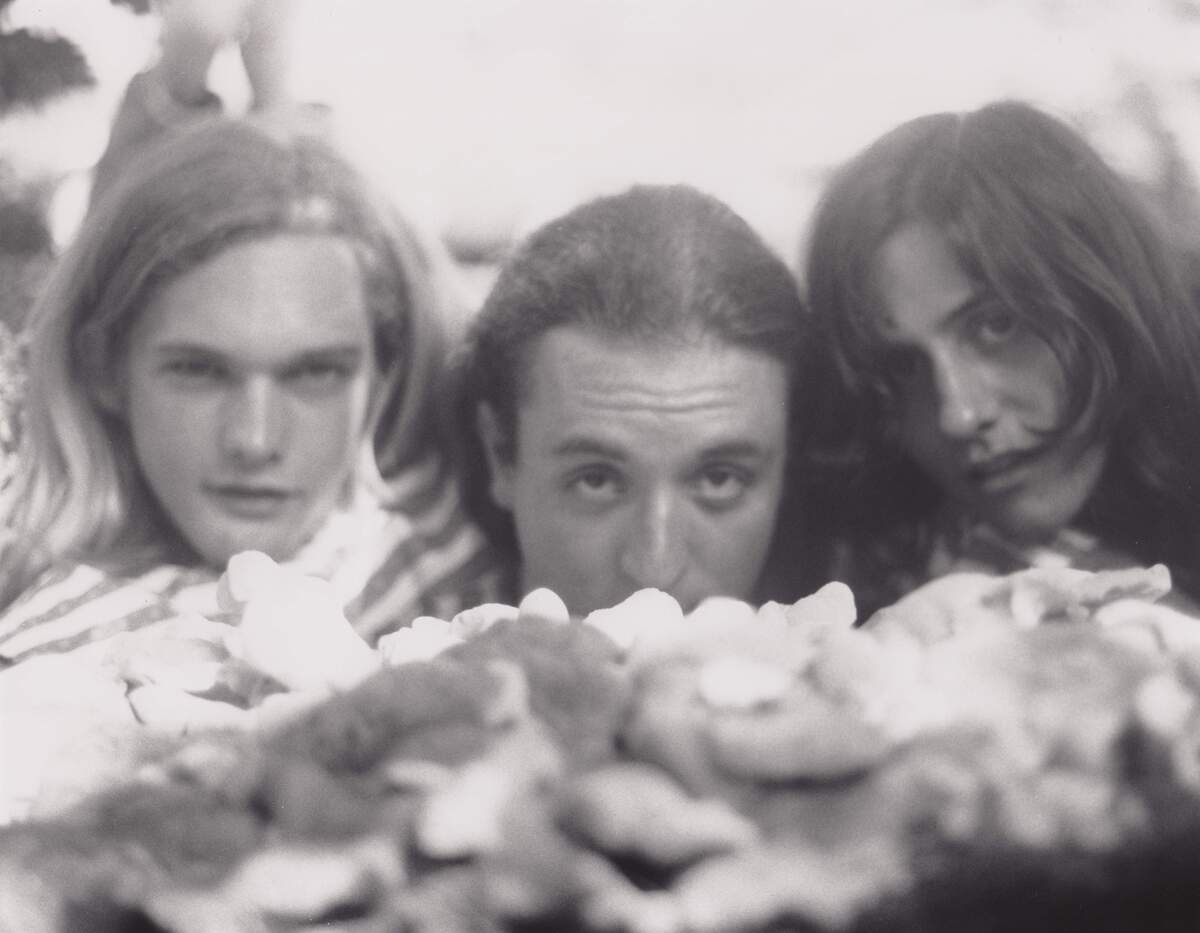
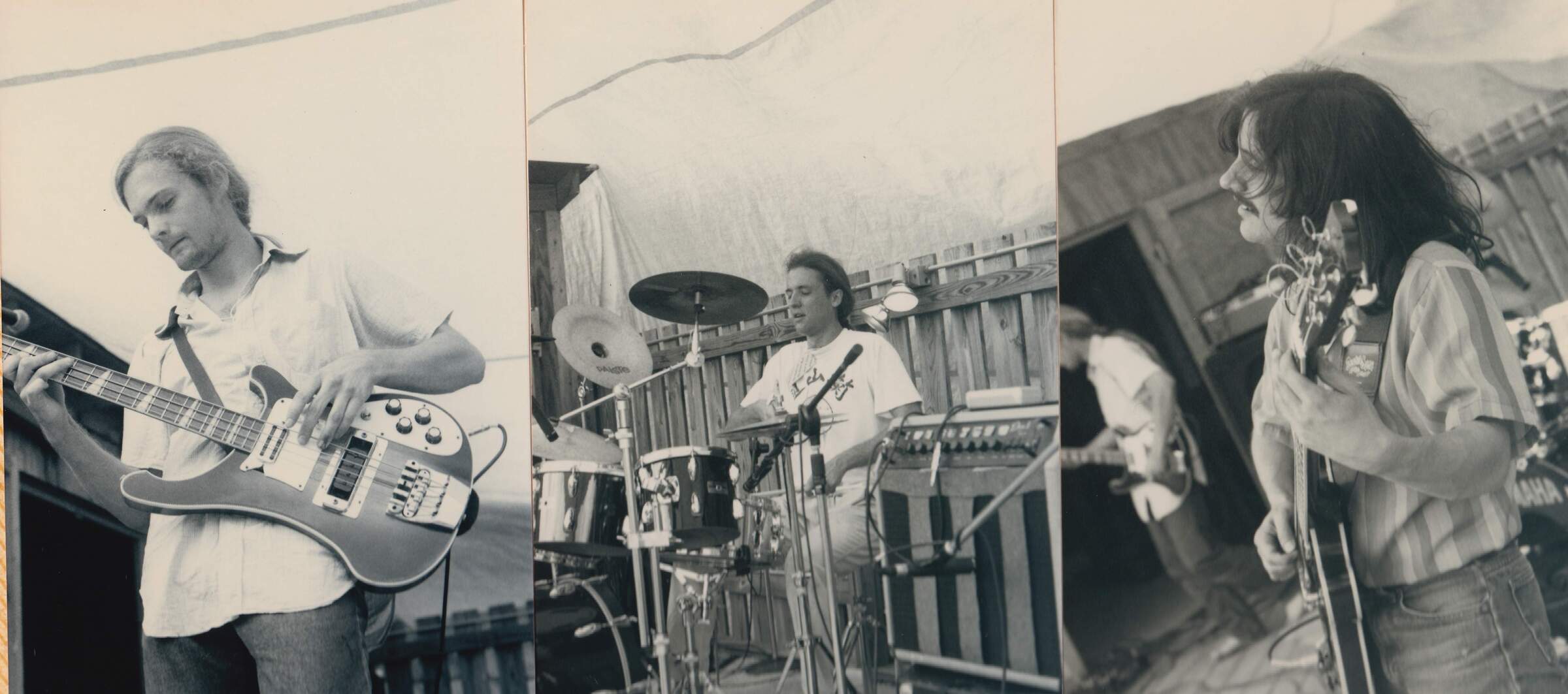
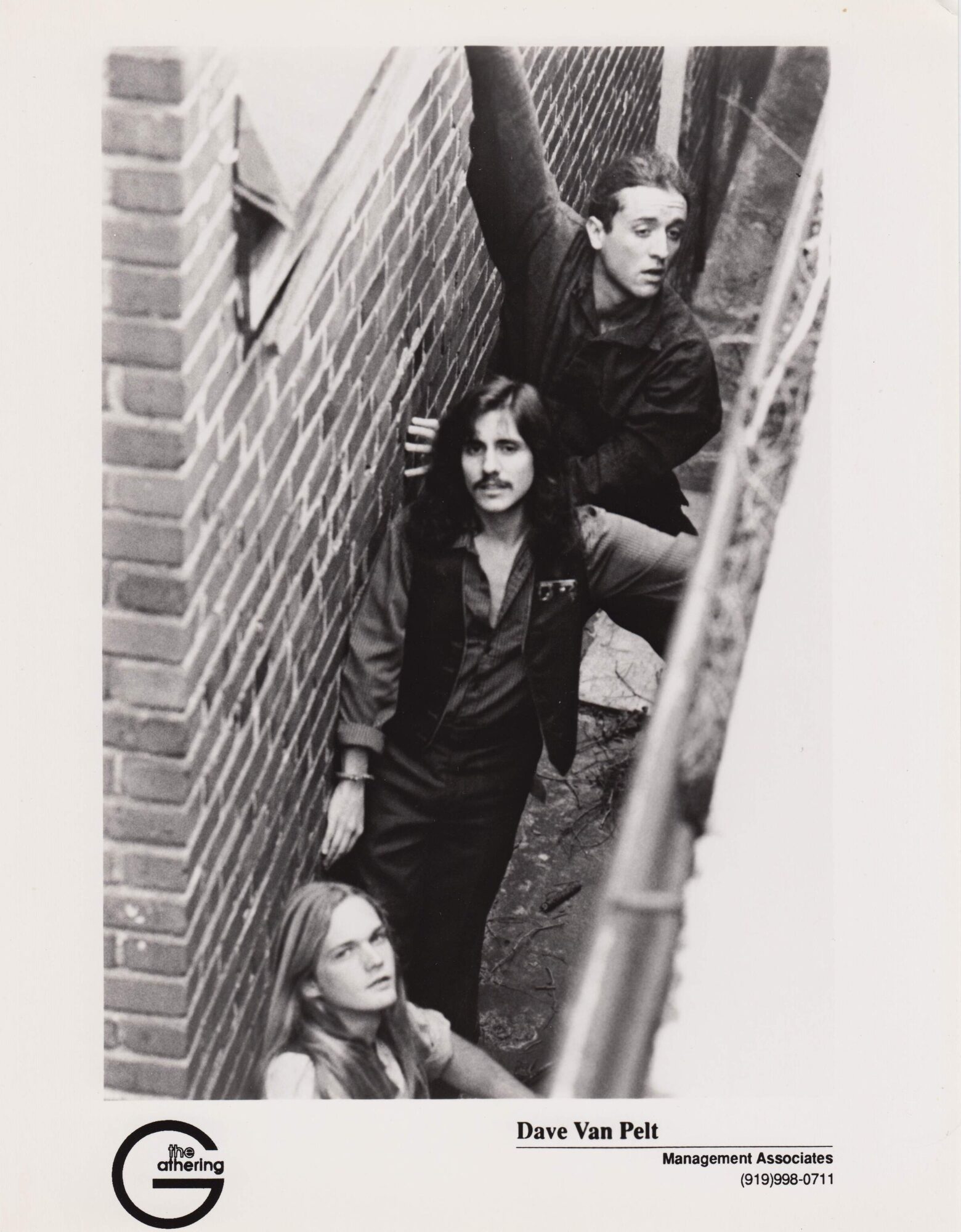
Formed in 1989, the trio, made up of Mike Chamis on guitar and vocal, Jeff Schmitt on drums, and Doug Williams on bass, toured throughout the Southeast with a sound that was rooted in experimental power combos of the past. After releasing their first album in 1992, the band spent two years working on their second album, before breaking up just as the album was finished.
All three musicians have continued to play throughout North Carolina, with bassist Doug Williams becoming a noted producer and engineer. There are also plans to release the Gathering’s second album for the first time, alongside a reissue of their first album, shedding sound and light on a time that passed all too quickly.
Williams offers the story of the Gathering in this wide-ranging interview.
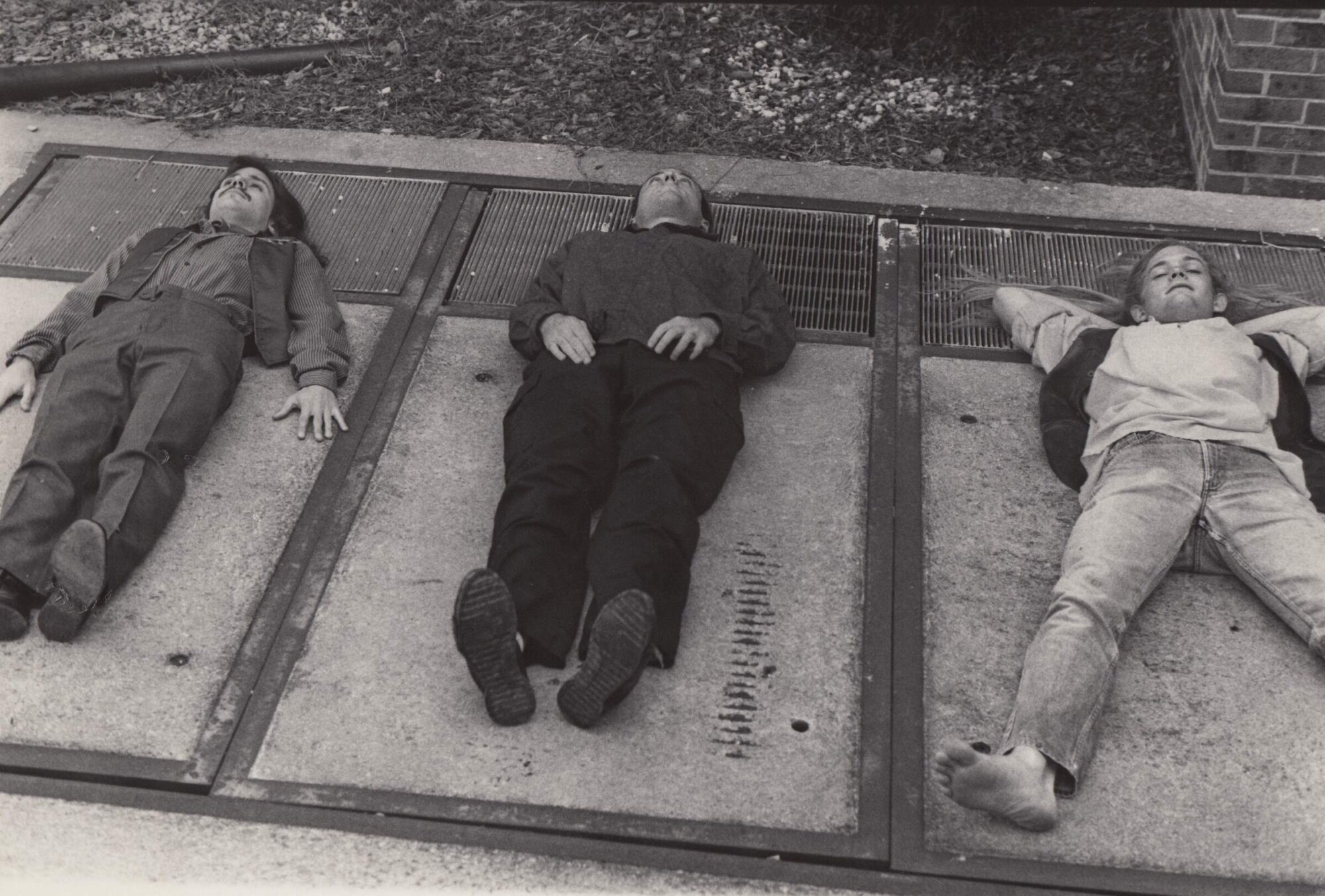
“We were definitely an experimental band”
Daniel Coston: How did the come together?
Doug Williams: It’s a mutual case of vanishing. The Gathering grew out of a previous Winston-Salem four-piece, Quick Henry who morphed into World of Kings, whose frontman vanished as things were getting off the ground. Mike joined the remaining trio, which then reduced further to another trio, and Doug came in last. Mike and I had been working about a year in another band who also had a vanishing member, so were looking for new opportunities. Melissa Clark split after about six months, though we played several of her songs throughout the life of the band.
Coston: What were the band’s original influences?
Williams: Listening back I hear The Who, King Crimson, Grateful Dead, Minutemen, Cream, Black Sabbath. I remember fairly early on there was a Who bootleg of a 1969 Amsterdam con-cert that got heavy rotation. We listened to a lot of bootlegs of late ’60’s and 1970’s rock bands, bands that tended to stretch out and just play, the original jam bands if you will. We saw a P-Funk Allstars show fairly early on, that was a big influence. We saw fIREHOSEthe night before the session for our first record.
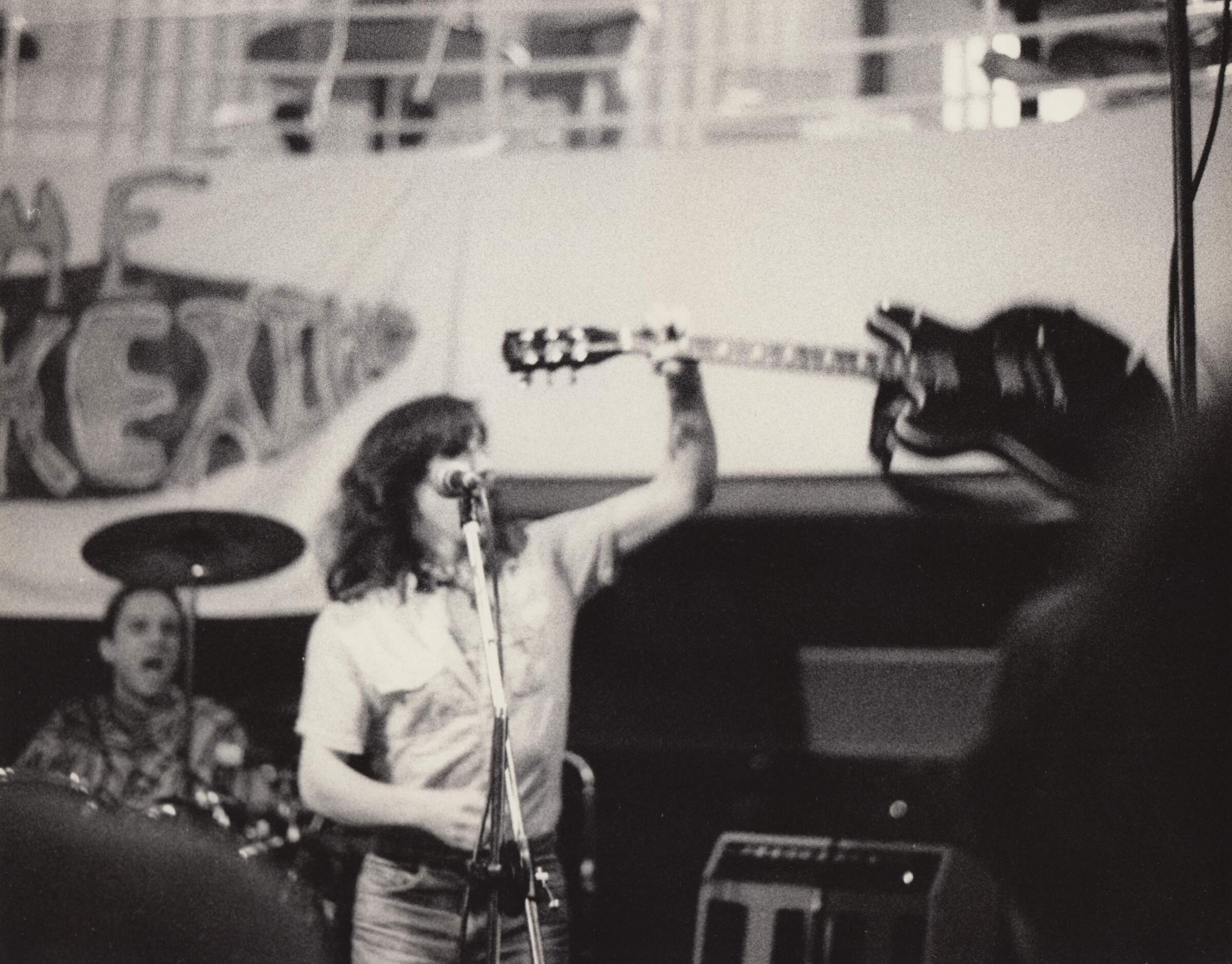
Coston: What would you like people to know about the Gathering, whether or not they were a fan of yours during the band’s time?
Williams: We were definitely an experimental band, blending pop, prog, hard rock, punk, and atonal jazz elements. We didn’t fit any of the boxes, and were always pushing to try new musical approaches and challenges.
Coston: Where did you play around Winston-Salem, and NC?
Williams: In Winston-Salem, many at Ziggy’s, Baity’s, The Screamin’ Deacon, the School of the Arts student commons. Also Outback Cafe, Sports Club, and Orchestra Pit. Hitting the road, Infiniti, the Green Room, and The Nightshade in Greensboro, The Hardback Cafe and Cat’s Cradle in Chapel Hill, Captured Live in Durham, The Brewery, Berkeley Cafe and Cup A Joe in Raleigh, The Green Door and 45 Cherry in Asheville, Klondike Cafe in Boone, The Iroquois in Roanoke VA, The Cellar in Blacksburg VA, Kings Head Inn and Friar Tucks in Norfolk VA, and some place full of bullet holes in Bluefield, West Virginia. We had a Milestone gig on 9/22/89 – later onthat day Hugo wrecked Charlotte, and we never got it rescheduled.
Coston: What were some of your favorite gigs during these early days?
Williams: Ziggy’s was always a fun home crowd, and the Hardback in Chapel Hill holds a special place.
Coston: How did the Gathering’s first album come together? Where was it recorded?
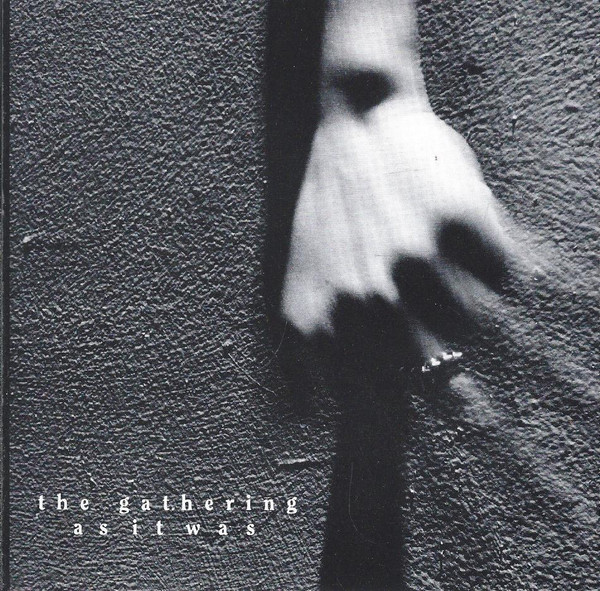
Williams: It was done at Drive In [Studio] with Mitch Easter, two sessions about a year apart. Both involved a day of recording followed by a day of mixing, no revisits! Ben Folds dropped in on one of those tracking sessions. He and Mike knew each other from Reynolds High, I knew his brother Chuck (Bus Stop) from my class. I’m working on a reissue that uses some of the original mixes, while remixing some others.
Coston: Doug, did you already have a studio put together during the Gathering era? And did your experiences recording with the Gathering influence you want to be producer/engineer?
Williams: It’s funny, I was never gonna do this, I was just gonna be in bands. (Says ten million other studio guys!). I was always recording rehearsals and gigs, and went to the Recording Workshop in early ’90 primarily to learn what I could do to make band sessions more efficient, thinking about the tech from a production angle. The studio was always fun, so when the first quality semi-affordable equipment started to come around, it was a natural step.
Coston: Tell me about the record store one-day tour that you did to promote the first album.
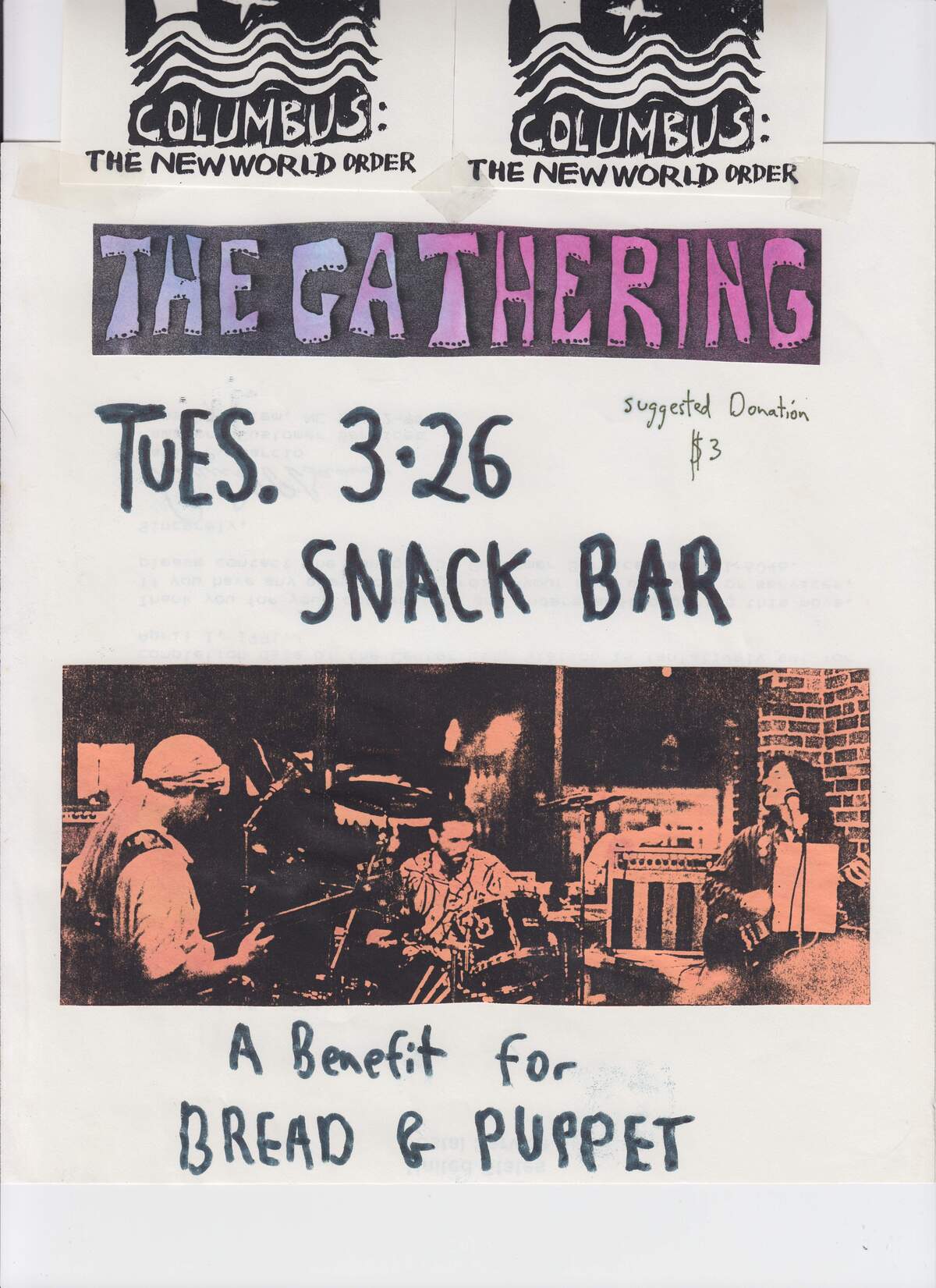
Williams: We had a Virginia Beach/Hampton Roads/Norfolk trio of in-stores when the Record Exchange expanded. They’d given us a positive review in their newsletter The Music Monitor, and asked if we were interested. That was a busy day! We also played the Fayetteville, Ra-leigh, and Winston-Salem stores.
Coston: How soon after the first album that the second album started to emerge?
Williams: The material for record two was in the works probably 6-9 months before record one came out, so it was played out in various forms for about a year and a half before recording. We had gotten involved with the protests around the Gulf War, and that brought us into orbit with friends at School of the Arts in theater, dance and music which led to collaborations and joining a new theater company, The Wheel Theater. There was a general feel of working towards a multimedia/multi-discipline piece with a storyline, the recording is the existing evidence of that effort.
Coston: Describe the changes in sound between the first and second album.
Williams: Record one started out more pop, and by the second session we were tackling some more ambitious Mike songs, more off the beaten path stuff, so it’s a mix of that. Some of those songs had been done a full decade before in The Vanguard, but never recorded, with pretty dif-ferent feeling arrangements. Mike had a deep well of songs that hadn’t been played in The Vanguard, along with new material. Two or three songs had been done with Mike and I’s pre-vious band, 9 Days Wonder. Record two was a more unified piece done in one session at Drive In, and we were past the early stages of trying different things on and learning what our common language and strengths might be. It also can’t be understated that we’re talking before/after Nirvana, #1 versus #2. When we started it was a wasteland of keyboard and hair metal bands, and we were “too rock” and ’not metal”. After Nirvana we weren’t rock enough in the right way either.
Coston: The second album sounds like you had been playing the songs live for as long, if not longer than the songs for the first album.
Williams: Definitely, and we were playing much longer set lists than the earlier ‘opening act’ era. We’d demoed everything several times on the four-track.
Coston: You finished the second album, and then broke up before you could release it. What happened?
Williams: Jeff the drummer decided to pursue his doctorate and left for the UK. The stresses of the theater company and the band having lots of overlapping parts were taking their toll and di-luting focus for awhile before the end. I feel like we weren’t in a rush to finish these exact re-cordings because the piece was going through rewrites, and there was the possibility we might re-record parts, or extend it. I don’t recall the timeline exactly, but I think the Wheel Theater crashed and burned about the same time, and another band I was briefly in, Charlotte’s Me And Emma also imploded, along with Mike’s other band The Vanguard, so there was a great sweep-ing away of what had gone before, none of which was particularly smooth given the seismic changes in music between 1990 and 1994.
Coston:. All these years later, what brought you to release this unreleased album now?
Williams: It’s always felt like significant unfinished business, and there’s not really any bucket it fits neatly into, it seems to maintain an identity after all these years, so it’s felt like a big missing piece of Winston-Salem scene history. People heard us play this material a lot, they saw it with theater company add-ons, and they saw it with the additional musicians heard on the record. People still remember us and occasionally mention the long out of print first record, yet the kids today don’t know we existed. As for why now, the record absolutely no one is asking for? Finding the right amount of time to get it to the finish line.
Mike and I first transferred the original tapes in 2014 and chipped away at the unfinished bits and decisions on and off for several years, and dwelt on those rough mixes for several years. All of that a matter of completing and correcting the original intent as much as was possible. It’s hard to see that when it’s your own work, in the moment.
In a lot of ways I’m glad we didn’t finish it at the time, at least not as it stood after the initial sessions, with time and budget constraints looming and distracting. Only more recently has the tech been widely available to shape the sounds to best effect, many things would have suffered in a 1994 mix.
Coston: What do you think about now when you hear these recordings?
Williams: It’s another lifetime, you know? It’s a flashback to a thing I can totally relate to doing that I wish wasn’t over on one hand, but also totally can’t imagine doing now on the other. I’m happy it’s done and generally content it’s the best it can be. There was a long time hearing them just invoked anger and a sense of loss, so also…..therapy! There are a few other singles to finish, both earlier and later bits, so those are coming.
Coston: How did your time in the Gathering influence the rest of your career in music?
Williams: It’s funny, every other band I’ve been in seems so ’normal’ in comparison. I had a lot of “duh” moments focusing on more standard musical structures and changes later on. Arranging music in a band informs in the studio with other artists. The kind of far-reaching blender we were has made it easier to grasp where others are coming from and what sort of suggestions or advice might help direct them. Sometimes that’s just, “Nah, that’s not that crazy, go for it”.
Coston: Finish this sentence. The Gathering was, and will always be…..
Williams: A band from another time, that was not ever of its time.
Daniel Coston
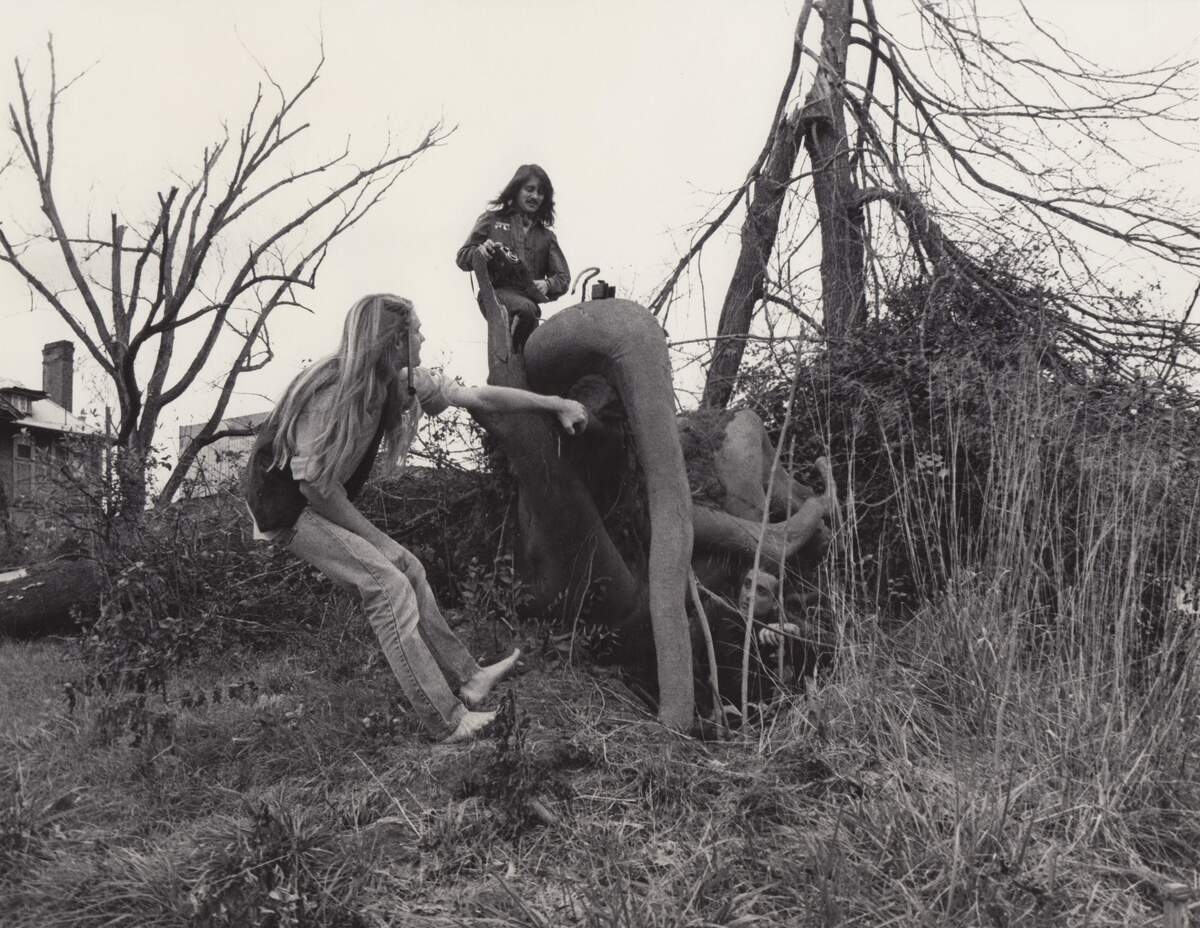
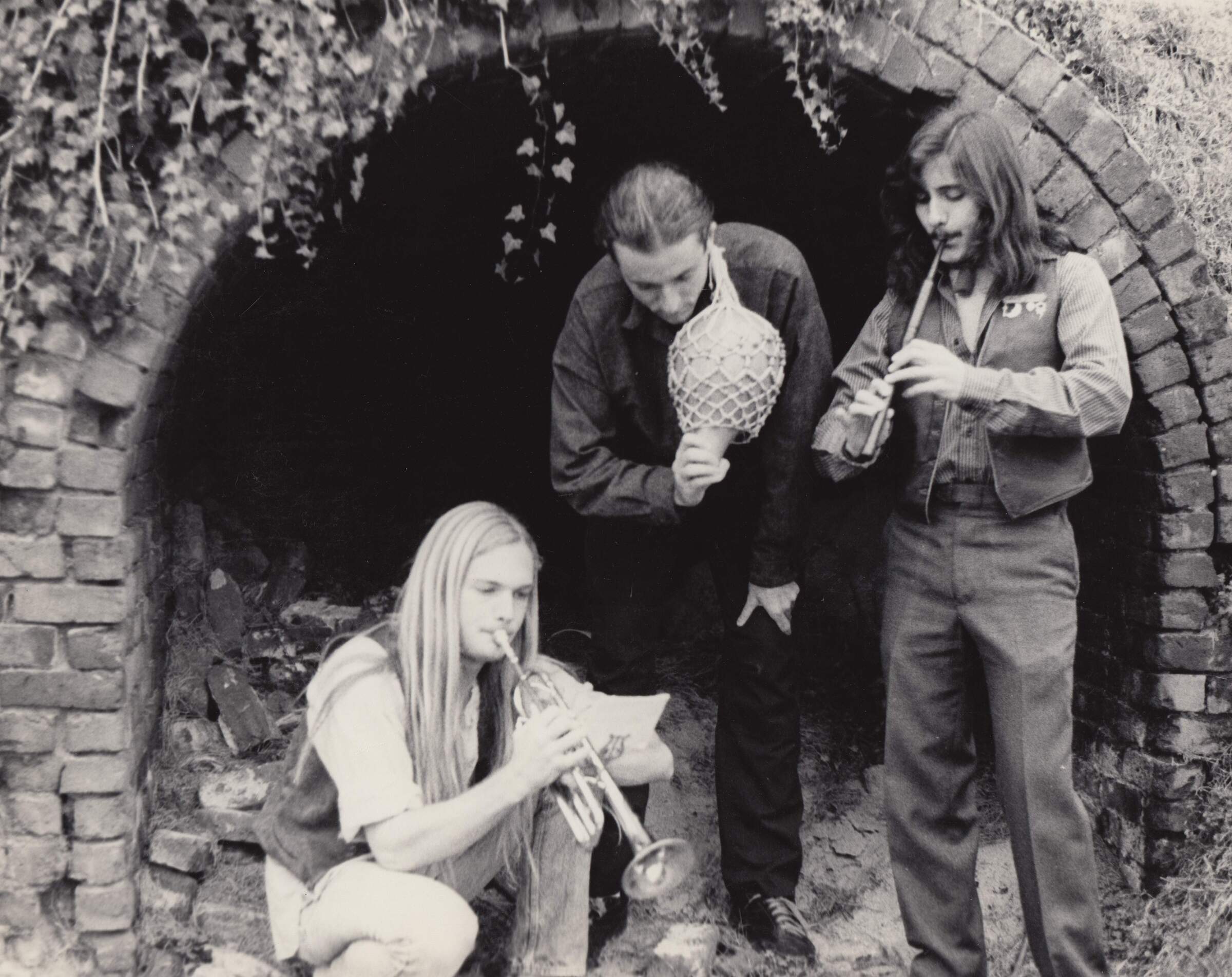
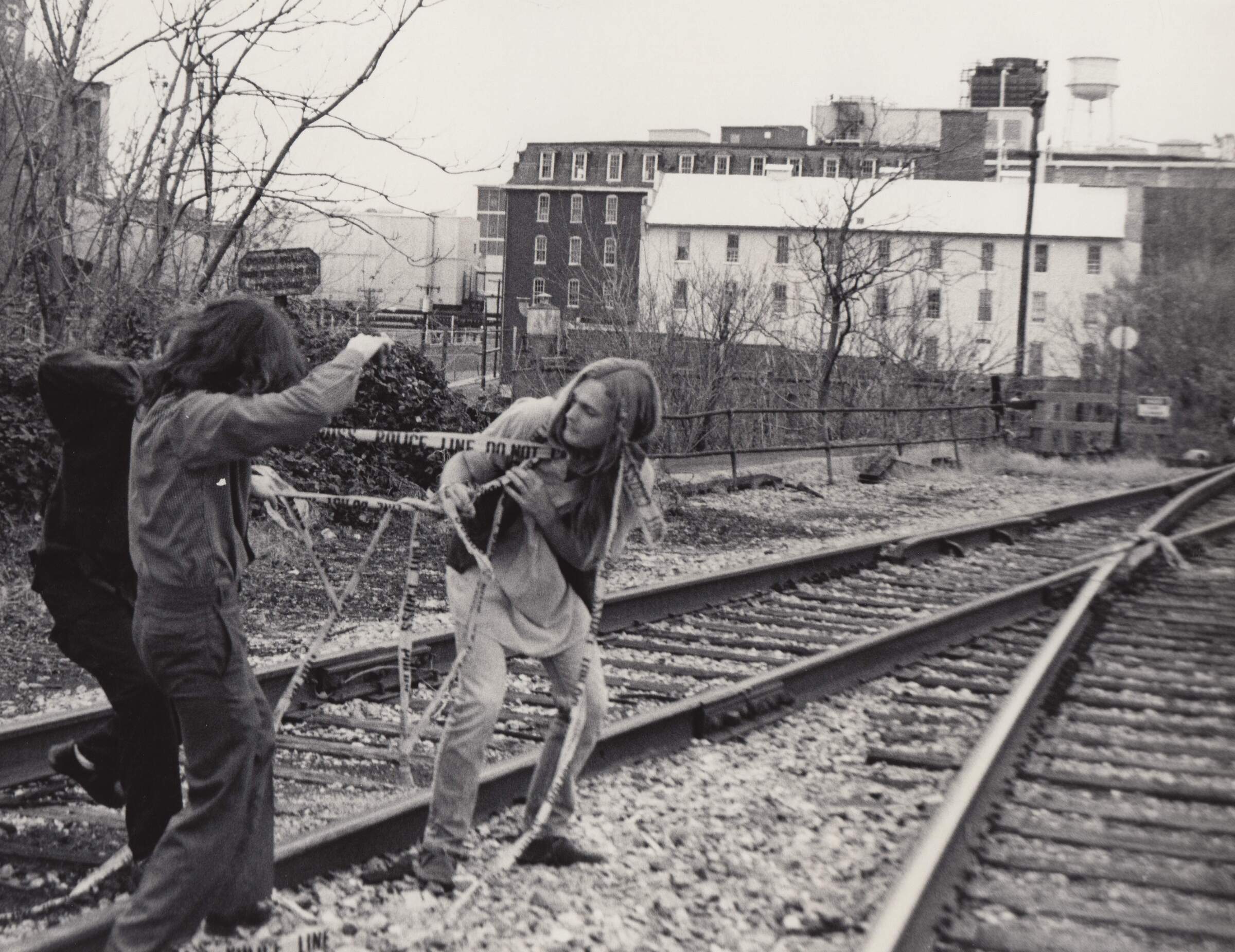
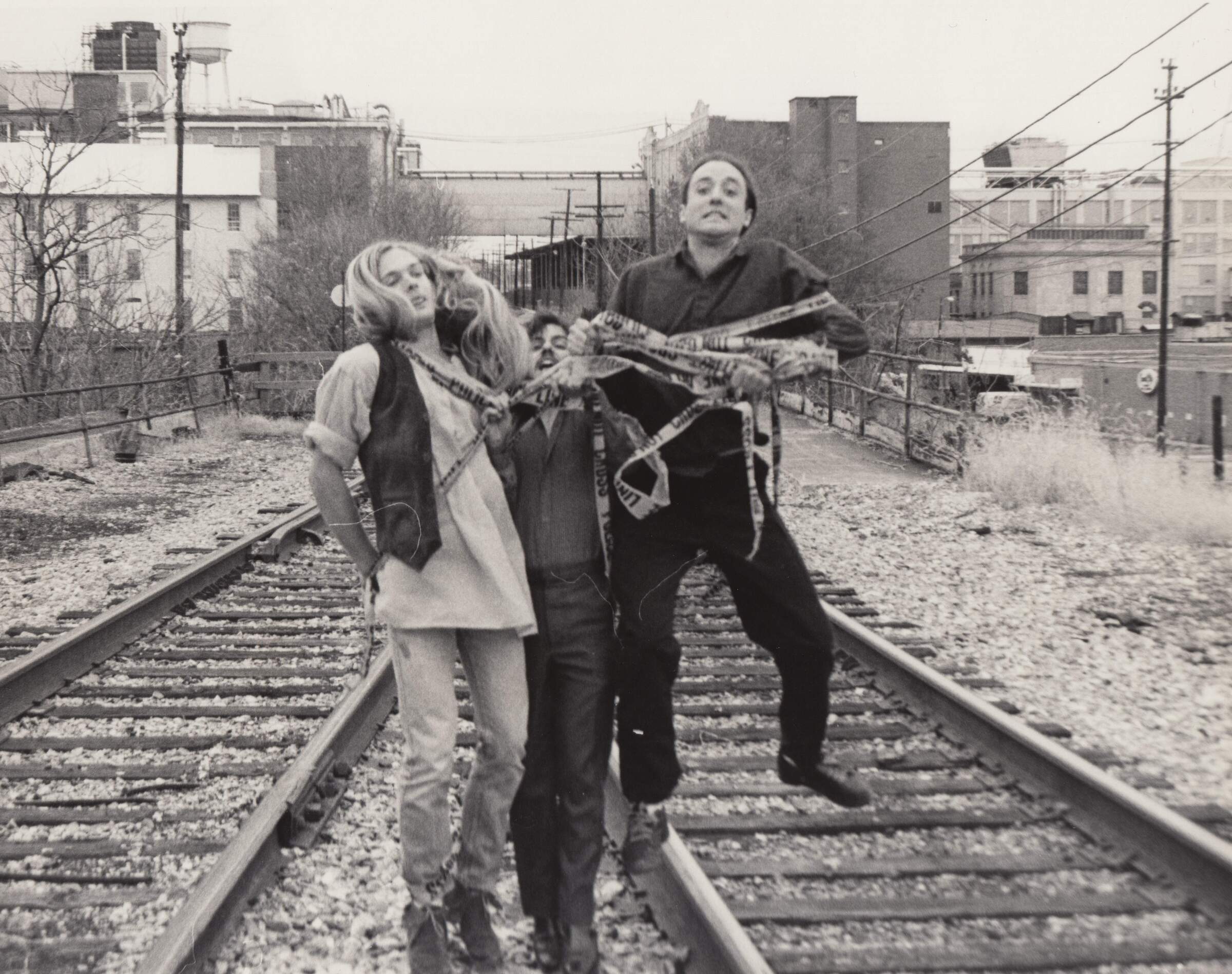
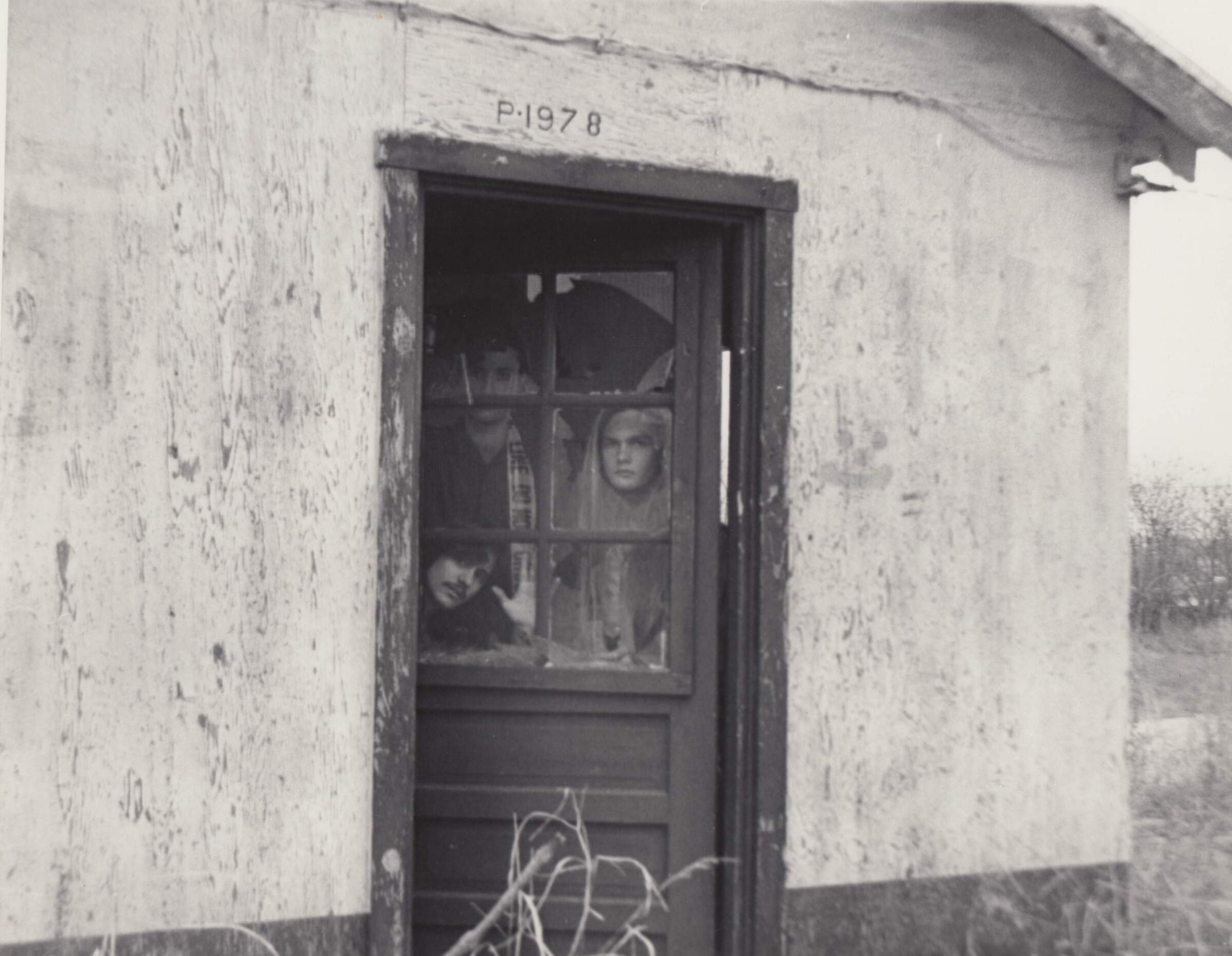
Headline photo: NCSA video shoot 1991 (Credit: Dorcas Williams)

 Steven H
Love it!