
This Lonesome Paradise Unveils ‘Let Us Prey’ on Their Forthcoming Album ‘Death Motels’
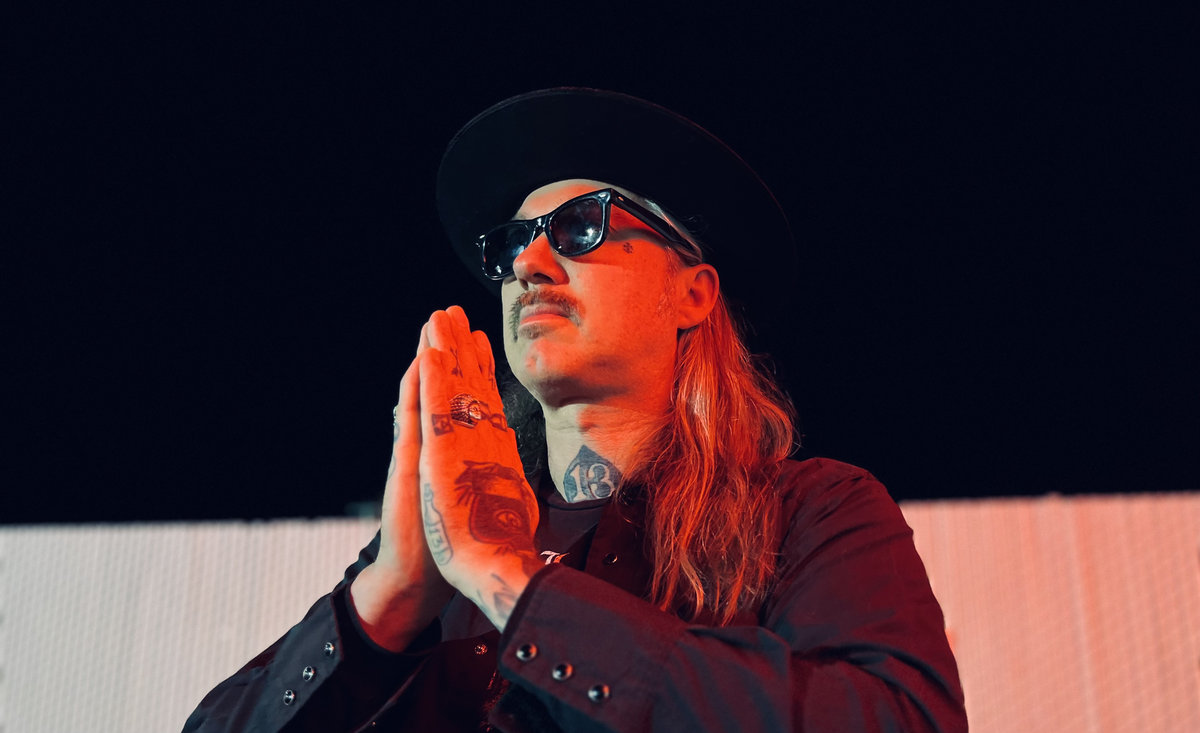
This Lonesome Paradise is a band that lives in the spaces between sound and vision, where music becomes cinema and cinema becomes ritual.
Founded in the Pacific Northwest and later rooted in the high deserts of the American Southwest, the group plays with vast and alive landscapes. At the helm, E Ray Béchard describes his songwriting as scoring “movies that only exist in my mind,” a philosophy that drives every note, every lyric, and now, every frame of their latest project.
‘Death Motels’ marks a significant expansion of the band’s ideas. Both a musical album and a three-part cinematic series, it plunges audiences into a gothic desert odyssey: marauding motorcycle gangs, spectral rituals, and a mythic outcast guide viewers through a liminal world of menace and beauty. Musically, the album departs from the band’s folkier, blues-laden origins, embracing ferocious guitars, low-end storms, Mellotron textures, and vocals that hover between incantation and confession.
Collaborative, immersive, and unflinching, This Lonesome Paradise blurs the line between nightmare and revelation. With ‘Death Motels,’ they assert themselves as conjurers of cinematic worlds. They are a band whose work is as haunting as the desert that inspire it. Today we are premiering exclusively ‘Let Us Prey’. Enjoy the ride:
“Movies that only exist in my mind”
You’ve described your songwriting process as scoring “movies that only exist in your mind.” With ‘Death Motels,’ you finally externalized those internal visuals into physical film. Did the reality of filming, with all of its limitations…the desert heat, the logistics…somehow alter the music in return, or was the original vision clear from the start? On that note, would you share a bit more about the concept behind the work?
E Ray Béchard: Yeah, the internalized visuals in my mind all play a huge part in my songwriting process, and this was an exciting experiment to externalize them into movie form. The limitations definitely acted more as inspiration than anything, as the challenges of living in this harsh desert environment played a huge role in the music, so it was only natural for it to rear its unyielding head during filming… windstorms of sand, flash rainstorms, brutal heat, and difficult terrain all gave the final product an honest representation of the Mojave and ourselves.
The movie was a collaborative effort between a group of our desert friends… it started as a concept/screenplay written by Ben Goulet, and then was further molded into what it became by Daniele Violi (director), Amanda Zo (wardrobe), Michael Wielock, and myself. We imagined a kind of Alejandro Jodorowsky meets Panos Cosmatos world and then just let shit unfold. Additionally, Jon Delouz (DP), Irena Delouz (makeup), Ella DeMaria, Robert Dougherty, Jonny Day, and a bunch of other Hi Dez friends helped bring this to life… really proud of the team.
The visual language of the trilogy is incredibly specific… You mention that in this world, “violence and ecstasy share the same frame.” Was it difficult to incorporate that specific tension into a musical arrangement? How does a guitar riff replicate that feeling of “corrupted milk”?
I think tension is my favorite part about any good art, as it forces one to explore internalized emotion, as opposed to being led to an emotional intent. I hunt for that feeling in music always. A guitar riff, or a melody line, speaks a secret language that can change the listener’s entire mood in an instant… I love that kind of magic.
The protagonist of the trilogy is an outcast. Does he represent a victim of this dystopia, or the only type of entity capable of surviving it?
I think they blur the line between addict and the drug they are addicted to. We all exist in a world of survival… we are as much a prisoner as we are the guard of our own prison cell. The children of subscription, the creators of our own private dystopia.
Speaking about the sound; you’ve moved away from your folkier, blues-laden origins… Was this a deliberate decision to match the narrative of the films, or was it just a natural continuation?
I’d say natural continuation. It was definitely not to match the mood of the film, as the music was recorded months before the movie idea came into view. Music for me is an extension of life and mood, and that keeps me from becoming trapped by genre or past direction. I feel as though I am a lightning rod, and whatever is flowing in the moment, I just try to get out of the way and let it breathe. This album feels like a moment in time; our job, as a band, was to capture it.
What’s next for you?
Oh wow… film scoring, movie, music, anything that can fill my soul suitcase. I am excited to see what will unfold though. Art for art, always.
Okay, last one: If you had to narrow it down to five records that really shaped you when you first started making music, what five make the cut?
That’s a tough one, haha… in no specific order:
Rowland S. Howard – ‘Teenage Snuff Film’
Joy Division – ‘Unknown Pleasures’
Bernard Herrmann – ‘Taxi Driver’
Godspeed You Black Emperor – ‘F♯ A♯ ∞’
Jason Molina – ‘The Ghost’
Klemen Breznikar
This Lonesome Paradise Website / Instagram
Bad Vibes Good Friends Website / Instagram / YouTube