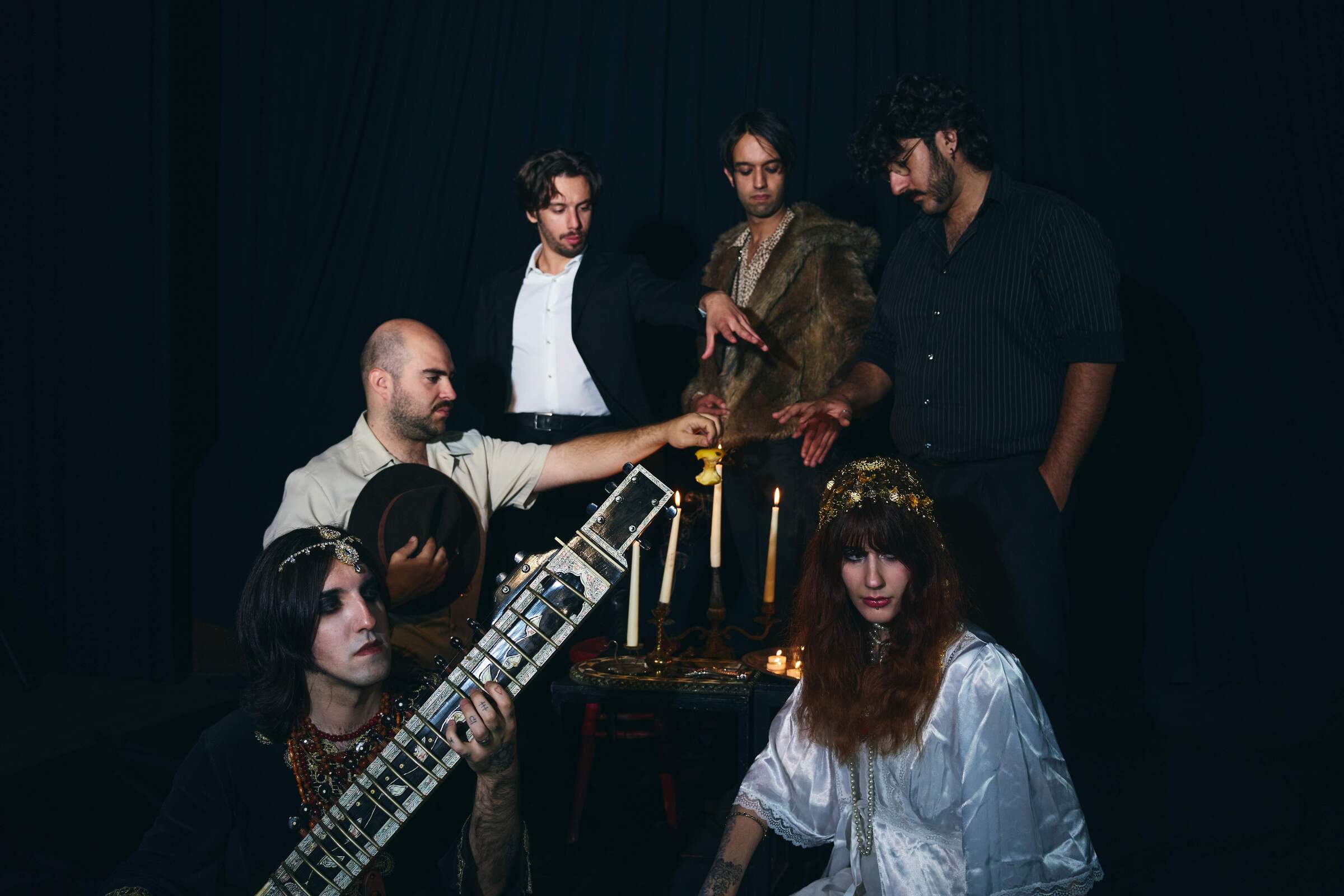

Summer of Hate Offers a Glimpse of ‘Blood and Honey’ with the Release of ‘Alem’ Video
The band Summer of Hate has announced the upcoming release of their new studio album, ‘Blood and Honey,’ scheduled to debut on January 30, 2026, via Tee Pee Records.
In anticipation of the release, the group has shared a new video for the track ‘Alem,’ offering a substantial preview of the record. The video release is accompanied by an in-depth conversation detailing the production and creative process behind the making of the album.
“We wanted to let people know exactly who we are,” João Martins says, and this record makes good on that promise. On ‘Blood,’ shoegaze is pushed through Sufi music, dabke, raga, and drone. On ‘Honey,’ romance, melancholy, and vulnerability rise to the surface. Together, they form one language, not two directions. “They are two sides of the same coin,” Laura Calado explains. Sadness becomes rage, then softness, then clarity.
What separates this work is not just its ambition, but its direction. “I have always known exactly what I wanted to do in music,” Martins says, and that certainty reverberates across every layer. This is music that insists on presence. It was written for rooms, for bodies, for “a colossal wall of sound.”
“There is so much music to explore”
‘Blood & Honey’ is described as your most ambitious work to date. What made you decide to create a double LP exploring two contrasting sonic worlds?
João Martins (Jonas): I have always been interested in doing this and I have always wanted to make huge, epic records with huge, epic songs. There is a lot of influence from The Brian Jonestown Massacre, The Warlocks, Spiritualized, Flowers of Hell, The Horrors, and Mercury Rev, and these are the bands where I get my musical clothing from. But I think the first four Smashing Pumpkins records really shaped my overall approach to composition and also how a band can evolve its sound without compromising, and in fact reinforcing, its aesthetic. I think with our debut album we did not manage to communicate who we were to the fullest extent. We are a heavy band on stage, and a lot of people were surprised by how huge we sound live after discovering us through our recording. With this album we wanted people to know exactly who we are and we wanted to explore more human emotions through experimentation with our sound.
Laura: We wanted to show people that our sound could be more potent, more different, that we were beyond honey and also had a bloody side. There is so much music to explore and we did not want to be confined to one type of sound. This album felt like the perfect opportunity to break out of that mould and explore everything we could be. As we composed new songs, it became clear that there was much more brewing inside us, and it was only natural for us to create an album like this.
How early in the writing process did the Blood and Honey conceptual split emerge? Was it intentional from the start, or something that revealed itself as the songs took shape?
Jonas: At first we thought of it as two separate EPs, but we soon gave up that idea and decided to follow the concept of a double album instead. We had been playing one of the songs from ‘Blood and Honey’ since we were touring with Love is Dead! Long Live Love. We initially wanted the first album to include more ‘Blood’ songs, but we did not manage that because of budget and time constraints. This album is the band really showing its true colours, and this exploration of shoegaze through Middle Eastern music will always be a defining part of our sound moving forward. I have always known exactly what I want to do in music, and I already know what the next two albums are going to sound like.
We worked with two producers to achieve this goal. Thomas Attar from Al Qasar worked on ‘Blood,’ and Rafael Silva from Fugly worked on ‘Honey.’ Thomas went in depth and really helped us bring out the best in our demos, while also adding to them because he is a student of this genre of music. He knows far more global music than Western music. A total nerd. Rafael, on the other hand, was the perfect person for Honey because he knows how to make twenty first century rock while experimenting with old gear. He was exactly the right person for the job, and his mixing style really respected the maximalist approach of the band.
Laura: As Jonas said, some of the songs on this album have been around since the first record, so in a sense the concept was there from the beginning. But it gained strength as we composed new songs and explored this side of our sound that had been a bit hidden under the surface of the first album. For me, the concept of Blood and Honey became real in the process of writing the lyrics. I tried to really immerse myself in my more bloody side, something I had not allowed myself to do very much in music or in life.
‘Blood’ blends shoegaze with Sufi music, dabke, raga, and other global influences. What drew you toward these traditions, and how did you approach integrating them respectfully and authentically?
Jonas: I started learning guitar and making music quite late, and I only had four guitar lessons. I really only learned the pentatonic scale and the major scale. After that I got into ‘Venus in Furs’ by The Velvet Underground and, while reading about it, I discovered ostrich tuning. This is when you tune all the strings to the same note. That was when my whole world shifted. It made a lot of sense to me in terms of creating melodies. Even without any pedals it already sounds like an elephant being attacked by bees. I learned how to make melodies by treating my guitar like a sitar, and when you treat all six strings as one, you start focusing more on feeling rather than overthinking everything. The Middle Eastern scales came very naturally after that. It was a very genuine and organic way for me to play these melodies.
I really love folk music and the idea of songs being passed down through generations, of people simply bringing their instruments and playing together, creating community through sound. My late aunt also used to watch Bollywood movies with me when I was a child. I have always been drawn to that blend of sitars and orchestra that you also find in sixties pop and psychedelic rock. I also tune my guitar to a sitar like tuning in Open C.
Later on, I got into Bachir Attar, Ravi Shankar, Tinariwen, and Erkin Koray, and I trained my ear to absorb as many grooves as I could from all these different cultures. There has also been a lot of immigration from the East and North Africa to Portugal, and many more left leaning DJs here started playing this music as a way of welcoming people who are being increasingly marginalised by the rise of the far right. It is very normal to walk into a DIY venue in Lisbon or Porto and hear Anatolian rock or dabke being played by some rock and roll DJ.
Another important way to respect these cultures is to oppose Western imperialism, colonisation, and capitalism. That is how real support happens, by calling out what our own governments and others have done and continue to do to the Global South. We are not appropriating anything. We are adding to the shoegaze lexicon and trying to normalise these sounds in Western pop music, while also offering something of our own in return. You could say that The Beatles, The Rolling Stones, and The Byrds did this in their own way, but we are taking it a step further. We are not trying to imitate ‘Tomorrow Never Knows’ or recycle tired tropes. We wanted to create a new language for counterculture and rebellion.
‘Honey’ leans into sixties romanticism, jangle pop, and dreamier tones. What emotional or narrative thread ties these softer songs to the intensity of Blood?
Laura: For me, they are two sides of the same coin. ‘Blood’ was very much a learning experience. I am naturally a melancholic person and I think that comes through in my lyrics. At first I was unsure how to approach ‘Blood’ and how to connect it to ‘Honey.’ But I soon realised that all my writing comes from the same place, except that I had not allowed myself to feel certain things. ‘Blood’ was me challenging myself to feel anger, to feel dirt, to make mistakes. It was me realising that my sadness is human and that my love is human too, and presenting those feelings in their rawest form.
“I have always been fascinated by the question of how you go from Oasis to Swans in the same song.”
Your sound fuses psychedelia, noise rock, post punk, and Middle Eastern folk elements. How do these different influences coexist within the band creatively?
Jonas: All of these styles are rooted in drone and they follow an almost tree like logic. What is shoegaze if not impressionist psychedelic rock? What is psychedelic rock if not distorted rock and roll? What is rock and roll if not a distorted form of folk music? And what is folk music if not the purest form of popular music, since these are songs passed down through generations because they build community? To me, all of these forms are connected. They just express different emotions.
We wanted to create huge, larger than life songs that still align with our previous record, but we also wanted them to be as loud and heavy as we play them live. We wanted to show people how we have always wanted to sound and how ambitious, maybe even self delusional, we truly are. I have always been fascinated by the question of how you go from Oasis to Swans in the same song.
With three guitarists in the lineup, how do you avoid overcrowding the arrangements while still achieving such a dense and immersive sound?
Jonas: The most important rule is not killing Laura. She sings at a very low volume and we need to protect that, because she is one of the most naturally musically gifted people I know. Not just when it comes to creating melodies and lyrics, but also rhythm. On this album she really got to shine, and she even contributed melodies for the guitars. If you are into the psychedelic experience, you will keep discovering new melodies and arrangements with every listen.
Laura: Vocally, I admit that it was hard for me not to go overboard on this album. Compared to the first one, I explored my voice and all the melodies I could create with it much more. The options felt endless. But of course, you cannot put everything into one song. This album was a big learning experience for me. It showed me my full vocal potential, but it also taught me that sometimes the most powerful moment for a vocalist is when you know when to stop singing.
So how do you approach writing lyrics for music that moves between spiritual intensity and dream like melancholy?
Laura: Like I said before, to me this album never felt like two separate entities. ‘The Blood’ side was a real challenge lyrically because I was not used to exploring my melancholy and sadness in that way. Being more bloody was scary at first, but it also felt very natural. Much of my writing is based on personal experiences, and Blood allowed me to step into a character that could express things I normally would not. I longed for the chance to be imperfectly sad, and this album gave me that space. In the end, I am really exploring the same themes in different ways. ‘Blood’ is sadness expressed through rage, dirt, and intensity, while ‘Honey’ is sadness expressed through softness and awareness.
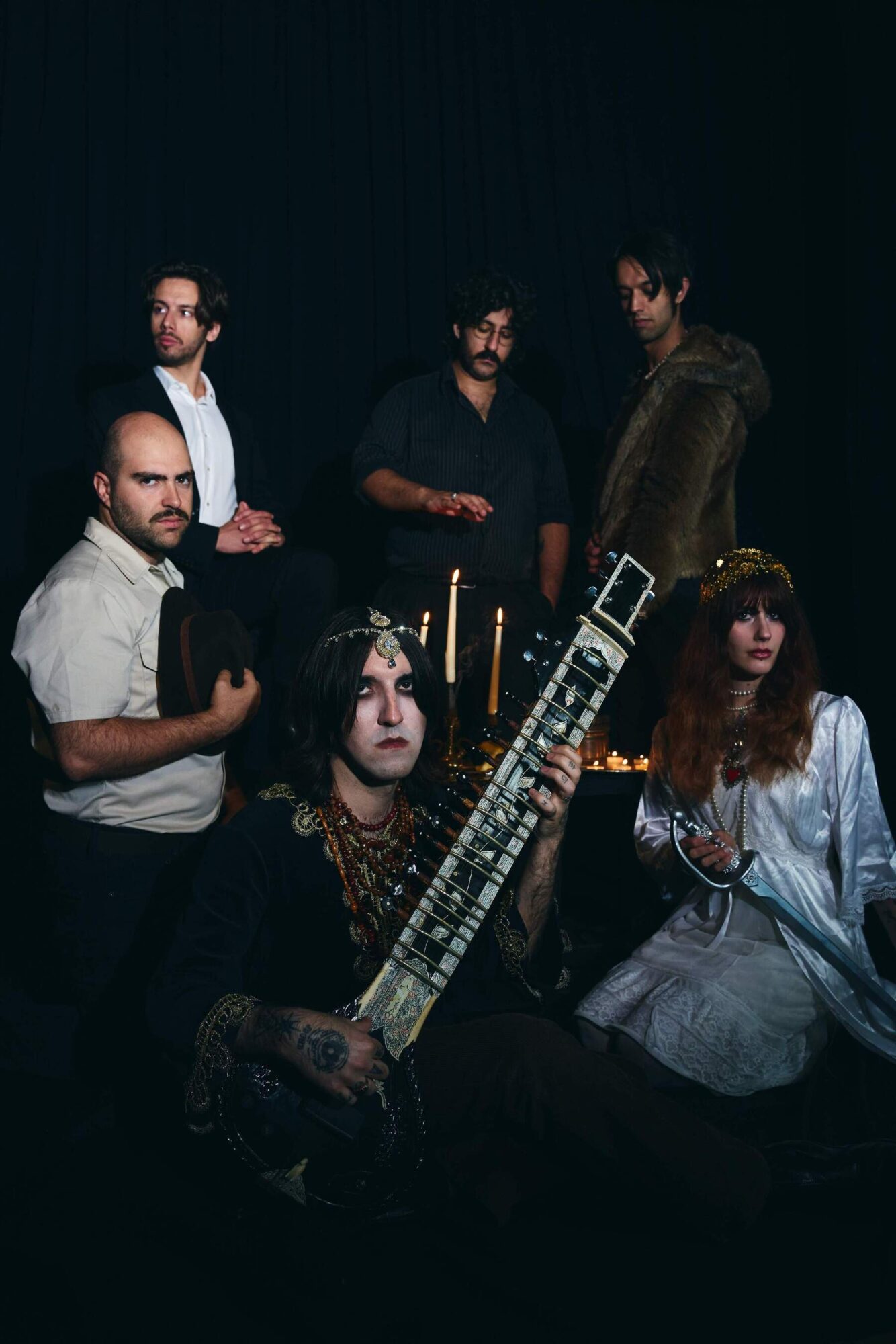
Your live performances are known for being emotionally intense. How do you translate the layered studio sound into something that hits just as hard on stage?
Jonas: You simply play louder, heavier, and as if the world is about to end. We tried, at first, to be more economical with the arrangements for this new album, and then we completely lost control because both of our producers were just like us. There are synth lines, orchestrations, drones, and tremolo effects that will not be used live, but you do not really need them when you have five amplifiers. Eventually, we would like to add a multi instrumentalist to the band, someone who can play violin and organ. But for now, we rely on a wall of guitar amplifiers that most sound engineers beg me not to turn past a certain point.
One thing I learned from The Brian Jonestown Massacre is that every note and every strumming pattern is a manifesto. If you play a Summer of Hate song the wrong way, you are essentially playing a completely different song over the original. There is room for a little improvisation, but you are not allowed to go beyond four notes. Through rehearsals, you decide what is truly essential. If the live version sounds a bit different from the record, that is fine, because we make up for it with emotional impact, feedback, and an overwhelming wall of sound.
We also take this very seriously. Nobody is allowed to be drunk or high while performing. You are there for the music. You give everything you have, try to touch some hearts, declare war on fascism, and then you leave.
Summer of Hate Facebook / Instagram / YouTube / Bandcamp
Tee Pee Records Official Website / Facebook / Instagram / X / Bandcamp / YouTube